



Supply Chain
Latest News
Advertisement
Latest Videos
Shorts
1:02
How Automation and Real-Time Monitoring Strengthens the Supply Chain
5 months ago
by
Anthony "TJ" Rizzo

0:56
How AI and Data Integration Revolutionize Pharmacy Supply Chains
7 months ago
by
Valerie Bandy, PharmD(+1 more)
0:54
The Crisis of Drug Shortages in Modern Healthcare
7 months ago
by
Valerie Bandy, PharmD(+1 more)

0:50
The Shocking Lack of Preparedness in Modern Hospitals
7 months ago
by
Valerie Bandy, PharmD(+1 more)
0:49
A PC Synopsis
7 months ago
by
Nicholas Saraceno, Senior Editor
1:33
PC Poetry Corner
8 months ago
by
Nicholas Saraceno, Senior Editor
0:35
How Small Companies Use AI to Topple Giants
8 months ago
by
Nicholas Saraceno, Senior Editor(+1 more)
0:45
Why Your Competitors Are Beating You to the Punch
8 months ago
by
Nicholas Saraceno, Senior Editor(+1 more)
0:50
How AI is Revolutionizing Pharmaceutical Supply Chains
8 months ago
by
Nicholas Saraceno, Senior Editor(+1 more)
0:41
Ending Shipment Theft and Compliance Nightmares
9 months ago
by
Nicholas Saraceno, Senior Editor(+1 more)
Podcasts
Advertisement
More News

The acquisition formalizes a nearly decade-old partnership as independent pharmacies lean on cooperatives to offset PBM reimbursement pressure and closures.

Nine more manufacturers join the MFN program, pairing new Medicaid pricing deals with $19.6B in U.S. manufacturing investment and API reserve donations.
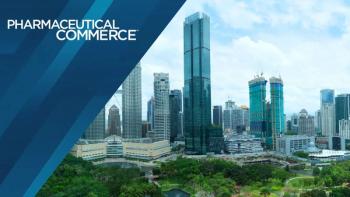
IAG Cargo has added a Kuala Lumpur station to its Constant Climate network, its 13th in Asia-Pacific, as regional biologics and personalized medicine demand accelerates.
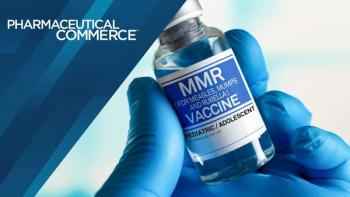
One Vaccine, Three Supply Chains: The Hidden Consequences of Splitting MMR
Published: | Updated:
Separating the combination MMR shot into three vaccines would not just change how children are immunized. It would require building three new supply chains from a licensing base that does not yet exist.

DSCSA verifies package movement, but resilience requires visibility into capacity, quality and sourcing risk.

Across pricing, supply chain, and patient support, the playbooks of pharma commercialization are being rewritten at once for a new era.

Bristol Myers Squibb will build a $2.3 billion modular manufacturing campus in Houston, part of a $40 billion five-year US investment pledge.

Dual chokepoint disruptions in the Gulf and Red Sea are pushing shippers toward longer, costlier routes with no resolution in sight.

Kenco has put DeepFabric's AI agents into live production across its 3PL operations, with plans to scale to 20 agents within a year.

Serialization data does more than meet DSCSA rules. See how connected event histories improve recalls, returns and inventory visibility.

Nick Niemeyer of API Innovation Center on how the National Fragility Index could help reduce US drug shortage risk.
The Section 232 tariff deadline for 17 major drugmakers has arrived. Here's what pharma supply chain teams need to know now.

Domestic manufacturing can reduce certain dependencies, but reliable pharmaceutical commercialization requires qualified redundancy, sustainable economics, quality maturity and decision-ready visibility across the full supply network.
Ember LifeSciences and Alfresa, Japan's top pharma wholesaler, form a cold chain alliance as biologics and specialty distribution demand grows.

Peli BioThermal and PAXAFE are partnering to pair cold chain packaging with AI-powered monitoring, signaling where pharma logistics technology is headed next.

Shortages of antibiotics, IV fluids and sterile injectables are hardening as new EU and US rules push pharma to fix the incentives behind them.

Geopolitical instability is pushing life sciences firms to map supply chains beyond suppliers to protect trials and patient access.

How commercial trade groups are shifting from distribution execution to strategic partners shaping market access, launch readiness and commercial performance.

The models pharma inherited were built for conditions that have changed. A look across the August issue at an industry redesigning itself.
Continuous monitoring, targeted automation and interoperability standards are redefining pharma cold chain custody and cutting temperature excursions.
EVERSANA's Danny Williams on how cell and gene therapies, AI, and direct-to-patient fulfillment are reshaping the pharma 3PL model.
The API Innovation Center's Gerren McHam on China's new supply chain rules, reshoring policy, and where US drug manufacturing goes next.

Specialty drugs, cell and gene therapies, and GLP-1s are reshaping pharma distribution, forcing 3PLs to build for both precision and scale.
ORBIS' Matt Marchetti outlines how pharma companies can define supply chain impact, KPIs, and ROI when transitioning to reusable plastic pallets.
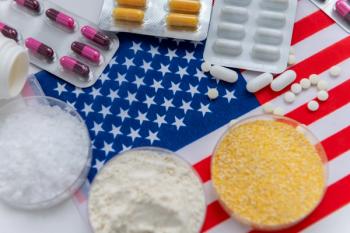
As China tightens supply chain rules, tariff pressure persists, and the FDA's PreCheck Program takes shape, this FAQ breaks down how pharma reshoring stands in 2026.
Advertisement
Advertisement
Trending on Pharmaceutical Commerce
1
White House Extends MFN Pricing to Every State Medicaid Program
2
Pharma Pulse: Behind the Scenes of LogiPharma USA 2026
3
How Rebate Timing Distorts a Pharmacy's 340B Books
4
Pharma Pulse: Independent Pharmacies Sue Express Scripts, Novo Taps Anthropic, Pharma Joins Clean Heat
5