
Pharma pricing shifts beyond PBM rebates as Medicare and cash channels reshape launches, WAC cuts and access strategies.
Pharma pricing shifts beyond PBM rebates as Medicare and cash channels reshape launches, WAC cuts and access strategies.

In the final installment of his interview with Pharmaceutical Commerce, Cencora's Ameer Ali outlines how supply chain stakeholders should prepare systems, processes and trading partners for the shift to NDC-12.

In the final installment of his interview with Pharmaceutical Commerce, Cencora's Gregg Gorniak looks back at DSCSA's five-year evolution and where serialized data is creating value beyond compliance.

Authenticx CEO Amy Brown on why patient support AI needs continuous oversight, not just adoption.
HDA's Kala Shankle unpacks the biggest open question on preemption and offers a two-step playbook for wholesalers and 3PLs preparing for national licensure.
In this week's Pharma Pulse, DHL breaks ground on a new cold chain hub at Singapore's Changi Airport, a new report finds pharma's commercial model in the middle of a fundamental reset, and the FDA grants accelerated approval to sevabertinib.

Twenty-six manufacturers now hold most-favored-nation agreements, and the commitments attached to the pricing terms may matter more than the prices themselves.
Cardinal Health's Liberty Dewey outlines the four parallel work streams driving the NDC-12 transition, and why the biggest risk sits in trading partner handoffs rather than any single system.

Sponsored
Joe Reynolds, Head of User Experience Services at Noble, breaks down what it really takes for pharmaceutical companies to move therapy from the clinic into the patient's home.
Sponsored
Logan Melchione shares how ClaimGuardRx gives account teams a fast, conversational way to tackle diversion and fraud together, and what that means for clients and patients.
Sponsored
Bryan Dennison breaks down the purpose-built technology behind ClaimGuardRx and how its detect-and-respond design keeps manufacturers ahead of evolving diversion tactics.
Sponsored
Matt Turner shares how ClaimGuardRx is redefining patient affordability by turning claims data into a proactive defense against maximizers and accumulators.

Overhaul's Danny Ramon argues that quality and regulatory teams, not just logistics, need faster protocols and more accessible stability data, since stolen or compromised product that re-enters the supply chain through gray markets can ultimately reach patients.

Cencora's Ameer Ali explains why trading partners' systems, not the NDC-12 deadline itself, determine whether product keeps moving through the supply chain during the transition.

Ed Schoonveld examines the uncertainty surrounding President Trump's MFN drug pricing agreements, stalled GENEROUS, GLOBE and GUARD proposals, and their ripple effects on ex-US drug launches.

AI-native operating systems present new capabilities to improve pharma supply chain operations.
Cencora's Gregg Gorniak on where DSCSA trading partners find shared value in compliance investment, and where that alignment breaks down.
In this week's Pharma Pulse, nine more drugmakers join the MFN program, GoodRx adds a family plan, IPC formalizes its USave partnership, and CSafe expands its thermal cover offerings.
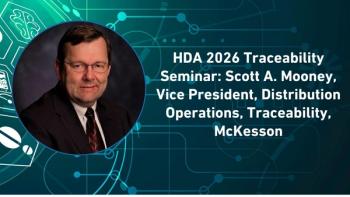
McKesson's Scott Mooney discusses the technical and operational challenges of DSCSA compliance, from linking ERP systems to EPCIS to recurring friction in 340B transaction data exchange.
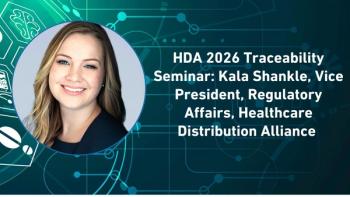
HDA's Kala Shankle says a two-year national licensure runway for distributors could work, but only if states, the FDA and industry move in parallel.

Pharmacy directors are using the growing number of publicly visible drug prices as leverage, new research shows. Manufacturers need to be ready, before those prices become a negotiation tool.

The acquisition formalizes a nearly decade-old partnership as independent pharmacies lean on cooperatives to offset PBM reimbursement pressure and closures.
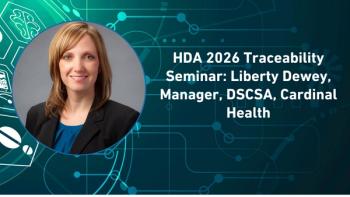
Cardinal Health's Liberty Dewey breaks down the NDC-12 transition timeline and the vendor, association and wholesaler support smaller pharmacies will need to get ready.

As loss-of-exclusivity events accelerate, generics and biosimilars are diverging into distinct business models, demanding different regulatory, IP, and market access strategies from manufacturers.
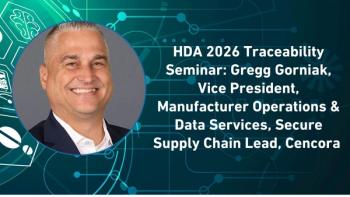
Cencora's Gregg Gorniak breaks down what separates basic DSCSA compliance from using it to streamline transactions and strengthen trading partnerships.

Nine more manufacturers join the MFN program, pairing new Medicaid pricing deals with $19.6B in U.S. manufacturing investment and API reserve donations.

Cencora's Ameer Ali explains how the shift to NDC-12 is reshaping supply chain systems and why readiness still varies widely across manufacturers.
HDA's Kala Shankle explains what a national licensure standard could mean for wholesale distributors and 3PLs, and why its success depends on how much state-level variation remains.

Alexis Cogswell of Inizio Medical explains how combining real-world data, AI analysis and HCP context is helping medical affairs teams move from retrospective reporting to actionable, real-time strategy.
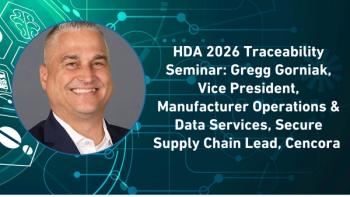
Ahead of HDA's 2026 Traceability Seminar, Cencora's Gregg Gorniak explains how AI and RFID are being used to catch DSCSA data gaps before trucks reach the dock.