
Germany's new health insurance law more than doubles mandatory drug rebates. Here is why it matters for US pharma pricing and launches.
Germany's new health insurance law more than doubles mandatory drug rebates. Here is why it matters for US pharma pricing and launches.

ORBIS' Matt Marchetti outlines how pharma companies can define supply chain impact, KPIs, and ROI when transitioning to reusable plastic pallets.

RxLogic's Ann Beal on how PBM reform indirectly impacts pharma manufacturers' affordability programs, rebate planning, and patient access.

TailorMed and Tennr are integrating referral automation with medication affordability tools for infusion centers and specialty pharmacies, aiming to address patient barriers earlier.
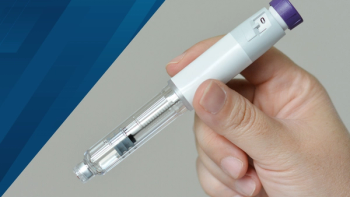
As Medicare expands GLP-1 access, pharmacies emerge as key to adherence, through patient education, ongoing engagement and timely intervention
In this week's Pharma Pulse, lawmakers introduce comprehensive 340B legislation, Peak Rock Capital completes its acquisition of Asembia, and new LogiPharma data shows supply chain risks across the industry.

As China tightens supply chain rules, tariff pressure persists, and the FDA's PreCheck Program takes shape, this FAQ breaks down how pharma reshoring stands in 2026.

Deanna Horner, EVP of Enterprise DIRECT Strategy at EVERSANA, explains which therapeutic areas will lead DTP adoption and her five-year outlook for the model.
Trutakna's FDA approval for IgAN highlights how patient support programs like TRU SUPPORT coordinate access and adoption in specialty drug launches.

Manufacturers must forecast and commercialize products across commercial, government and cash economies to maximize lifetime enterprise value.

Partha Anbil and Partha Khot examine what makes patient support programs succeed, industry adoption trends, key criticisms, and the strategic path forward.

Deanna Horner, EVP of Enterprise DIRECT Strategy at EVERSANA, explains how real-time data generated through direct-to-patient models are shaping pharma's commercial decisions.

In the first half of this analysis, Partha Anbil and Partha Khot examine how patient support programs cut discontinuation and improve patient outcomes, reshaping hub services into an industry standard.

Generating real-world evidence isn't enough. What drives market access is whether payers can actually evaluate and act on it.
This week's Pharma Pulse covers the launch of Medicare's GLP-1 Bridge, FDA's approval of the first regulatory T-cell therapy for chronic GVHD, seven companies tapped for FDA's PreCheck manufacturing pilot, and a wave of dealmaking.

Deanna Horner, EVP of Enterprise DIRECT Strategy at EVERSANA, breaks down what's fueling pharma's embrace of direct-to-patient models.

Gerren McHam of the API Innovation Center on what a resilient US pharmaceutical supply chain looks like in five to ten years, and what execution actually requires.
The FDA selected seven companies, including two CGT manufacturers, for its PreCheck Pilot to accelerate domestic manufacturing approvals and bolster supply chain resilience.

As CGTs scale from clinical to commercial, Cencora's Krystal Haynes discusses the supply chain decisions that determine whether a launch succeeds.
Gerren McHam of the API Innovation Center outlines what a whole-of-government approach to meaningful pharmaceutical supply chain independence from China actually requires.

Amber Hussain Siddique explains why that inventory economics, FEFO compliance gaps, and freight cost structures are driving America's persistent drug shortage crisis and what it takes to fix it.

GEODIS completed 86 international trial shipments using recyclable paper-based thermal covers, marking a credible step forward in sustainable pharmaceutical airfreight packaging.

China's 2026 supply chain rules mean routine US trade compliance can now trigger Chinese export restrictions.

Cate Lockhart shares how manufacturers should communicate across mixed RWE data sources and what guardrails AI needs before payers can trust it.
In this week's Pharma Pulse, UPS commits $48 million to cold chain infrastructure, AbbVie moves to acquire Apogee Therapeutics in a $10.9 billion deal, and more.

In this special episode of Pharma Pulse, Rohit Tripathi breaks down how companies should be scenario planning ahead of the first USMCA joint review which begins on July 1.

As hub transitions accelerate and digital tools reshape how support is delivered, four patient services experts weigh in on what's driving change in 2026, and what manufacturers need to get right to keep patients on therapy.

Cate Lockhart explains why pharma-generated RWE quality isn't the issue, and how AMCP Standards are closing the communication gap with payers.

As PBM pressure mounts and formulary bidding wars squeeze manufacturers, a direct access marketplace model offers drug makers a path to compete on efficacy, price and real-world outcomes.

The investment adds 27 temperature-controlled freight facilities across the Americas, Europe, and Asia as demand for biologics distribution infrastructure continues to climb.