At LogiPharma USA 2026, Swisslog's Garrett Freeman explains how onshoring, geopolitical risk and a shifting product mix are driving supply chain automation.
At LogiPharma USA 2026, Swisslog's Garrett Freeman explains how onshoring, geopolitical risk and a shifting product mix are driving supply chain automation.
At LogiPharma USA 2026, quality leaders explained why connected data, risk-based prioritization, and human accountability must come before AI in supply chain compliance.
Swisslog's Mark Beers discusses how software helps pharma supply chains adapt to shifting portfolios, strengthen inventory verification and build trust.
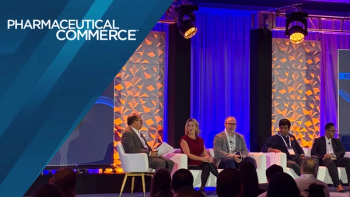
At LogiPharma USA 2026, leaders from J&J, Sun Pharma, Accord Healthcare, and Freehand discussed visibility, redundancy tradeoffs, and AI's role in resilient pharma supply chains.
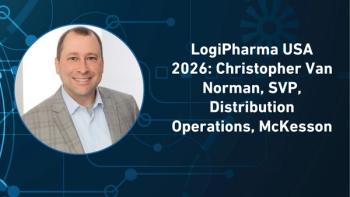
McKesson's Chris Van Norman previews his LogiPharma USA keynote on demand signal sharing, AI, and precision distribution for targeted therapies.

LogiPharma's Charleen Ring and McKesson's Chris Van Norman preview the 2026 agenda, sessions to prioritize and a day two fireside chat.
Cardinal Health and McKesson moved to extend CVS Health distribution deals through June 2032, retaining their largest customer pending final contracts.

Inside the October 2026 issue: why splitting MMR takes years, why payers cite a price that does not bind them, and what pricing rules broke.

Mike Hennessy Jr. on the commercial assumptions being rewritten across pricing, patient engagement and supply chain in PC's October 2026 print issue.

In this Q&A, Doceree CEO Harshit Jain, MD, explains why AI should inform prescribing decisions, not drive them, and how sales reps own relationships while AI extends reach.
Patient support data that is trusted, connected and delivered into field workflows can move access teams from reporting to faster patient intervention.
In this week's Pharma Pulse, the EU Council adopts the "pharma package," Commerce details 0% tariffs for certain drugs and Sharp expands autoinjector assembly capacity.

GLP-1 demand is straining pharma cold chain capacity, from tighter temperature thresholds and rising load rejections to fuel costs and trailer backlogs.

As more pharmacies dispense GLP-1s, payment processor reviews, higher fees and account closures are emerging as an overlooked point of friction in the access channel.

Waltz Health and Fresenius Kabi will offer three biosimilars through a direct-to-payer model that bypasses traditional wholesaler and PBM rebate channels.

Eutecma's Tempaid buy pairs reusable bulk shippers with last-mile mailers as smaller, more frequent refrigerated shipments reshape demand.
HDA's Kala Shankle says a federal licensure baseline could bring real efficiency gains for wholesale distributors and 3PLs, but only if state requirements align and every stakeholder moves on the same timeline.

With HRSA's approval window now closed, attention turns to whether health system pharmacies can reconcile rebates at scale before the pilot's Jan. 1 start.

As patient expectations continue to evolve, brick-and-mortar pharmacy’s path forward lies in combining trusted, face-to-face care with the efficiency and convenience patients increasingly value.

Copeland's Dickson buy adds cloud-native monitoring as the pharma cold chain moves toward continuous visibility to meet rising regulatory demands.
In this week's Pharma Pulse, Vicapsys merges with Stateline, Veritiv targets GLP-1 shipping, Section 232 tariffs widen and HRSA's 340B rebate pilot deadline arrives.
Episode 3 of Supply Chain Signal examines the Aug. 31 MFN agreements with nine mid-size manufacturers, the GENEROUS Medicaid model and whether pricing, trade and manufacturing policy now add up to a new pharma operating model.

Cencora's Ameer Ali on the operational lift behind the 12-digit NDC shift, the readiness gap across manufacturers and what's at stake for product flow if systems aren't ready in time.

Temperature excursions cost pharma an estimated $35 billion a year as biologics, GLP-1s and cell and gene therapies raise cold chain stakes.

Valerie Bandy of Tecsys on where 340B rebate mechanics threaten pharmacy purchasing, and how stakeholders can prevent disruption.
CMS says 40 states and Puerto Rico have signed on to the GENEROUS Model, which applies MFN pricing to Medicaid drugs through state-invoiced rebates.

Informa's invitation-only Leadership Summit returns to CPHI Milan Oct. 6 as executives weigh sourcing, medicine security and reshoring pressure.

The EU's pharma reform makes market protection more conditional. Here is how US drugmakers, especially startups, can adapt and use IP to complement it.

The White House said Medicaid programs in all 50 states, D.C. and Puerto Rico now receive MFN prices, with nearly $65 billion in savings over a decade.

Rebate delays could force 340B hospitals to pay upfront and wait months for credit, distorting drug spend on the books. Valerie Bandy, PharmD, of Tecsys explains the fallout.