

Data & Technology
Latest News
Advertisement
Latest Videos


Shorts
0:42
Training Day Success
7 months ago
by
Nicholas Saraceno, Senior Editor

0:56
How AI and Data Integration Revolutionize Pharmacy Supply Chains
7 months ago
by
Valerie Bandy, PharmD(+1 more)

0:50
The Shocking Lack of Preparedness in Modern Hospitals
7 months ago
by
Valerie Bandy, PharmD(+1 more)

0:35
How Small Companies Use AI to Topple Giants
7 months ago
by
Nicholas Saraceno, Senior Editor(+1 more)

0:41
Trust Is the Real Roadblock for Decentralized Pharma Networks
8 months ago
by
Nicholas Saraceno, Senior Editor(+1 more)

0:50
How AI is Revolutionizing Pharmaceutical Supply Chains
8 months ago
by
Nicholas Saraceno, Senior Editor(+1 more)

0:37
Why Healthcare Regulatory Change Is Already Inevitable
9 months ago
by
Nicholas Saraceno, Senior Editor(+1 more)

0:43
The Biggest Mistakes Organizations Make in PHI Access Control
10 months ago
by
Nicholas Saraceno, Senior Editor(+1 more)
3:50
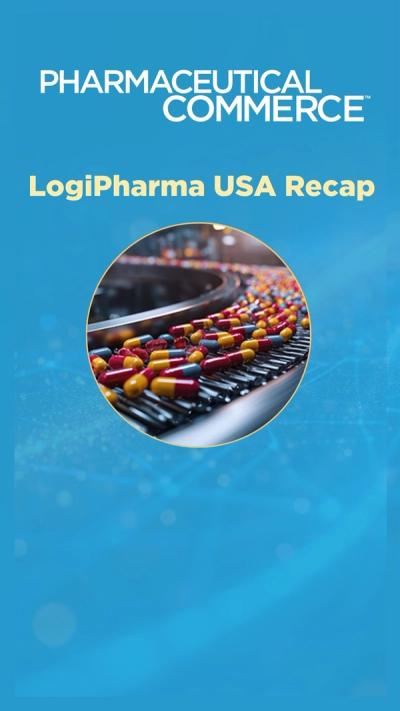
LogiPharma USA 2025: A Shift Toward Real-Time Visibility and End-to-End Control
a year ago
by
Nicholas Saraceno, Senior Editor(+3 more)

0:54
The Hidden Challenges of DTC Medications
a year ago
by
Nicholas Saraceno, Senior Editor(+1 more)
Podcasts
Advertisement
More News

Health care's real challenge isn't more data, it's activation. Arcadia's Sandy Leonard on turning real-world evidence into point-of-care action.

AI-enabled pharmacovigilance is becoming a commercial capability that protects product value and speeds evidence-based market access decisions.

Cleveland Clinic's new prescription drone delivery program and Arrive AI's planned collaboration with LifeSpan Pharmacy highlight growing interest in drone technology for last-mile logistics.

Access leaders are pressed to prove AI ROI, but ConnectiveRx execs Cindy Baksh and Steve Randall argue the real work is defining "better" first, then deciding where AI fits.
A subtraction-oriented approach to pharmacy data can surface avoidable drug waste that fragmented systems routinely miss.
Continuous monitoring, targeted automation and interoperability standards are redefining pharma cold chain custody and cutting temperature excursions.

TailorMed and Tennr are integrating referral automation with medication affordability tools for infusion centers and specialty pharmacies, aiming to address patient barriers earlier.

Intelliguard and Accucold have launched an RFID-enabled refrigerated cabinet to improve hospital medication tracking, visibility, and cold-chain control.

Pharma supply chains are embracing AI, digital twins, IoT, and DSCSA-driven traceability to improve resilience, visibility, and profitability amid rising global disruptions.

At the Doceree Makers Summit, leaders from Sanofi, Bristol Myers Squibb, Eli Lilly, and others backed a new pharma marketing operating model to replace fragmented legacy softwares.
Decision intelligence helps pharma unify small molecule and cell and gene therapy supply chains through AI-driven, automated decision-making.

AI-driven cold chain visibility is only as reliable as the data behind it, exposing gaps between compliance, monitoring, and true product conditions.
Raquel Vazquez discusses how data can be incorporated to make key decisions within the cold chain.
Joydeep Ganguly evaluates 4IR tools, data strategy, and why end-to-end thinking will define pharma supply chain transformation.

Anthony "TJ" Rizzo explains how modern tools are enabling more oversight and precision within the cold chain.

Brightseed debuts a clinically validated AI platform to integrate life sciences innovation from discovery to commercialization

The facility addresses growing demand for GLP-1 medications and other temperature-sensitive pharmaceuticals.

The online pharmacy is collaborating with a digital health provider to combine direct-to-patient GLP-1 dispensing with virtual clinical support, highlighting evolving supply chain and regulatory considerations in obesity care.
In a Q&A, Joe Hudicka, supply chain expert, argues that pharma companies embracing AI-driven, real-time supply chain intelligence will outpace those stuck in status-quo thinking.
In the second part of her Pharma Commerce video interview, Valerie Bandy, PharmD, Tecsys’ vice president of pharmacy solutions, points out that shortages remain the top disruption driver, revealing fragmented forecasting, limited enterprise visibility, and poor cross-system integration that keep hospitals stuck in reactive mode instead of proactive planning.

In the first part of her Pharma Commerce video interview, Valerie Bandy, PharmD, Tecsys’ vice president of pharmacy solutions, explains why health systems lack real-time pharmacy inventory visibility, driving reactive decisions, higher costs, and increased vulnerability to shortages and disruptions.

What 2025 means for the life sciences sector in the New Year.

By unifying data, workflows, and decision-making across partners, AI orchestration is enabling healthcare supply chains to move from reactive firefighting to proactive resilience—supporting faster responses, smarter tradeoffs, and more reliable patient care delivery.
In the final part of his Pharma Commerce video interview, Joe Hudicka, entrepreneur and supply chain expert, outlines how real-time AI signal sharing across supply chain partners can help pharma companies anticipate demand shifts, reduce shortages, and respond faster to pandemics and geopolitical disruptions.
In the third part of his Pharma Commerce video interview, Joe Hudicka, entrepreneur and supply chain expert, explains why independent verification, validation, and human decision-making must stay central, as AI accelerates data processing and operational workflows across pharma supply chains.
Advertisement
Advertisement