

Data & Technology
Latest News
Advertisement
Latest Videos

Shorts
1:00
The Evolving Role of AI
a year ago
by
Nicholas Saraceno, Senior Editor(+1 more)
0:57
The Value of Cold Chain Tech in Providing Pharma Delivery
a year ago
by
Nicholas Saraceno, Senior Editor(+1 more)
0:49
How AI Fuels the Rise in Counterfeit Drug Websites
a year ago
by
Nicholas Saraceno, Senior Editor(+1 more)
Podcasts



Advertisement
More News

Anthony “TJ” Rizzo shares his outlook on the future of pharma cold chain technology.

Ahead of his presentation at LogiPharma 2026, Anthony “TJ” Rizzo discusses how automation and real-time monitoring can be deployed in supply chains.
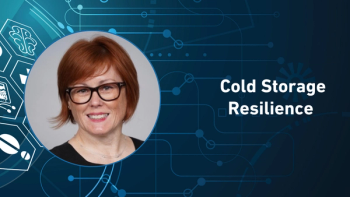
Jessica Ledesma explores how hospital pharmacies are adopting autonomous cold storage to protect high-value medications.
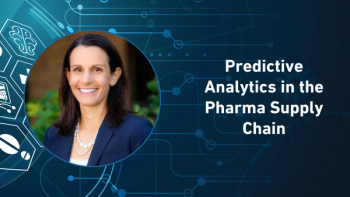
Emily Gallo, SVP of OptiFreight® Logistics at Cardinal Health, discusses how predictive analytics and actionable benchmarking bridge the data-to-decision gap in pharma logistics.

Brightseed debuts a clinically validated AI platform to integrate life sciences innovation from discovery to commercialization

The facility addresses growing demand for GLP-1 medications and other temperature-sensitive pharmaceuticals.
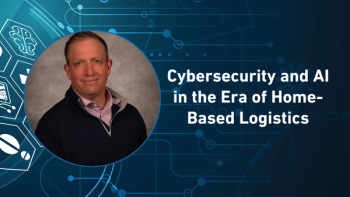
A conversation with Kenco’s Tim McClatchy explores how pharmaceutical logistics providers are strengthening cybersecurity across manufacturer-to-home delivery networks, deploying AI to optimize operations, and adapting to evolving regulatory pressures shaping the future of healthcare supply chains.

The online pharmacy is collaborating with a digital health provider to combine direct-to-patient GLP-1 dispensing with virtual clinical support, highlighting evolving supply chain and regulatory considerations in obesity care.
In today’s Pharma Pulse, HHS Secretary RFK Jr. centralizes department operations under CMS leadership, while a new telehealth model shows a 66% reduction in repeat ER visits for older adults.
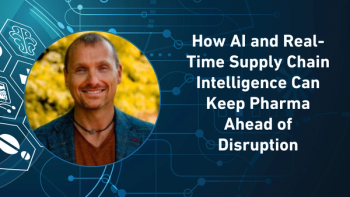
In a Q&A, Joe Hudicka, supply chain expert, argues that pharma companies embracing AI-driven, real-time supply chain intelligence will outpace those stuck in status-quo thinking.

What 2025 means for the life sciences sector in the New Year.
In today’s Pharma Pulse, the FTC secures a multi-billion-dollar settlement against the "rebate trap," while Congress provides long-term certainty for the digital health revolution.

By unifying data, workflows, and decision-making across partners, AI orchestration is enabling healthcare supply chains to move from reactive firefighting to proactive resilience—supporting faster responses, smarter tradeoffs, and more reliable patient care delivery.

Artificial intelligence is helping pharma teams uncover critical safety signals faster, lower costs, and shift pharmacovigilance from compliance to competitive advantage.

The France-based provider brings its cloud-native WMS and automation expertise to the US market.
In today’s Pharma Pulse, over 200 health groups denounce childhood vaccine schedule cuts, GSK acquires RAPT Therapeutics, and BD partners with ten23 health to scale large-volume injectors.

The partnership aims to speed commercialization, reduce risk, and enable large-volume biologics to shift from IV to subcutaneous delivery.
In today’s Pharma Pulse, the FDA and EMA synchronize on AI standards, a potential divide in pricing strategy occurs, and BoomRx launches a needle-free nanoemulsion for weight loss.

The platform is helping to improve absorption, consistency, and scalable care delivery.

Backed by Frazier Healthcare Partners and strengthened by the acquisition of eBlu Solutions, CareTria aims to accelerate patient access by combining provider technology, digital enrollment, and multi-modal fulfillment into a single end-to-end platform.
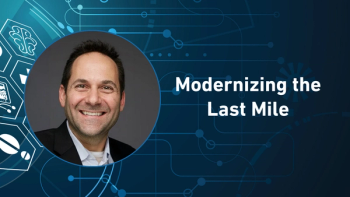
In the final part of his Pharma Commerce video interview, Arthur Axelrad, co-founder and CEO of Dispatch Science, explains how outdated, batch-based communication between shippers and carriers is undermining last-mile resilience—and why APIs, cloud platforms, and real-time connectivity are essential to improving transparency, safety, and speed in healthcare logistics.
In today’s Pharma Pulse, Novartis and Moderna anchor a domestic manufacturing surge, while AI-driven biomarker discovery and physician well-being reshape the future of clinical care.

Traditional market access practices are being transformed by an increasingly rocky landscape of rebate, discount, and direct-distribution practices, but artificial intelligence may clear the pathways to profitability.

As safety data grows in scale and complexity, AI-powered pharmacovigilance is emerging as a strategic imperative—helping drugmakers improve detection, reduce risk, and strengthen commercial performance.

AI-powered control towers and digital twins are emerging as essential tools to prevent costly supply chain failures and restore operational reliability.
Advertisement
Advertisement
Trending on Pharmaceutical Commerce
1
Pharma Pulse: Cencora to Acquire AON, Amazon and Google Back ePA Expansion
2
Inside the 340B Rebate Pilot Standoff: Court, Congress, Drugmakers
3
How Pharma Automation Cuts Human Touches and Error Risk
4
FAQ: How Is AI Being Deployed in Pharma Supply Chains?
5