
Despite steady growth since the Drug Quality and Security Act, outsourcing facilities remain constrained in scale and scope, offering targeted mitigation rather than systemic relief for persistent shortages.
A professor of food, pharma, and healthcare business at Saint Joseph’s University’s Erivan K. Haub School of Business.

Despite steady growth since the Drug Quality and Security Act, outsourcing facilities remain constrained in scale and scope, offering targeted mitigation rather than systemic relief for persistent shortages.

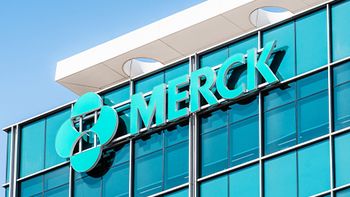
Merck’s decision to shutter its Riverside, PA antibiotic API facility underscores how decades of cost-driven optimization have eroded domestic manufacturing of essential medicines—exposing systemic vulnerabilities in US drug supply resilience that markets alone are unlikely to fix.

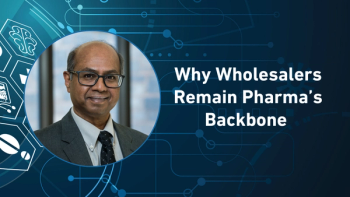
As drugmakers experiment with direct-to-patient sales, Thani Jambulingam, PhD, professor of food, pharma, and healthcare business at Saint Joseph’s University’s Erivan K. Haub School of Business, shares why wholesalers remain indispensable to pharmaceutical distribution—supporting cold chain management, regulatory compliance, billing, and large-scale logistics that manufacturers are not equipped to handle on their own.

Thani Jambulingam, PhD, professor of food, pharma, and healthcare business at Saint Joseph’s University’s Erivan K. Haub School of Business, describes why uncertainty around final tariff rules is forcing manufacturers into a wait-and-see position.

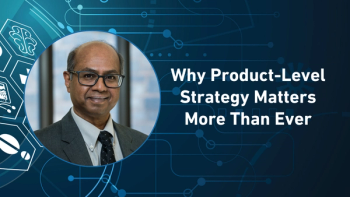
In a discussion on global trade disruption, Thani Jambulingam, PhD, professor of food, pharma, and healthcare business at Saint Joseph’s University’s Erivan K. Haub School of Business, explains why pharmaceutical manufacturers must move beyond broad assumptions about tariffs and instead assess trade risk at the individual product level.

Pharma’s push into direct-to-patient sales is reshaping the front end of drug distribution, but wholesalers like Cencora, McKesson, and Cardinal Health remain indispensable as the backbone of the industry’s regulated, specialty, and logistics infrastructure.

Ways to address limitations while also enhancing the decision-making process.

This link in the pharma supply chain is undergoing a major transformation propelled by technological advancements, regulatory changes, and evolving market dynamics, requiring industry leaders to adopt innovative strategies in order to remain competitive.

With great power comes great responsibility. In this case, tackling these obstacles is vital to making sure that the positives of GLP-1s are not outweighed by the downfalls of improper waste disposal.