



Legal & Regulatory
Latest News
Advertisement
Latest Videos





Podcasts


Advertisement
More News

New bipartisan legislation would give the FDA authority to modernize prescribing information, reducing waste while improving accuracy and patient care.

The pharmaceutical giant’s commitment includes a $1.2 billion investment in advanced facilities powered by AI and digital technology, strengthening biopharma manufacturing and clinical research across the United States.
The new Goochland County facility will serve as Lilly’s first fully integrated API and drug product site, focusing on antibody-drug conjugates, while creating thousands of jobs and strengthening domestic supply chains.

The South Korean CDMO has signed its second multi-billion-dollar contract in less than a year, even as shifting US trade policies and looming tariffs create challenges for global drugmakers.
Key points from our recent webinar on the President’s MFN order.
The new 180,000-square-foot facility in Foster City anchors the company’s long-term $32 billion investment in domestic manufacturing and R&D.
In the final part of his Pharma Commerce video interview, Diogo Rau, executive vice president and chief information and digital officer for Eli Lilly and Company, focuses on physician demand, global momentum, and how US legislation can help the industry finally move beyond paper.

Following a federal appeals court decision that struck down much of his tariff authority under the International Emergency Economic Powers Act, President Trump is asking the Supreme Court to fast-track review.

In the second part of his Pharma Commerce video interview, Diogo Rau, executive vice president and chief information and digital officer for Eli Lilly and Company, highlights that cutting down on the 90 billion sheets of paper used for medicine inserts each year isn’t just an environmental win—it’s also a critical step toward making drug information more accessible for patients with vision challenges, language barriers, or cognitive and physical disabilities.
The company is committing over half a billion dollars to build a state-of-the-art research hub in Thousand Oaks, CA, designed to accelerate next-generation therapeutics through advanced automation and collaboration.
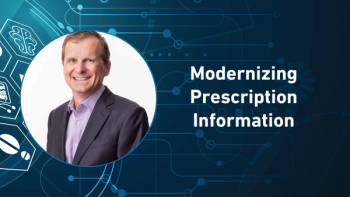
In the first part of his Pharma Commerce video interview, Diogo Rau, executive vice president and chief information and digital officer for Eli Lilly and Company, explains how the Prescription Information Modernization Act of 2025 aims to replace package inserts with digital-first documentation, providing patients with better access to understandable medication guidance in the process.
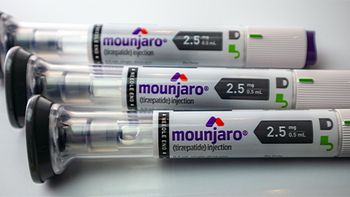
Lilly has temporarily halted UK shipments of Mounjaro until Sept. 1, when new list prices take effect.
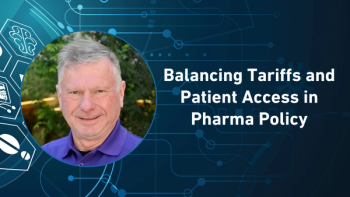
In the final part of his Pharma Commerce video interview, Dave Malenfant, a healthcare supply chain expert, emphasizes that patient access must remain the top priority, even amid steep tariffs, citing cases like orphan drugs and oncology treatments where government flexibility is essential.

With potential tariffs reaching 250% and new federal initiatives like SAPIR and most-favored nation pricing reshaping incentives, this explainer explores how major drugmakers are pouring billions into US facilities.
FDA approves COVID-19 vaccines from Moderna, Pfizer-BioNTech, and Novavax targeting the LP.8.1 sublineage of SARS-CoV-2, with eligibility limited to adults aged 65 years and older and those with underlying medical conditions that place them with a high risk for severe disease.
In the fourth part of his Pharma Commerce video interview, Dave Malenfant, a healthcare supply chain expert, cautions that stockpiling to offset tariffs could backfire for pharma companies, leading to expired inventory, higher waste, and costly trade-offs, unless renegotiation strategies are pursued.

As of today, Aug. 27, wholesale distributors must fully comply with the Drug Supply Chain Security Act’s enhanced drug distribution requirements, closing the FDA’s exemption period and advancing efforts to strengthen patient safety and supply chain integrity.

The new 700,000-square-foot Holly Springs site—part of Roche’s $50 billion US investment plan—will focus on metabolic and obesity treatments, create 400 jobs, and strengthen domestic biopharma manufacturing amid shifting tariff and drug pricing policies.

Addressing the most common concerns surrounding the legislation intended to establish interoperability within the pharma supply chain.

A federal judge tripled damages against the pharmacy benefits manager after finding it encouraged inflated Medicare drug claims and underpaid pharmacies.
Ron Lanton, partner, Lanton Law, explains that declining public trust and political support for vaccines could force pharmaceutical companies to rethink regulatory strategies and investment priorities in biologics and vaccine development.

The new framework, set to take effect Sept. 1, limits tariffs on pharmaceutical imports to 15% but follows months of shifting proposals, including threats of tariffs as high as 250%.
Ron Lanton, Partner, Lanton Law, warns that shifting federal policies and ongoing lawsuits could create compliance challenges and operational risks that pharmaceutical supply chain leaders must closely monitor.

Amid the topsy-turvy developments in global trade, one message appears certain for pharma manufacturers: the escalating need to stockpile inventory in the US.
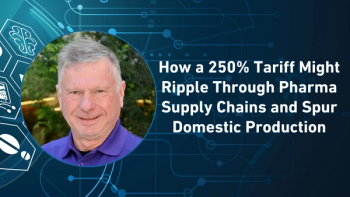
In the second part of his Pharma Commerce video interview, Dave Malenfant, a healthcare supply chain expert, outlines how the impact of a steep pharmaceutical import tariff varies across raw materials, components, and finished products, along with why such a policy could incentivize companies to shift production to the US.
Advertisement
Advertisement
Trending on Pharmaceutical Commerce
1
White House Extends MFN Pricing to Every State Medicaid Program
2
Pharma Pulse: Independent Pharmacies Sue Express Scripts, Novo Taps Anthropic, Pharma Joins Clean Heat
3
How Rebate Timing Distorts a Pharmacy's 340B Books
4
Pharma Pulse: Behind the Scenes of LogiPharma USA 2026
5