



Legal & Regulatory
Latest News
Advertisement
Latest Videos








Podcasts
Advertisement
More News

How the zero-prefix collision will disrupt reimbursement, patient access, brand protection and market intelligence — and what commercial leaders must do before 2033.
In today's Pharma Pulse, the FDA flags misleading promotional claims from ImmunityBio regarding its cancer therapy and MedImpact launches new solutions to address the skyrocketing employer costs of GLP-1 weight management therapies.

Corey Ford, principal at Nuvera, explains how pharma is shifting focus from HCPs to patients in support programs and commercialization.
In today’s Pharma Pulse, the FDA launched a unified monitoring system to enable real-time adverse event reporting, and direct-to-employer drug purchasing models are emerging as companies look to bypass traditional intermediaries.

The FDA launched AEMS, a unified platform that replaces fragmented legacy databases to enable real-time adverse event reporting.
In today’s Pharma Pulse, the FDA approved Wellcovorin as the first therapy for an ultra-rare neurological disorder, and disparities in OTC naloxone access persist despite declining retail prices.
In today's Pharma Pulse, Ipsen voluntarily withdraws tazemetostat due to safety signals, while the FDA approves deucravacitinib for active psoriatic arthritis.

The FDA is working with states to implement the Section 804 Importation Program, offering new regulatory enhancements for projecting cost savings on Canadian drug imports.

The FDA has transitioned to a "new era" of proactive enforcement, issuing warning letters to telehealth and pharmaceutical companies to eliminate misleading promotional claims and ensure a fair balance of risks and benefits regarding approved and compounded GLP-1 medications.
In today’s Pharma Pulse, the FDA grants priority review to a therapy for polycythemia vera, while Novo Nordisk receives expanded pediatric approval for its once-weekly growth hormone.
In today’s Pharma Pulse, the FDA grants a lightning-fast approval for Boehringer’s lung cancer therapy under its new priority program, while CMS Administrator Mehmet Oz launches a sweeping offensive against fraudulent billing.
The FDA granted accelerated approval to Boehringer Ingelheim’s Hernexeos for first-line HER2-mutant NSCLC following a 44-day review under the National Priority Voucher Program.

A guide to how the IRA is reshaping Medicare Part D, price negotiations, manufacturer liability, and pharmacy operations, along with what it means for access, adherence, and commercial strategy.

Rare disease drugs now drive innovation, investment, and portfolio strategy as policy incentives, scientific advances, and market success reshape biopharmaceutical growth.

In the final part of his Pharma Commerce video interview, John Stanford, Incubate’s executive director, argues that while Medicare price controls may reduce federal spending, they have yet to meaningfully improve patient access—contending that true reform must address insurance design, out-of-pocket costs, and the long-term impact on life sciences innovation and investment.
The FDA’s Plausible Mechanism Framework is designed to facilitate the approval of highly individualized therapies for patients with ultra-rare diseases.
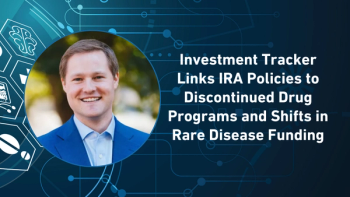
In the third part of his Pharma Commerce video interview, John Stanford, Incubate’s executive director, shares how Incubate’s analysis of SEC filings reports dozens of halted research programs following the Inflation Reduction Act’s passage, while recent legislative changes tied to orphan drugs appear to be influencing renewed rare disease investment.
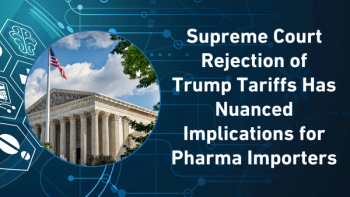
The Supreme Court invalidated IEEPA-based tariffs, but pharmaceutical tariffs imposed under Section 232 remain in effect.
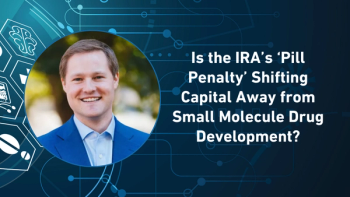
In the second part of his Pharma Commerce video interview, John Stanford, Incubate’s executive director, points out how uneven Medicare negotiation timelines between small molecules and biologics are influencing R&D and venture funding decisions, according to biotech investors advocating for legislative changes.

A policy change allowing approval of some new drugs based on one adequate and well-controlled study could accelerate development timelines, while raising questions about evidentiary standards and downstream supply chain planning.

A 2026 industry survey finds mounting pressure from PBMs, federal pricing reforms, and compliance scrutiny, as manufacturers increase automation and AI investment to manage expanding gross-to-net exposure.

While the Inflation Reduction Act introduces a $2,100 out-of-pocket cap and payment smoothing options for Medicare Part D beneficiaries, low awareness and persistent health literacy gaps threaten to limit their real-world impact—highlighting the need for coordinated action across providers, pharmacies, industry, and advocacy groups.

Companies not included in the initial round are now pursuing their own agreements amid concerns over levies, Medicare pilot programs, and future price-setting policies.

Rising recalls, tighter FDA enforcement, global supply chain dependencies, and rapid technology shifts are reshaping pharmaceutical quality and compliance—forcing manufacturers to rethink oversight, resilience, and continuous improvement across operations.

As policy pressure, tariffs, and supply chain risks push drugmakers to expand US-based production, this FAQ explains what pharma reshoring is, why it’s accelerating, which companies are investing, and how the shift could reshape reliability, regulation, and patient access.
Advertisement
Advertisement