



Legal & Regulatory
Latest News
Advertisement
Latest Videos





Advertisement
More News

In the second part of her Pharma Commerce video interview, LeAnn Boyd, Liviniti’s founder and CEO, discusses how this MFN executive order can affect players in the space that operate under a rebate-driven PBM model.

Though this specific agreement centers around aerospace and automobiles, the greater supply chain will wait and see how Trump’s import taxes impact pharmaceuticals, a sector that faces a potential 25% tax on imports.

In the first part of her Pharma Commerce video interview, LeAnn Boyd, Liviniti’s founder and CEO, outlines the most critical root causes of rising healthcare and drug costs that the MFN executive order doesn’t address.
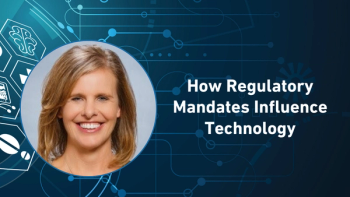
In the third part of her Pharma Commerce video interview, Kirsten Newquist, Identiv’s CEO, shares the ways in which regulations, including DSCSA, are impacting the adoption of smarter packaging technologies across the industry.
Ron Lanton, Partner, Lanton Law, weighs in on the potential international trade, pricing, and access implications of tying US drug costs to those in other developed countries under the Most Favored Nation executive order.

In order to succeed in today’s outcomes-driven healthcare landscape, pharmaceutical companies must move from traditional sales models to strategic, measurable partnerships with integrated delivery networks (IDNs).
Alice Valder Curran outlines the steps manufacturers should take to better prepare for upcoming executive actions on drug pricing and market access.
The designation allows pharmacists to substitute it for Humira without prescriber approval (per state law), which expands patient access in the process.

As this medical approach continues to become more widely adopted, the industry must adapt to help provide precise, compliant, temperature-controlled delivery of highly individualized treatments.
In a Q&A with Pharma Commerce, Kurt Lunkwitz, ProRx Pharma’s COO, uncovers the stringent requirements that 503B outsourcing facilities must abide by under the Drug Quality and Security Act, while also shedding light on the FDA’s impact when it comes to improving the safety, quality, and trust in compounded drugs.
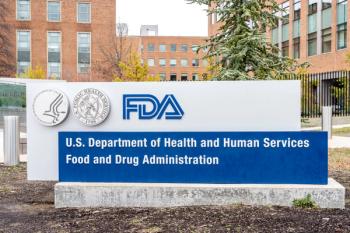
In an article recently published by The New England Journal of Medicine, FDA higher-ups Vinay Prasad, MD, MPH; and Martin A. Makary, MD, MPH, wrote that any new COVID-19 vaccine must now be evaluated in placebo-controlled studies.

In an exclusive sit-down with Pharma Commerce, Anne Cassity, senior vice president of government affairs for the National Community Pharmacists Association (NCPA), discusses pending legislation that could affect the impact of PBM pricing.

Trump anticipates that the executive order will help lower drug prices by 30% to 80%.

In the final part of his Pharma Commerce video interview, Michael Rowe, Two Labs’ senior director of DSCSA/serialization compliance services, discusses the obstacles in documenting and proving DSCSA compliance.

The financial decision is due to customer demand stemming from the reshoring of drug supply services.
The President plans to sign an executive order on Monday morning to enforce the trade clause.
In the second part of his Pharma Commerce video interview, Michael Rowe, Two Labs’ senior director of DSCSA/serialization compliance services, comments on stakeholders’ overall preparedness for complying with the latest enforcement deadlines.
In the first part of his Pharma Commerce video interview, Michael Rowe, Two Labs’ senior director of DSCSA/serialization compliance services, shares his overall thoughts on this year’s DMC.
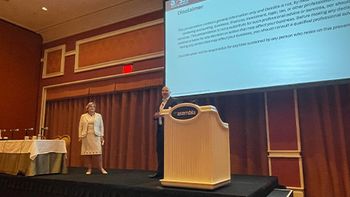
A seminar shares key observations and learnings from the first round of direct price negotiations.

IQVIA’s Doug Long offers a lay of the land, including trends and developing issues that are shaping the current market.
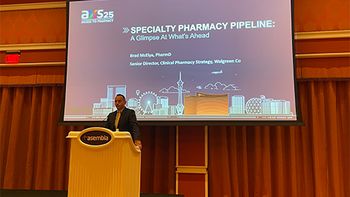
A session dives into the trends surrounding specialty drugs and therapies, along with providing an overview of the drug development landscape.

In the final part of his video interview with Pharma Commerce Editor Nicholas Saraceno, Paul Levesque, CEO of Theratechnologies, describes the uneasiness behind regulatory complications.

Claire Riches highlights inefficiencies in the current drug approval process, while outlining the role of payers and insurers in shifting toward data-driven approval framework.
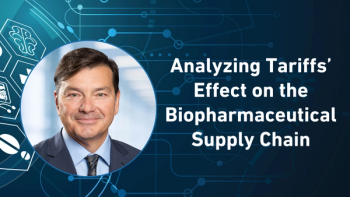
In the first part of his video interview with Pharma Commerce Editor Nicholas Saraceno, Paul Levesque, CEO of Theratechnologies, outlines how US tariffs on Canadian goods have impacted the company’s operations, particularly in terms of cost and supply chain management in the US market.
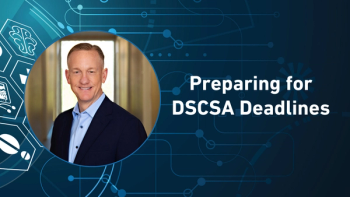
In the third part of his video interview with Pharma Commerce Editor Nicholas Saraceno, Jody Hatcher, CEO of Morris & Dickson and chair of HDA’s board of directors, comments on the steps needed to achieve Drug Supply Chain Security Act compliance.
Advertisement
Advertisement
Trending on Pharmaceutical Commerce
1
CVS Health’s Breakup: A Turning Point for Pharma Supply Chains or a Redistribution of Market Power?
2
The End of the Traditional Launch: How JCA, HTA Evolution and Pricing Pressures Are Driving Continuous Evidence Generation
3
When Drug Pricing Collides With Politics
4
Idle US Capacity Could Anchor Generic Drug Reshoring, APIIC Says
5