


Legal & Regulatory
Latest News

Advertisement
Latest Videos




Podcasts
Advertisement
More News

The pharmaceutical giant’s new 700,000-square-foot hub aims to onshore production of key medicines and strengthen the US drug supply chain.
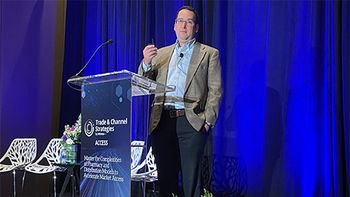
As the FDA ends its phased exemption period for most trading partners, Two Labs’ Michael Rowe warns that DSCSA compliance is entering a far more complex era—one shaped by real-time traceability, digital record requirements, and a transition to a 12-digit NDC.

In the second part of his Pharma Commerce video interview, Ed Schoonveld, value and access advisor for Schoonveld Advisory and author of The Price of Global Health, notes that while non-transferability could hinder smaller biotechs partnering late with pharma, most alliances are already in place before vouchers become relevant.

The new 350,000 square-foot Mesa hub is expected to expand the compounding pharmacy’s national fulfillment and advanced compounding capabilities.
In the first part of his Pharma Commerce video interview, Colin Banas, MD, DrFirst’s chief medical officer, explains that with updated certification requirements for drug pricing transparency and electronic prior authorization, providers will see momentum build toward more efficient, patient-focused medication workflows.
In the final part of his Pharma Commerce video interview, Dan Walles, VP & GM, traceability and compliance solutions, TraceLink, notes that while DSCSA was designed for compliance, its first major business value is enabling targeted recalls.

The agreement includes exemptions for UK-produced drugs and medical devices from Section 232 tariffs, but mandates a significant change to the UK's NICE value appraisal framework.
In the second part of his Pharma Commerce video interview, Dan Walles, VP & GM, traceability and compliance solutions, TraceLink, describes how initial EPCIS setup issues quickly give way to operational challenges—missing data, mismatched shipments, and suspect product alerts. Dispensers that succeed are the ones developing repeatable, cross-partner exception workflows.

The Trump administration has announced new negotiated Medicare prices for a second wave of blockbuster treatments, yielding an estimated $12 billion in savings for 2027, when compared to Medicare’s 2024 net spending.
In the first part of his Pharma Commerce video interview, Dan Walles, VP & GM, traceability and compliance solutions, TraceLink, notes that full readiness hinges on integrating serialized data exchange into everyday operations, not simply meeting minimum compliance requirements.
In the third part of his Pharma Commerce video interview, Brad Stewart, BDO’s national life sciences co-leader, explains that while the FDA has not defined the specific level of manufacturing commitment needed to improve US supply chain resilience, applicants for the voucher should focus on linking unique or rare disease therapies—particularly in areas like oncology—with domestic onshoring efforts to move their applications to the top of the pile for selection.
In the second part of his Pharma Commerce video interview, Brad Stewart, BDO’s national life sciences co leader, reveals how National Priority Vouchers—and geopolitical pressure—are reshaping decisions around supply chain investment.
In the first part of his Pharma Commerce video interview, Brad Stewart, BDO’s national life sciences co leader, explains why large-volume, high-need drugs—especially those heavily sourced overseas—may be the strongest candidates, and how the pandemic’s supply chain lessons are influencing the program’s future direction.

A US-China Economic and Security Review Commission report highlights China’s tightening grip on APIs, biomanufacturing, and R&D services, raising alarms about supply chain vulnerabilities, data transparency gaps, and the urgent need for US policy action.
This episode of Pharma Pulse discusses how the FDA’s new plausible mechanism pathway, WeightWatchers’ plans to offer oral Wegovy, and emerging evidence on berberine are shaping the future of obesity and metabolic health care.
In the first part of her Pharma Commerce video interview, Christy Christian, senior industry principal with Kinaxis, describes how manufacturers face mounting challenges managing long, complex supply chains, including limited inventory buffers, tight cash flow constraints, and constant policy changes.
This episode of Pharma Pulse discusses FDA’s growing National Priority Voucher initiative, fresh data on oral semaglutide’s cardiometabolic impact, and Mark Cuban’s latest drug addition that signals key shifts in innovation, access, and affordability across the pharmaceutical landscape.

Nine drugs from leading manufacturers will participate in HRSA’s new 340B rebate model pilot program, set to begin in 2026, which aims to evaluate a rebate-based framework for future drug pricing models amid ongoing industry litigation.
This episode of Pharma Pulse discusses Novartis’ $12 billion acquisition of Avidity Biosciences to expand its RNA therapeutics portfolio, and President Trump’s proposed 10% tariff increase on Canadian imports that could disrupt pharma supply chains.

The move adds new tension to US-Canada trade relations under the USMCA and raises questions about pending pharmaceutical import policies.
This episode of Pharma Pulse discusses new data showing a post-Dobbs surge in telehealth medication abortion requests, the FDA’s expedited review of Tzield under its new National Priority Voucher Program, and the launch of a dedicated biopharma air logistics network by Frontier Scientific Solutions and ATSG.
Kala Shankle, JD, HDA’s vice president of regulatory affairs, shares that as DSCSA traceability requirements take full effect, distributors and trading partners are preparing for long-term gains in supply chain security, recall efficiency, and counterfeit prevention.
This episode of Pharma Pulse covers Amazon and WeightWatchers’ partnership to deliver FDA-approved weight-loss medications, Merck’s new biomanufacturing center of excellence in Virginia, and the FDA’s first-ever approval of a TSLP-targeting biologic, Tezspire, for chronic rhinosinusitis with nasal polyps.

The company’s new 400,000-square-foot facility in Elkton will boost small molecule manufacturing, create hundreds of jobs, and strengthen US innovation and supply chain resilience.
Kala Shankle, JD, HDA’s vice president of regulatory affairs, describes how FDA officials are signaling a balanced enforcement approach when it comes to DSCSA enforcement, expecting compliance efforts and documentation, but also recognizing that perfection will take time.
Advertisement
Advertisement