Brok Vandersteen explains how life sciences companies can strategically adopt DTP models for better patient access and commercial success.
Brok Vandersteen explains how life sciences companies can strategically adopt DTP models for better patient access and commercial success.
Kristine McGaughey, vice president of Implementation at ConnectiveRx, shares her insights on timing, strategy, and planning to ensure a smooth therapy launch.
In today's Pharma Pulse, the FDA grants a 54-day fast-track approval for high-dose Wegovy under a new priority program while a new report explores the economic pressures and chronic shortages destabilizing the U.S. generics market
Kimberly Howard, senior manager of Field Reimbursement Services at CoverMyMeds, explains how aligning hubs and reimbursement teams improves patient support.

Chronic shortages expose how low prices, fragile supply chains, and misaligned incentives are undermining the U.S. generic drug market.
Tina Valbh, managing partner at PharmaKonnect and co-founder of Tina’s Warriors, discusses the biggest post therapy launch patient support gaps.
In today's Pharma Pulse, the FDA approves Icotyde as the first targeted oral peptide therapy for moderate-to-severe plaque psoriasis, while Cold Chain Technologies prepares to debut its MedAssure orchestration platform at LogiPharma 2026
Jordan Armstrong, VP of Business Development at AssistRX, explains how companies can tailor direct-to-patient strategies into their commercialization plans.
Brok Vandersteen, VP of Business Development, AssistRX, explains how policy pressures push life sciences companies toward direct-to-patient model adoption.

Cold Chain Technologies will debut its MedAssure orchestration platform at LogiPharma 2026 providing a proactive solution for a cold chain market burdened by frequent temperature excursions.
Jay Bregman, founder and CEO of Andel, discusses how employers are managing rising costs for prescription benefits and how pharma companies are shifting their distribution patterns.
In today's Pharma Pulse, ongoing conflict in the Middle East disrupts critical pharmaceutical cold chains, while AstraZeneca and partners launch a new program to decarbonize industrial heat across global supply chains.

Ongoing conflict in the Middle East has pushed pharmaceutical companies into cold chain rerouting scrambles.

AstraZeneca, ERM, and Secaro launched their Clean Heat Program to decarbonize supply chains.
In today’s Pharma Pulse, the FDA expands a key biologic approval for pediatric patients, and new research highlights the success of pharmacist-led testing in rural communities.
Kroger will offer the Zepbound KwikPen at its participating retail pharmacies.

Evaluate’s 2026 analysis finds that rare disease therapies are set for continued growth—potentially exceeding $400 billion in sales by 2032.
In today’s Pharma Pulse, Eli Lilly issues a safety warning and SteinCares enters a licensing agreement with Shilpa Biologicals to expand biosimilar access in Latin America.
Eli Lilly is investing $3 billion over the next decade to build a localized manufacturing and supply system in China.

The AI-native operating system targets complex workflows, automating claims and communications to reclaim logistics teams' time.
In today’s Pharma Pulse, the FDA launched a unified monitoring system to enable real-time adverse event reporting, and direct-to-employer drug purchasing models are emerging as companies look to bypass traditional intermediaries.
The FDA launched AEMS, a unified platform that replaces fragmented legacy databases to enable real-time adverse event reporting.

In the first part of his Pharmaceutical Commerce interview, Jay Bregman, founder and CEO of Andel, discusses how employers are exploring direct-to-employer drug purchasing models that bypass traditional pathways.

In today’s Pharma Pulse, the FDA approved Wellcovorin as the first therapy for an ultra-rare neurological disorder, and disparities in OTC naloxone access persist despite declining retail prices.
Decision intelligence helps pharma unify small molecule and cell and gene therapy supply chains through AI-driven, automated decision-making.


Even as manufacturers and their logistics partners grapple with unstable supply chains, the technology continues to evolve.
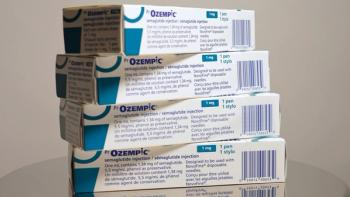
Hims & Hers will offer branded semaglutide instead of compounded GLP-1 drugs.