



Patient Assistance Programs
Latest News
Advertisement
Latest Videos






Podcasts
Advertisement
More News

Anthony Bianciella explains how rare disease brands lose patients because journey maps prioritize prescribing intent over the complex, unfamiliar logistics of post-diagnosis access.
Fragmented handoffs and poor communication can leave patients navigating delays and confusion in prior authorization workflows.
Tina Valbh, managing partner at PharmaKonnect and co-founder of Tina’s Warriors, discusses the biggest post therapy launch patient support gaps.



Policy shifts bring meaningful improvements for some—but looming coverage losses and rising premiums threaten to erase those gains.
In this Q&A, Alan Balch, PhD, CEO of the Patient Advocate Foundation and the National Patient Advocate Foundation, discusses rising insurance costs, widening affordability gaps, and growing pressure on the healthcare safety net.

This guide breaks down how AFPs function and why they are fundamentally changing the path between patients and their therapies.
In the fourth part of his Pharma Commerce video interview, Alan Balch, PhD, CEO of the Patient Advocate Foundation and the National Patient Advocate Foundation, outlines the financial pressures that make sustained safety net protections a healthcare imperative.
In the third part of his Pharma Commerce video interview, Alan Balch, PhD, CEO of the Patient Advocate Foundation and the National Patient Advocate Foundation, points out that from employer-paid premiums to Medicare and Medicaid subsidies, the US system relies on layered financial support to keep coverage within reach—underscoring how few individuals can realistically pay the full cost of care or insurance on their own.
In the second part of his Pharma Commerce video interview, Alan Balch, PhD, CEO of the Patient Advocate Foundation and the National Patient Advocate Foundation, describes how rising healthcare and living costs are expanding financial hardship beyond traditional eligibility thresholds, while safety-net resources shrink and demand accelerates.

In the first part of his Pharma Commerce video interview, Alan Balch, PhD, CEO of the Patient Advocate Foundation and the National Patient Advocate Foundation, explains how mounting financial pressure is forcing patients to ration care, undermining treatment adherence and accelerating downstream clinical and economic risk.
Rising prescription costs and premiums are forcing more than half of patients to take drastic measures to cover OOP costs.

The addition of Starjemza reinforces Mark Cuban Cost Plus Drugs' effort to expand access to affordable specialty medicines through its transparent cost-plus pricing model, while also enhancing patient support via a new partnership with Medchat.ai.

The partnership will provide DTC options at locations nationwide.

Amid intensified competition—and evolving IRA and PBM dynamics—leaders in the access space must now adopt a strategist mindset.

The merger integrates EVERSANA’s commercialization services with Waltz Health’s AI-powered payer tools to address patient affordability, streamline drug access, and reduce costs for high-expense therapies such as GLP-1s.

Why it’s time to act on passing key bills to boost access for millions.

A JAMA Network Open study reveals that patients with private insurance can face monthly costs nearing $600 after a cancer diagnosis, highlighting the disparities based on cancer stage and calling for stronger financial support policies.

The advantages and challenges associated with structuring a patient assistance program as a non-profit foundation.
Doubling down on patient access and support fundamentals will win out over Washington’s next move.
Many uninsured and underinsured individuals remain unaware of vital financial assistance programs for prescription costs, highlighting a critical need for increased awareness and resources.

As the rising cost of prescription medications in the United States becomes an increasing barrier for millions of people, how can we effectively address and improve patient adherence?

An NEJM study explores how this loss—following Medicaid disenrollment—affects beneficiaries.
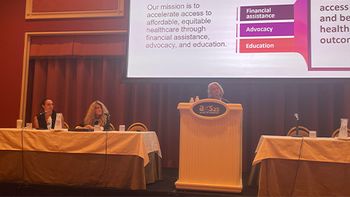
Subject matter experts share the challenges that patients face in terms of medication affordability, along with the role that specialty pharmacies can play in helping to tackle these issues.
Advertisement
Advertisement
Trending on Pharmaceutical Commerce
1
Inside the 340B Rebate Pilot Standoff: Court, Congress, Drugmakers
2
How Pharma Automation Cuts Human Touches and Error Risk
3
Pharma Pulse: Cencora to Acquire AON, Amazon and Google Back ePA Expansion
4
Supply Chain Signal: PhRMA’s GLOBE Lawsuit and the New Economics of Pharma Supply Chains
5