

Commercialization
Latest News
Advertisement
Latest Videos






Shorts
0:57
The Complex Reality of Modern Medicine Pricing
10 months ago
by
Nicholas Saraceno, Senior Editor(+1 more)
Podcasts

Advertisement
More News

The EU's pharma reform makes market protection more conditional. Here is how US drugmakers, especially startups, can adapt and use IP to complement it.

Pharmacy directors are using the growing number of publicly visible drug prices as leverage, new research shows. Manufacturers need to be ready, before those prices become a negotiation tool.
As loss-of-exclusivity events accelerate, generics and biosimilars are diverging into distinct business models, demanding different regulatory, IP, and market access strategies from manufacturers.
Virtual care's pre- and postvisit windows offer pharma marketers a more targeted, attentive audience than physical waiting rooms, new research shows, and most brands aren't capitalizing on it yet.

EVERSANA's Vikram Anand explains how disconnected PV systems and manual safety processes can create commercial delays after FDA approval.

Across pricing, supply chain, and patient support, the playbooks of pharma commercialization are being rewritten at once for a new era.

Gifthealth CEO Chip Parkinson on the factors accelerating direct-to-patient model adoption, and what's next for the channel.
Four pharma commerce experts revisit their 2026 predictions on dealmaking, patient access and commercialization at the year's midpoint.
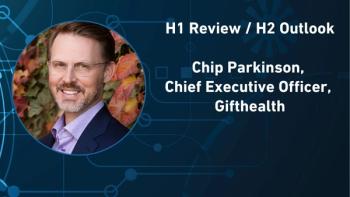
Gifthealth's Chip Parkinson says direct-to-patient adoption has accelerated since January, driven by structural, not cyclical, market forces.

How commercial trade groups are shifting from distribution execution to strategic partners shaping market access, launch readiness and commercial performance.

Novo Nordisk’s complaint argues that Lilly's campaigns leave out information about the most effective injectable doses of Wegovy (semaglutide) and Ozempic (semaglutide), a dispute that could reshape how both companies compete for share in the GLP-1 market.
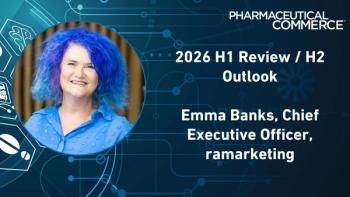
Ramarketing CEO Emma Banks revisits her "year of two halves" outlook, discussing whether 2026 has followed the same pattern and what she expects for H2.

Doceree launched Semmelweis, an AI model built for pharma commercialization, as drugmakers ramp up AI investment in marketing and sales operations.

The models pharma inherited were built for conditions that have changed. A look across the August issue at an industry redesigning itself.
Trutakna's FDA approval for IgAN highlights how patient support programs like TRU SUPPORT coordinate access and adoption in specialty drug launches.

As PBM pressure mounts and formulary bidding wars squeeze manufacturers, a direct access marketplace model offers drug makers a path to compete on efficacy, price and real-world outcomes.

Cash pay is re-emerging as biopharma brands rethink insurance barriers, patient access, and affordability in a fragmented payer market.

As cell and gene therapies move beyond ultra-rare disease indications into broader patient populations, the commercialization infrastructure built around them is due for a fundamental redesign.

Avalere Health analysts map the converging pressures reshaping the drug pricing and distribution landscape ahead of November.

Lilly’s $7B deal for Kelonia aims to turn complex cell therapy into a simple injection, bypassing the slow, costly lab work of current cancer treatments.
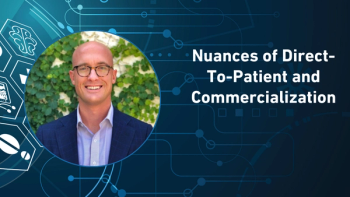
Brok Vandersteen explains how life sciences companies can strategically adopt DTP models for better patient access and commercial success.
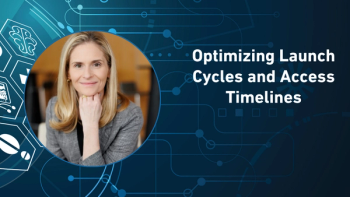
Kristine McGaughey, vice president of Implementation at ConnectiveRx, shares her insights on timing, strategy, and planning to ensure a smooth therapy launch.
In the first part of his Pharmaceutical Commerce interview, Jay Bregman, founder and CEO of Andel, discusses how employers are exploring direct-to-employer drug purchasing models that bypass traditional pathways.

Advertisement
Advertisement
Trending on Pharmaceutical Commerce
1
FAQ: How Is AI Being Deployed in Pharma Supply Chains?
2
FDA Finalizes Guidance on Prescription Drug Companion Apps
3
BioPharma Supply Chains of the Future: What to Know About Localization
4
Where Cold Chain Expertise Gaps Put Advanced Therapies at Risk
5