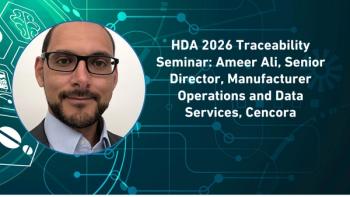
In the final installment of his interview with Pharmaceutical Commerce, Cencora's Ameer Ali outlines how supply chain stakeholders should prepare systems, processes and trading partners for the shift to NDC-12.
Cheryl Allen, BS Pharm, MBA, founding partner, Curatio Scientia Advisors, highlights how two decades of commercial trade and distribution have transformed the channel from a primarily supply-chain-focused function into a more integrated discipline.
In a conversation with Pharmaceutical Commerce, Curatio’s Cheryl Allen reflected on two decades of evolution in commercial trade and distribution, noting how traditionally separate functions, supply chain operations and patient support services, are increasingly merging. She highlighted a growing shift toward integrated downstream models, including the rise of medically integrated dispensing, where physician groups establish in-house pharmacy capabilities to streamline access and enhance continuity of care. What began in oncology, Allen noted, is now expanding into specialties such as neurology, rheumatology, and dermatology, driven by practice consolidation and new value levers tied to management services organizations and group purchasing dynamics.
As the industry gathers at the conference, Allen said she is particularly focused on how organizations can safeguard the integrity of the US drug supply chain. She underscored persistent training gaps and the need for manufacturers to build stronger internal development pathways, ensuring future leaders are equipped to manage increasingly complex distribution environments. More foundational education, she added, could open doors for talent interested in entering the trade and channel space.
Looking toward 2026, Allen outlined Curatio’s priorities around navigating a shifting regulatory landscape and deepening its analysis of both pipeline and on-market products. She emphasized the role of emerging technologies and business-support tools in helping trade teams evaluate analogs, anticipate distribution needs, and design models resilient to regulatory change. Curatio, she said, is focused on supporting manufacturers as they plan for the next three to five years of product movement and patient access.
A transcript of Allen’s full conversation with PC appears below.
PC: Trade & Channel Strategies is celebrating 20 years. How has the channel evolved during that time when it comes to commercial trade and distribution?
Allen: I'm just super excited to be here, you know, 20 years of trade and channel, and I was just reflecting on that coming over this morning and thinking about all of the changes that have happened in the past 20 years, when we think of commercial, trade and distribution and the opportunity to meet here and to share our ideas and opportunities. You know, one of the things that we got involved in in this past year is looking across organizations from almost like a benchmarking perspective, to think about not only where the organization is today, pharmaceutical manufacturer from commercial trade and distribution, but where will the organization be in three years, in five years, in 10 years, and how do we appropriately set up the structure for that? What are the technologies that need to support that? And one of the very important, important things is training for that. And that really, going through that project with a manufacturer client was so eye opening for me on that third aspect, the training, how things have changed. I mean, commercial, trade and distribution has always been very complex, working to make sure that, from a supply chain perspective, product is where it needs to be for patient access well now the evolution of the channel is such that commercial trade and distribution teams also are thinking about patient access provider support services and almost that entire like support system for the products.