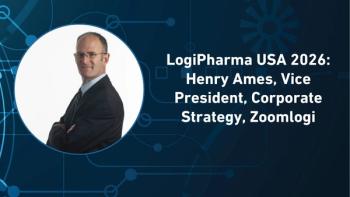
Zoomlogi’s Henry Ames says exception handling still hinges on experienced staff, and AI agents could gather and document details for their judgment calls.
BMS will deploy enterprise AI across functions to streamline workflows, structure field insights, and improve HCP engagement and execution.
Bristol Myers Squibb (BMS) has entered a strategic agreement with Anthropic to deploy Claude Enterprise across its global operations, signaling a broader shift in how pharmaceutical companies are integrating generative artificial intelligence into commercialization, medical affairs, and operational decision-making.
The agreement positions Claude as a shared “intelligence platform” spanning research, clinical development, manufacturing, commercial, and corporate functions. According to the company, more than 30,000 employees will gain access to the platform as part of the rollout.1
"Most enterprise AI stops at the chatbot,” said Greg Meyers, EVP and chief digital and technology officer at BMS, in a release.1 “The real prize is the untapped value still trapped behind decades of data silos, and this collaboration is how we reach it. Anthropic’s Claude gives us the agentic capabilities, pace of innovation, and security necessary to connect our systems and put that collective knowledge in the hands of every BMS employee to accelerate innovation for patients,” he added.1
BMS outlined multiple near-term priorities for deploying Claude Enterprise across its operations, focusing on engineering speed and embedding AI into core scientific and business workflows.¹
In research, this includes applying AI reasoning across proprietary scientific and clinical data to “synthesize, interrogate, and extract predictive insights.”¹ In drug development, it aims to bring “intelligent automation” to trial documentation and regulatory submissions.¹ In manufacturing and quality, the focus is on accelerating investigations, compliance documentation, and batch release decisions.¹ In commercial and medical affairs, the system is intended to convert “field insights into structured intelligence” to support more timely engagement with healthcare professionals.¹
The partnership reflects how pharmaceutical manufacturers are increasingly moving beyond limited AI pilots toward enterprise-scale deployment. While AI discussions in life sciences initially centered on drug discovery and clinical development, companies are now evaluating how generative AI can support commercialization workflows, accelerate medical content generation, improve knowledge management, and streamline coordination across business units.
The news also highlights how enterprise AI is increasingly being positioned as infrastructure rather than a point solution. Within commercial functions, industry analysts have pointed to growing use of generative AI in areas such as customer engagement workflows and decision support as companies respond to rising complexity in
The BMS agreement reflects a broader shift in how large pharmaceutical manufacturers are approaching enterprise AI, moving from isolated use cases to more coordinated strategies that span the commercial, medical, and operational sides of the business. Rather than being treated simply as productivity tools, these platforms are increasingly being positioned as infrastructure that can help connect information across functions and reduce the friction of working in silos.
The scale of deployment, extending to tens of thousands of employees, also signals a push toward standardization after years of fragmented experimentation across business units. For commercialization teams in particular, this raises a practical question: whether a shared AI backbone can improve consistency in how insights are generated, shared, and acted on across medical affairs, commercial operations, and supporting functions.
1. Bristol Myers Squibb. Bristol Myers Squibb Announces Strategic Agreement with Anthropic to Position Claude Enterprise as the Shared Intelligence Platform Across Its Global Operations. Published May 20, 2026. Accessed May 21, 2026.
2. McKinsey & Company. Early adoption of generative AI in commercial life sciences. McKinsey & Company website. Published 2024. Accessed May 21, 2026.