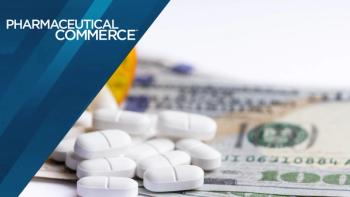
Epic's Prescription Marketplace, due summer 2027, will show pharmacy cash prices next to insured costs before a prescription is sent.

Senior Content Associate
Pharmaceutical Commerce
Epic's Prescription Marketplace, due summer 2027, will show pharmacy cash prices next to insured costs before a prescription is sent.
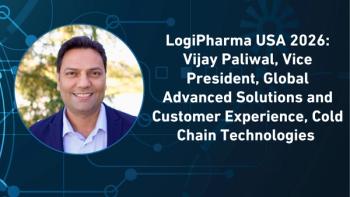
At LogiPharma USA 2026, Cold Chain Technologies' Vijay Paliwal explains how predictive monitoring and right-sized packaging cut excursion risk and waste.
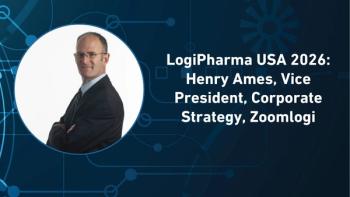
Zoomlogi’s Henry Ames says exception handling still hinges on experienced staff, and AI agents could gather and document details for their judgment calls.
At LogiPharma USA 2026, BMS’s Kevin Cook explains why CMO partnerships must move beyond transactions toward shared goals and KPIs.

In this week's Pharma Pulse, DHL adds six dedicated cold chain air corridors linking Europe and North America to Asia, Walmart rolls out a $0 prescription tier and rare disease Center of Excellence for its US workforce and FDA launches its Rare Disease Framework Initiative.
GEODIS' David Frouin explains why quick packaging qualification, backups on every lane and actionable IoT data underpin cold chain resilience.

Cencora's Matt Sample explains how AI compares forecasts with ordering patterns to flag pharma demand shifts early, with 10% forecasting gains.
At LogiPharma USA 2026, Swisslog's Garrett Freeman explains why validation, change management and stakeholder alignment now drive automation projects.
Zoomlogi's Henry Ames explains how AI agents are resolving supply chain exceptions, from unlinked IoT trackers to after-hours escalation calls.
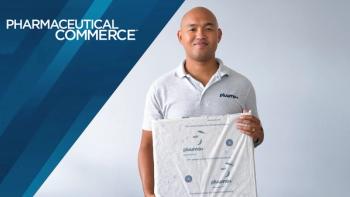
Aeropowder will begin U.S. production of its recycled-feather PluumoPlus insulation in Q1 2027 through a manufacturing deal with ColdCorr.

As organized groups add impersonation and email fraud to hijackings and trailer thefts, every handoff between shipping partners has become a point of exposure.
Octapharma USA's Kerem Tokel explains how product value and supply risk should shape freight security, and why complacency remains a persistent gap.
At LogiPharma USA 2026, Cold Chain Technologies' Vijay Paliwal explains how manufacturers should choose between reusable, single-use and active packaging.
At LogiPharma USA 2026, Cold Chain Technologies' TJ Rizzo explains how gaps in end-to-end cold chain expertise create risk for advanced therapies.
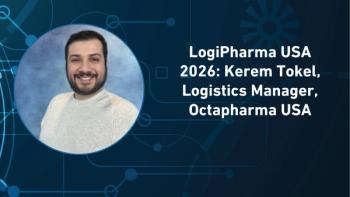
Octapharma USA's Kerem Tokel explains how tariffs and DSCSA are affecting how stolen pharma loads are resold, and why partner SOPs matter.

At LogiPharma USA 2026, Mark Talens explains where pharma gains the most from shared distribution visibility.
In this week's Pharma Pulse, PhRMA sues to block CMS's GLOBE pricing model, WFS opens a temperature-controlled cargo terminal in Lyon and Bayer commits $2.2 billion to a new Ohio manufacturing site.

Freehand CEO Nitin Jayakrishnan explains why pharma manufacturers are trading long-term plans for operating models built to sense and pivot.

PhRMA's lawsuit argues CMS overstepped its demonstration authority by tying Medicare Part B rebates to international prices.
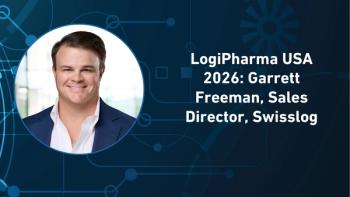
At LogiPharma USA 2026, Swisslog's Garrett Freeman explains how onshoring, geopolitical risk and a shifting product mix are driving supply chain automation.
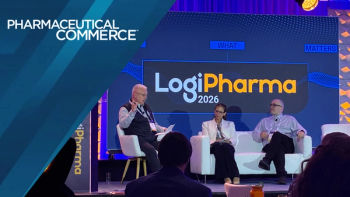
At LogiPharma USA 2026, quality leaders explained why connected data, risk-based prioritization, and human accountability must come before AI in supply chain compliance.
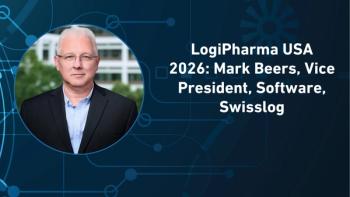
Swisslog's Mark Beers discusses how software helps pharma supply chains adapt to shifting portfolios, strengthen inventory verification and build trust.
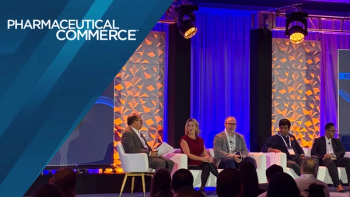
At LogiPharma USA 2026, leaders from J&J, Sun Pharma, Accord Healthcare, and Freehand discussed visibility, redundancy tradeoffs, and AI's role in resilient pharma supply chains.
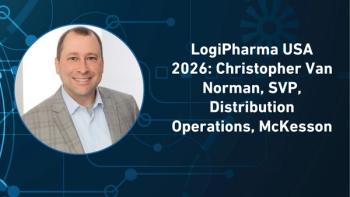
McKesson's Chris Van Norman previews his LogiPharma USA keynote on demand signal sharing, AI, and precision distribution for targeted therapies.

LogiPharma's Charleen Ring and McKesson's Chris Van Norman preview the 2026 agenda, sessions to prioritize and a day two fireside chat.

Cardinal Health and McKesson moved to extend CVS Health distribution deals through June 2032, retaining their largest customer pending final contracts.

Inside the October 2026 issue: why splitting MMR takes years, why payers cite a price that does not bind them, and what pricing rules broke.

In this Q&A, Doceree CEO Harshit Jain, MD, explains why AI should inform prescribing decisions, not drive them, and how sales reps own relationships while AI extends reach.
In this week's Pharma Pulse, the EU Council adopts the "pharma package," Commerce details 0% tariffs for certain drugs and Sharp expands autoinjector assembly capacity.

Waltz Health and Fresenius Kabi will offer three biosimilars through a direct-to-payer model that bypasses traditional wholesaler and PBM rebate channels.

August 3rd 2026

May 13th 2026
October 9th 2026


