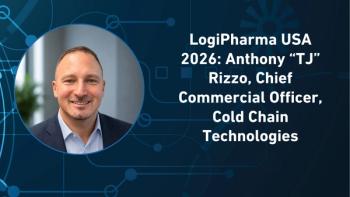
At LogiPharma USA 2026, Cold Chain Technologies' TJ Rizzo explains how gaps in end-to-end cold chain expertise create risk for advanced therapies.
Patient support looks very different today than it did even a decade ago.
Manufacturers have expanded investments in patient services, digital engagement, specialty pharmacy partnerships, educational resources, reimbursement support, and personalized programs designed to help patients navigate increasingly complex therapies. Those investments reflect the changing realities of specialty care, where treatment often extends well beyond writing a prescription.
Today's patient support model is, in many ways, a response to the evolution of specialty medicine itself.
Specialty therapies now account for more than half of U.S. drug spending, with many new specialty therapies expected to enter the market over the next several years. As innovation has accelerated, patient support has adapted alongside it.
That evolution has been both necessary and valuable. At the same time, it may be changing the questions organizations need to ask.
For many years, patient support discussions centered on whether the right capabilities were in place to help patients overcome barriers to start and stay on therapy. Today, many of those capabilities are well established.
Increasingly, the conversation appears to be shifting from building support to connecting support.
Complexity Is Changing the Operating Model
As treatments become more individualized, patient journeys become more complex. Patients are often learning about their medication and disease state, managing complicated treatment schedules, conducting ongoing self-monitoring, involving a caregiver , and multiple transitions throughout therapy. They are interacting with an ecosystem of players from their healthcare providers, reimbursement specialists, specialty pharmacies, and clinical educators.They engage in digital platforms, and through manufacturer-sponsored programs over the course of their treatment.
Each interaction serves a purpose, and each capability addresses a specific need. Yet patients rarely experience these capabilities one at a time. They experience how those capabilities come together—or don't—throughout their journey.
That distinction may seem subtle on paper or in planning sessions, but it has meaningful implications for how patient engagement is designed.
Historically, support models were often organized around operational functions. Increasingly, organizations are recognizing that patients experience those same functions as a single, continuous journey.
Patient Needs Have Expanded
Traditional patient support capabilities remain foundational to helping patients begin therapy successfully. Access support, reimbursement services, affordability programs, specialty pharmacy coordination, and clinical services continue to play essential roles in the patient journey.
What has changed is the environment in which those capabilities operate.
As specialty therapies become more complex, research continues to show that educational, emotional, and practical barriers can influence whether patients initiate therapy and remain engaged over time. These needs coexist with access and fulfillment challenges; the support models of today must plan for that mix of friction points.
This may help explain why organizations are investing not only in expanding patient support capabilities, but also in better understanding how those capabilities work together across the patient journey. Increasingly, the challenge is not simply strengthening individual functions. It is designing an experience where those functions feel connected from the patient's perspective.
That shift is influencing more than the services organizations provide. It is shaping
Designing for Continuity
In my experience, conversations around patient support have become noticeably different over the past several years.
The discussion is no longer centered solely on whether key capabilities are available. More often, it focuses on how those capabilities fit together within a broader patient engagement strategy.
During launch planning, for example, organizations are increasingly considering questions that extend beyond traditional program design. At which points do gaps in education create drop-off risk? When is human engagement most meaningful? How should digital touchpoints complement—not compete with—personal interactions? How can insights gathered across multiple support functions help create a more coordinated experience?
These questions reflect a broader shift toward designing programs around how patients experience treatment rather than around how individual support functions are organized.
That perspective also changes how success is measured. Individual services may create impact but only within their specific capacity. Are those tools and resources working seamlessly enough to meet the needs of unique patient challenges and lived experience? Increasingly, organizations are looking beyond the performance of individual functions to understand how the overall experience comes together from the patient's perspective.
Technology Is Expanding What Human Engagement Can Do
Artificial intelligence, predictive analytics, workflow automation, and connected data are giving organizations greater visibility into patient needs than ever before. Information that once existed across separate systems can increasingly be connected to identify opportunities for earlier, more personalized engagement and to help support teams coordinate activities more effectively.
The opportunity, however, is not simply to generate more information. It is to apply that information more intentionally.
Patients facing uncertainty rarely benefit from another notification alone. More often, they need clarity, confidence, and guidance that helps them understand what comes next. Technology can help identify those moments and equip support teams with meaningful context. Human expertise helps translate that context into conversations that are timely, relevant, and responsive to the patient's needs, while giving patients the opportunity to ask questions, seek clarification, and receive guidance in real time.
Rather than viewing technology and human engagement as separate strategies, many organizations are beginning to see them as complementary capabilities. One helps simplify complexity behind the scenes; the other helps simplify it for the patient.
Looking Ahead
As patient support continues to mature, organizations will likely continue investing in new capabilities, technologies, and engagement strategies. The opportunity, however, may lie less in expanding individual capabilities than in designing how those capabilities work together to create a coordinated patient experience.
Patients should not have to understand organizational structures, navigate multiple support models, or determine which function owns a particular moment in their journey. They should experience confidence that the right guidance is available when they need it, regardless of what is happening behind the scenes.
As patient support continues to mature, success may increasingly be measured not only by the services organizations provide, but by how effectively those services create a coordinated, connected patient experience.