Zoomlogi's Henry Ames explains how AI agents and digitized SOPs help quality managers decide on quarantine or release after a cold chain excursion.
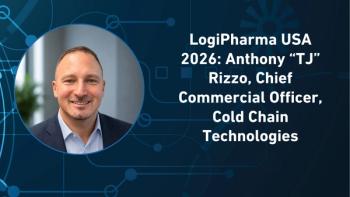
Ahead of his presentation at LogiPharma 2026, Anthony “TJ” Rizzo discusses how automation and real-time monitoring can be deployed in supply chains.
As pharmaceutical cold chains grow more complex and time-sensitive, the pressure to maintain product integrity across global, around-the-clock operations continues to intensify. At LogiPharma 2026, the conversation is shifting beyond packaging performance alone toward a more connected, responsive model, one where automation and real-time monitoring play a central role in managing risk as it happens. Among those leading that discussion is Anthony “TJ” Rizzo, chief commercial officer at Cold Chain Technologies.
Ahead of his panel discussion, Rizzo sat down with Pharmaceutical Commerce to discuss the operational challenges driving this shift. From unpredictable transit conditions and climate variability to infrastructure inconsistencies, he explains that traditional approaches can no longer absorb the full range of real-world disruptions.
Instead, Rizzo points to a growing need for end-to-end visibility and more integrated digital ecosystems. A lack of in-transit insight has long forced companies into a reactive posture, where issues are investigated only after delivery. With real-time monitoring, however, organizations can move toward early detection and intervention, changing how cold chain performance is managed. At the same time, automation helps reduce fragmentation by connecting data across multiple partners and handoffs, replacing siloed systems with a more unified operational view.
Rizzo also underscores how these capabilities are reshaping compliance expectations. Regulators are increasingly looking for continuous evidence of control throughout a shipment’s journey, rather than point-in-time validation. This shift is driving greater emphasis on data integrity, auditability, and the need for validated digital tools that align with GMP frameworks. As he notes, technology alone is not enough—it must be embedded within structured, risk-based processes that enable both efficiency and regulatory confidence.
Together, these trends signal a broader transformation in cold chain logistics—one that is more proactive, data-driven, and responsive to real-world conditions. In this first installment, Rizzo explores how automation and real-time monitoring are helping organizations move closer to that goal.