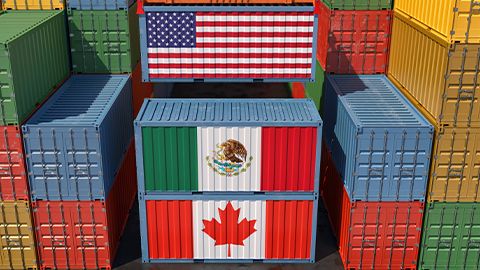



After an initial 30-day pause, the US president plans to re-enact the import taxes on the nation’s trading partners—while also doubling the 10% tariff on China.
After an initial 30-day pause, the US president plans to re-enact the import taxes on the nation’s trading partners—while also doubling the 10% tariff on China.
In the third part of his video interview with Pharma Commerce Editor Nicholas Saraceno, Geoffrey Joyce, PhD, director of health policy at the Leonard D. Schaeffer Center for Health Policy & Economics at USC, describes how the tariffs can affect price or competition within the branded drug space.

The presidential action follows up on a 2019 final rule aimed at empowering patients and boosting competition among hospitals, group health plans, and health insurance issuers in both individual and group markets.
In the first part of his video interview with Pharma Commerce Editor Nicholas Saraceno, Geoffrey Joyce, PhD, director of health policy at the Leonard D. Schaeffer Center for Health Policy & Economics at USC, outlines how the tax on goods coming from China and potential 25% tariff on pharmaceuticals could influence generic drug prices.
In the second part of his video interview with Pharma Commerce Editor Nicholas Saraceno, Tom Dorsett, CEO, RazorMetrics, comments on why he believes polypharmacy is an overlooked driver of unnecessary spending and adverse health outcomes.

The injection for the treatment of psoriatic arthritis—among other indications—is a biosimilar to Stelara.

James D. Chambers, PhD, MPharm, MSc, professor of medicine at the Tufts Medical Center Institute for Clinical Research and Health Policy Studies, dives into why biosimilars contribute to a reduction in cost and increase in patient access, while highlighting challenges to adoption.

In the third part of her video interview with Pharma Commerce Editor Nicholas Saraceno, Laura Johnson, senior director of sales, life sciences, Loftware, discusses why the demand for supply chain transparency is continuing to gain momentum, while also explaining the role that track-and-trace initiatives are playing in that effort.

The timing for the potential tax is yet to be determined, as the industry awaits to see the impact it could bring.

A qualitative study examines how Medicaid telehealth reimbursement policies affect staffing and patient-centered care.
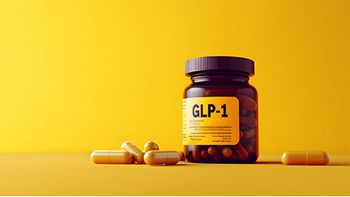
The company’s Mourenx plant in Southwest France aims to become an API network hub, with first supplies expected by next year.

These taxes on goods—with the potential to take effect in weeks or months—will vary by country, but rates could depend on regulations, industry subsidies, and other factors.

The facilities are expected to offer pharma shipment support by addressing time and temperature-specific requirements.

Trump raises the import tax to 25% on the former—while restoring the latter to 25%—in a move that could potentially take effect on March 4.

In the second part of his video interview with Pharma Commerce Editor Nicholas Saraceno, Jim Shehan, chair of the FDA regulatory practice at Lowenstein Sandler, discusses some of the other specific regulatory updates that drug developers be closely monitoring in the current landscape.

The agreement is centered around improving cell culture efficiency and CGT quality.

A cohort study investigates the magnitude of lost coverage among pediatric patients, following the conclusion of the pandemic public health emergency.

What factors should be considered—and how can both parties benefit long-term?

A survey study of US employers aims to determine whether they prioritize financial or nonfinancial criteria when selecting health plans.
In the first part of his video interview with Pharma Commerce Editor Nicholas Saraceno, Jim Shehan, chair of the FDA regulatory practice at Lowenstein Sandler, describes what the approach of pharma companies should be amid the latest/pending tariffs imposed on Canada, Mexico, and China, along with their potential impact on the pharma supply chain.

The company cites a decline in sales and excess inventory as the main contributing factors.

However, the 10% tariff on imports from China went into effect this morning, with the nation imposing several of it own.

What implications will these have on the pharma supply chain?
In the final part of his video interview with Pharma Commerce Editor Nicholas Saraceno, Ed Schoonveld value & access advisor for Schoonveld Advisory and author of The Price of Global Health, previews his upcoming February column.

A study explores dual-enrollment in these plans—compared to other Medicare Advantage plans— impacts North Carolina’s Medicaid fee-for-service spending.
