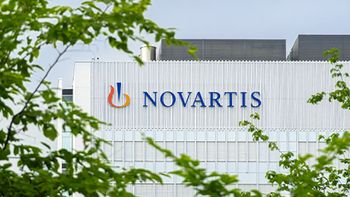
The pharma giant’s new 10,000-square-foot Carlsbad plant strengthens its US manufacturing network and supports its overarching $50 billion investment plan committed to operations.
The pharma giant’s new 10,000-square-foot Carlsbad plant strengthens its US manufacturing network and supports its overarching $50 billion investment plan committed to operations.
This episode of Pharma Pulse explores how regulators modernize safety information for hormone therapy, new data that reinforces SGLT2 inhibitors’ clinical value, and Arsenal Capital expanding its life sciences logistics portfolio with the ThermoSafe acquisition.
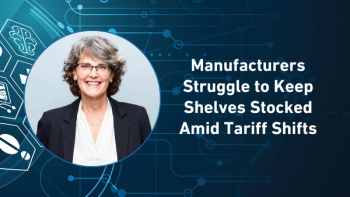
In the first part of her Pharma Commerce video interview, Christy Christian, senior industry principal with Kinaxis, describes how manufacturers face mounting challenges managing long, complex supply chains, including limited inventory buffers, tight cash flow constraints, and constant policy changes.

The deal—with the potential to be valued at up to $725 million—positions ThermoSafe for accelerated growth and innovation in temperature-controlled packaging solutions, with Arsenal aiming to expand global reach and technological capabilities.
This episode of Pharma Pulse explores a major review finding no link between maternal acetaminophen use and autism or ADHD, CMS launching initiatives to cut Medicaid drug costs, and Eli Lilly expanding its gene therapy collaborations.

This guide outlines a proven framework, spanning process, people, and platform, to help healthcare innovators scale AI with compliance, collaboration, and clinical impact in mind.

Launching next year, the new CMS Innovation Center initiative—known as the GENEROUS Model—aims to align Medicaid drug prices with global standards, reduce prescription spending, and strengthen the program’s long-term sustainability through fairer state purchasing and transparent pricing rules.
This episode of Pharma Pulse discusses FDA’s growing National Priority Voucher initiative, fresh data on oral semaglutide’s cardiometabolic impact, and Mark Cuban’s latest drug addition that signals key shifts in innovation, access, and affordability across the pharmaceutical landscape.

Lilly announced a new agreement with the Trump administration to expand access to its GLP-1 therapies, including Zepbound and orforglipron, offering the drugs to Medicare beneficiaries for $50 per month and through Medicaid programs starting in 2026.

Pharma’s push into direct-to-patient sales is reshaping the front end of drug distribution, but wholesalers like Cencora, McKesson, and Cardinal Health remain indispensable as the backbone of the industry’s regulated, specialty, and logistics infrastructure.

The addition of Starjemza reinforces Mark Cuban Cost Plus Drugs' effort to expand access to affordable specialty medicines through its transparent cost-plus pricing model, while also enhancing patient support via a new partnership with Medchat.ai.

As the three models converge, expect a bigger role for sales reps, minimal impact on incentive compensation, and a boon to the healthcare system.

Cencora's investment includes new automated centers in Ohio and California and a major cold chain expansion in Alabama to enhance capacity, efficiency, and supply chain resilience.

How next-generation AI-driven traceability hubs can transform pharmaceutical serialization from a compliance requirement into a business advantage, while enabling real-time supply chain visibility, faster issue resolution, and greater operational efficiency across the global drug distribution network.
In second part of his Pharma Commerce video interview, Faisal Khan, a GRC solutions expert with Vanta, urges organizations to move beyond one-time vetting toward continuous monitoring, contractual accountability, and shared responsibility for HIPAA compliance.

Eli Lilly invests $3 billion in a new European manufacturing facility, enhancing production capacity and creating jobs while ensuring faster access to innovative medicines.
The formula for bridging scientific advancement with operational flexibility in boosting access to cell and gene therapies.

In first part of his Pharma Commerce video interview, Faisal Khan, a GRC solutions expert with Vanta, explains how excessive data access and poor visibility into data flows remain leading causes of HIPAA-related incidents.
Nine drugs from leading manufacturers will participate in HRSA’s new 340B rebate model pilot program, set to begin in 2026, which aims to evaluate a rebate-based framework for future drug pricing models amid ongoing industry litigation.
Lance Hill, CEO of Within3, discusses how AI-driven decision support tools are helping pharmaceutical companies achieve launch excellence while maintaining regulatory compliance and data integrity.
The investment is aimed at boosting oral medicine manufacturing capacity.

In the final part of her Pharma Commerce video interview, Jen Butler, CCO at Pleio, emphasizes that as digital tools become central to patient support, there is value to balancing technology with empathy.

The partnership will provide DTC options at locations nationwide.
In the third part of her Pharma Commerce video interview, Jen Butler, CCO at Pleio, argues that addressing patients’ emotional barriers is essential to maximizing ROI, improving adherence, and ensuring that existing support programs truly reach those who need them.
In the second part of her Pharma Commerce video interview, Jen Butler, CCO of Pleio, warns that without stronger education, communication, and pharmacist involvement, digital engagement risks becoming purely transactional.
This episode of Pharma Pulse discusses Novartis’ $12 billion acquisition of Avidity Biosciences to expand its RNA therapeutics portfolio, and President Trump’s proposed 10% tariff increase on Canadian imports that could disrupt pharma supply chains.

At LogiPharma USA, industry leaders from Tive, McKesson, and the broader healthcare logistics community discussed the sector’s transition from passive monitoring to real-time control, the growing influence of advanced therapies, and the importance of diversity and innovation in shaping the future of pharma supply chains.

The move adds new tension to US-Canada trade relations under the USMCA and raises questions about pending pharmaceutical import policies.
This episode of Pharma Pulse discusses new research linking cholesterol imbalance in obesity to higher depression risk, Eli Lilly’s acquisition of Aderum Biotechnologies to strengthen its neuroscience pipeline, and Cambrex’s $120 million investment to boost US. API manufacturing capacity.

The CDMO’s latest investment will boost capacity at its Charles City, IA facility by 40%, underscoring Cambrex’s focus on reshoring drug manufacturing, advancing peptide and small molecule production, and supporting the long-term stability of the US pharma supply chain.