
Eton Pharmaceuticals reached its long-held goal of ten rare disease commercial products, acquiring the US rights to Hemangeol, the only FDA-approved treatment for infantile hemangioma.
Eton Pharmaceuticals reached its long-held goal of ten rare disease commercial products, acquiring the US rights to Hemangeol, the only FDA-approved treatment for infantile hemangioma.
In today's Pharma Pulse, the FDA expands the pediatric indication for Juxtapid to treat rare homozygous familial hypercholesterolemia, while Novo Nordisk announces a major €432 million investment in its Irish facility to scale global oral GLP-1 production.
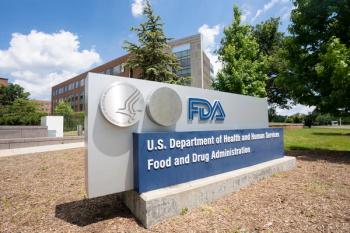
The FDA has transitioned to a "new era" of proactive enforcement, issuing warning letters to telehealth and pharmaceutical companies to eliminate misleading promotional claims and ensure a fair balance of risks and benefits regarding approved and compounded GLP-1 medications.

SpotSee and Controlant announced a collaboration to enhance pharmaceutical supply chain visibility using integrated monitoring devices and cloud-based indicators.
In today’s Pharma Pulse, the FDA grants priority review to a therapy for polycythemia vera, while Novo Nordisk receives expanded pediatric approval for its once-weekly growth hormone.
In today’s Pharma Pulse, the FDA grants a lightning-fast approval for Boehringer’s lung cancer therapy under its new priority program, while CMS Administrator Mehmet Oz launches a sweeping offensive against fraudulent billing.
The FDA granted accelerated approval to Boehringer Ingelheim’s Hernexeos for first-line HER2-mutant NSCLC following a 44-day review under the National Priority Voucher Program.

LogiPharma 2026 in Vienna debuts interactive, hands-on formats and a two-track structure to boost collaboration, training, and real-time engagement for life sciences supply chains.

A conversation with Kenco’s Tim McClatchy explores how pharmaceutical logistics providers are strengthening cybersecurity across manufacturer-to-home delivery networks, deploying AI to optimize operations, and adapting to evolving regulatory pressures shaping the future of healthcare supply chains.

A guide to how the IRA is reshaping Medicare Part D, price negotiations, manufacturer liability, and pharmacy operations, along with what it means for access, adherence, and commercial strategy.

Dan Chancellor, Norstella's vice president of thought leadership, examines how the patent cliff and persistent growth gaps are shaping pharma M&A strategy heading into 2026.
Rare disease drugs now drive innovation, investment, and portfolio strategy as policy incentives, scientific advances, and market success reshape biopharmaceutical growth.
In today’s Pharma Pulse, Eli Lilly’s orforglipron shows superior blood sugar control over oral semaglutide, while GSK secures a $950 million acquisition of 35Pharma.

CMS’s CY 2027 Medicare Advantage rates signal mounting cost pressure, setting the stage for tighter benefits, tougher contracting, and heightened access scrutiny in the months ahead.
In today’s Pharma Pulse, UK regulators seize thousands of fake weight loss pens, while new data reveals that the "miracle jab" is financially out of reach for nearly 70% of users.
From new formulations and vial formats to retailer expansion and pricing pressure, evolving GLP-1 strategies are transforming distribution models, reimbursement dynamics, and long-term supply planning.
In the final part of his Pharma Commerce video interview, John Stanford, Incubate’s executive director, argues that while Medicare price controls may reduce federal spending, they have yet to meaningfully improve patient access—contending that true reform must address insurance design, out-of-pocket costs, and the long-term impact on life sciences innovation and investment.
In today’s Pharma Pulse, the FDA unveils a Plausible Mechanism framework to fast-track ultra-rare disease therapies, while Astellas partners with Vir Biotechnology in a massive $2.1 billion oncology collaboration.

The company is significantly lowering the US list prices for its popular weight loss and diabetes GLP-1 drugs, signaling a broader shift in pricing strategy as competition intensifies and access pressures grow.
The FDA’s Plausible Mechanism Framework is designed to facilitate the approval of highly individualized therapies for patients with ultra-rare diseases.
In today’s Pharma Pulse, Eli Lilly launches the monthly Zepbound KwikPen to streamline obesity care, while Gilead Sciences moves to acquires Arcellx in a massive expansion of its cell therapy portfolio.
In the third part of his Pharma Commerce video interview, John Stanford, Incubate’s executive director, shares how Incubate’s analysis of SEC filings reports dozens of halted research programs following the Inflation Reduction Act’s passage, while recent legislative changes tied to orphan drugs appear to be influencing renewed rare disease investment.

The multi-dose pen—capable of providing a one-month supply—may ease device supply constraints and reshape distribution planning.
In today’s Pharma Pulse, BioNTech escalates its patent battle against Moderna over next-gen COVID shots, while a new pharmacist-led "PRIME" program proves a game-changer for prediabetes prevention.
The Supreme Court invalidated IEEPA-based tariffs, but pharmaceutical tariffs imposed under Section 232 remain in effect.
In the second part of his Pharma Commerce video interview, John Stanford, Incubate’s executive director, points out how uneven Medicare negotiation timelines between small molecules and biologics are influencing R&D and venture funding decisions, according to biotech investors advocating for legislative changes.
In today’s Pharma Pulse, Johnson & Johnson commits over $1 billion to a new biomanufacturing site in Pennsylvania, while Hims & Hers enters a $1.15 billion agreement to acquire Australian telehealth leader Eucalyptus.
A policy change allowing approval of some new drugs based on one adequate and well-controlled study could accelerate development timelines, while raising questions about evidentiary standards and downstream supply chain planning.

The logistics provider has launched a temperature-controlled network with new dedicated capacity and aviation routes designed to enhance the transport of time-critical pharmaceuticals and biologics, responding to the rising demand for reliable, compliant cold-chain logistics.
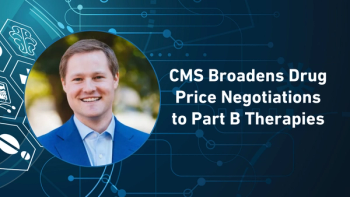
In the first part of his Pharma Commerce video interview, John Stanford, Incubate’s executive director, explains how third round of CMS drug selections brings physician-administered medicines under price controls for the first time, intensifying debate over provider reimbursement and investment in small-molecule therapies.