Sponsored
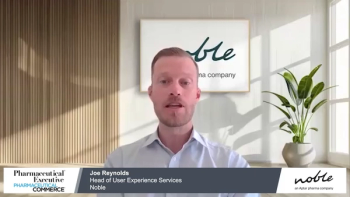
Joe Reynolds, Head of User Experience Services at Noble, breaks down what it really takes for pharmaceutical companies to move therapy from the clinic into the patient's home.
Kimberly Howard, senior manager of Field Reimbursement Services at CoverMyMeds, explains how aligning hubs and reimbursement teams improves patient support.
In the first part of Pharmaceutical Commerce’s interview with Kimberly Howard at Access USA, Howard examines the evolving relationship between hub services and field reimbursement teams, emphasizing how these groups operate in parallel workflows that must ultimately converge to support patient access. While hubs focus on benefits investigations and verification, field reimbursement managers work directly with providers to navigate payer requirements and ensure proper documentation for prior authorizations.
Howard underscores that success depends on how well these two functions are coordinated. She explains that breakdowns often occur when manufacturers fail to clearly define roles or enable effective communication between teams, leading to inefficiencies and delays in getting patients on therapy. Strong collaboration, supported by shared data and aligned workflows, can significantly improve first-pass approval rates and overall pull-through.
She also addresses how manufacturers should think about resource allocation, particularly when deciding between investing in field reimbursement teams or expanding hub capabilities. According to Howard, the decision often comes down to program volume, complexity, and the specific access barriers a product faces—especially around prior authorizations—making a tailored, strategic approach essential.
A transcript of her conversation with PC can be found below.
Howard: I think that, field reimbursement managers and the hub services - we work in parallel workflows. So, you think about hub services, they're doing your BIs, your BVs, they're looking at, you know, working directly with the provider's offices through that, where FRMs are more the reimbursement aspect. You know, we're dealing with the providers and really sitting down with them to talk through what are the step therapies for the product that you're supporting. How do you make sure that you're documenting everything and submitting that when you go to do a prior auth? We want to make sure that with the providers, you know, we're, we're setting them up for success the first time around. You know, we want them, them to get that patient on therapy, and that's really what we're doing. We really work hand in hand with the hub, though. You know, they're doing some things that we can't do, and so therefore we rely on them, so building that relationship with the two of them is really important. I think, also because we're CoverMyMeds, we have access to some of that hub services data that makes it a little bit easier for us to really, just single-handedly work that workflow between the two of us.
I think that all comes down to the volume of the program sometimes in deciding what you want to do. I believe that with field reimbursement, we're very hands-on. We're in the field. That's part of what our job is. And so for us to be able to sit down and walk somebody through that whole PA process, to have them ask us questions about, "what do we need to do here?" We can't give them clinical information - I can't direct them on that. However, I can help let them know what we see, what the, what the payer policy is, what they're looking for so that they're submitting all that correct information. So I think, for, a customer who's looking to do between the two, it, it really is about what is the volume, what are the needs, what are the barriers that you're experiencing, and a lot of it comes down to the prior auth and the pull-through, and so therefore I think that's where you've got to look at what, what that is.