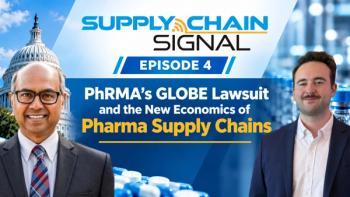
Episode 4 of Supply Chain Signal examines PhRMA’s legal challenge to CMS’ GLOBE model and whether manufacturers can lower costs, expand U.S. production and strengthen supply chain resilience all at once.
In the first part of his Pharmaceutical Commerce interview, Jay Bregman, founder and CEO of Andel, discusses how employers are exploring direct-to-employer drug purchasing models that bypass traditional pathways.
In a recent interview, Jay Bregman, founder and CEO of Andel, discussed his company's newly launched direct-to-employer medication platform, which is designed to reduce prescription drug costs by circumventing traditional pharmacy benefit managers and insurance intermediaries.
The platform enables employers to purchase medications directly from manufacturers and subsidize employee out-of-pocket costs, with its initial rollout including Eli Lilly's Zepbound® KwikPen®. Bregman described the model as a response to compounding financial and operational pressures that employers face within conventional drug purchasing channels. Rising expenditures on GLP-1 medications in particular have prompted some employers to curtail or eliminate prescription benefits, while others have resorted to prior authorization requirements and step therapy protocols to manage costs.
When asked about the significance of the move toward direct-to-employer drug purchasing, Bregman suggested the implications extend well beyond GLP-1s. He noted that employer clients engaging Andel for GLP-1 cost relief frequently ask whether the model can be extended to their ten highest-cost branded drugs, indicating appetite for broader adoption of the direct purchasing approach.
Bregman said the trend points toward a fundamental restructuring of pharmaceutical distribution, contending that employer frustration with legacy procurement channels — driven by escalating costs and increasingly restrictive utilization management requirements — is reaching an inflection point. He suggested the model has the potential to re-segment the market as a whole. For industry observers, the platform raises questions about the long-term viability of PBM-intermediated purchasing and the degree to which employer-driven disintermediation could reshape commercial drug distribution more broadly.
A transcript of his conversation with PC can be found below.
Bregman: I think it's going to re-segment the entire market. I mean, we speak to clients every day, and what they tell us is, "We would love you to help with our GLP-1s because we absolutely need help there." But by the way, they turn to their broker and they say, "Hey, give Jay the top ten drugs, brand drugs, that are weighing down on our pharmacy spend, because Jay, if you can go and negotiate similar deals like you've done with Lilly with them, we'd love to talk to you about that as well." So I think there's just a growing trend in the market that, employers have really had it with, you know, ultra-high costs, never-ending skyrocketing costs, plus having to really downscale the member experience by putting endless PAs, step therapies, et cetera, to try and prevent the drugs from getting to the hands of people who really want and need them.