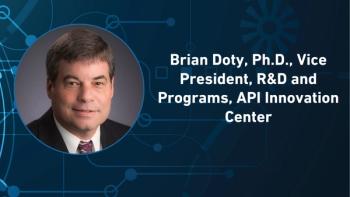
APIIC's Brian Doty says key starting materials are where domestic generic supply efforts must focus, and continuous flow chemistry makes the business case.
APIIC's Brian Doty says renovating shuttered US plants with advanced manufacturing is faster and cheaper than building new to reshore generics.
Renovating idle domestic facilities, rather than building new ones, is the most practical way to bring generic drug production back to the US, according to Brian Doty, Ph.D., vice president of R&D and programs at the
Margins on generics are so thin that greenfield plants are hard to make profitable, Doty says. A full facility can take four to six years to build, while renovating an existing site usually takes about six months and costs far less.
According to Doty, that space exists. A study APIIC conducted at its founding assessed available U.S. capacity and found that roughly half of it now sits shut down and could be repurposed, Doty says. APIIC’s 2025 white paper cites a Washington University survey that found US generic manufacturing sites producing at about half their annual capacity.1
Getting generic companies to use it is the harder part. Manufacturers with lines already running are reluctant to invest more without a clear return, so “the business case has to make sense to them,” he says.
Policy could do the rest. Doty says government support has helped APIIC demonstrate that reshoring critical medicines works, and manufacturers have been forthcoming about opening their sites. Next steps could include designating preferred providers and offering incentives to customers that buy American-made.
Companies offshored production over the past 20 to 30 years to stay cost competitive, Doty says, and the industry is now seeing the implications. He views reshoring as a real opportunity rather than a problem that can’t be overcome.
Watch the first installment of Doty’s interview:
1. API Innovation Center. Building a Resilient Domestic Drug Supply Chain: The Path to National Health Security. March 25, 2025. Accessed November 10, 2026.