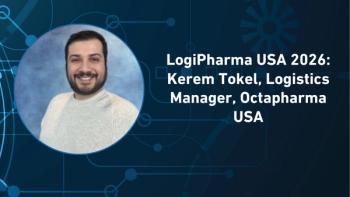
Octapharma USA's Kerem Tokel explains how product value and supply risk should shape freight security, and why complacency remains a persistent gap.
Octapharma USA's Kerem Tokel, a LogiPharma USA 2026 freight security panelist, discusses theft hotspots, the export of stolen pharmaceutical loads and how to tighten chain of custody.
Cargo thieves are hitting fewer loads in 2026, but they are making each one count. Supply chain theft incidents across the U.S. and Canada fell 26% year over year to 677 in Q2 2026, while total estimated cargo losses more than doubled to $304.6 million from $135.7 million. Organized groups are expected to keep specializing in high-value commodities with established resale markets, with business email compromise serving as the major access point for many of the quarter's most sophisticated schemes.¹
According to a Q1 2026 cargo theft report, 36% of the 574 recorded U.S. cargo theft incidents took place in California, while Tennessee's share rose to 12% from 9% a year earlier. Memphis, a major 3PL hub, saw a 27% year-over-year increase in theft incidents, driven by pilferage from unattended shipments during overnight and early morning hours.²
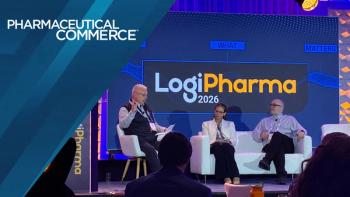
Kerem Tokel, logistics manager at Octapharma USA, addressed those threats at LogiPharma USA 2026 as a panelist on "Securing the Pharma Freight Network: Tools, Threats & Tactics for 2026," a session focused on protecting high-value pharmaceutical freight across every mile of transit, from mitigating organized cargo theft to strengthening chain-of-custody integrity.
In the following Q&A, Tokel discusses why tariffs and the Drug Supply Chain Security Act (DSCSA) are pushing stolen pharmaceutical loads toward export markets, which lanes concern him most, how security measures should scale with a product's value and supply risk, and why complacency around verifying who is on the other end of a call remains a recurring industry gap.
Watch Tokel’s interview with PC:
Tokel: As far as the lanes, we're really looking at the hotspots. We're looking at the I-90 corridor, Memphis, Southern Tennessee and Southern California. What we're seeing with pharmaceuticals specifically is that with tariffs affecting global economies and DSCSA locking down illicit trade in the United States, we're seeing more outbound pilfering. So, loads that normally or previously would've been stolen and resold in the United States, we're seeing them actually exported to countries that don't have as strong controls with their pharmaceutical supply chains.
It's all about the human relationships. Making sure that your brokers and your carriers have SOPs that align with what you need for your supply chain security and making sure that any exceptions are handled immediately, not taking anything for granted and following up on any discrepancies that might pop up.
It's important to have a baseline, right? You need to make sure that you have your SOPs in place, your carriers are all meeting the same quality criteria that you have set forth with your brokers and your carriers, and then really looking at what the disruption is going to be and the monetary value. If you have some drug that isn't necessarily valuable, that won't be disrupted because there's a lot of supply, maybe you can get away with sending a parcel. If you have something that's in very short supply or is worth millions of dollars, now you're looking at smart locks, maybe even escorts, depending on what your security profile looks like.
Taking things for granted and complacency. It's very easy for anyone within the chain of custody, whether it's a shipper, a 3PL, a carrier, to say, "Hey, I recognize that voice," or, "I recognize this name or number. Sure, we'll take it at face value," whether it's a change of carrier or a change of destination. So, really making sure that you are sure about who you're talking to, and that any changes are documented through the normal chain of custody.
It’s sucking the air out of the room right now and it’s AI. AI is the strongest, most powerful tool that humanity has ever created. And just like a hammer can build a house or tear it down, AI can either empower your supply chain or ruin it.
One thing that we’re seeing quite a bit is vocal spoofing. So anyone who listens to this video, not saying that they should, could take my voice, run it through an AI filter, and be able to make phone calls or video calls with what is essentially my voice. That’s where the human connection really comes into play. If something smells wrong, it probably is. Reach out directly, keep those human connections, and make sure that the changes that are being made are legitimate.
Kerem Tokel is logistics manager at Octapharma USA.
1. Cargo Theft Losses More Than Double to $304 Million in Q2 Despite a Drop in Thefts, Driven by High-Value Metals and Technology Heists. Verisk. August 6, 2026.
2. U.S. Cargo Theft Dipped in Q1 2026 While Deceptive Pickup Schemes Jumped 31%, Overhaul Report Finds. Overhaul. PR Newswire. May 18, 2026.