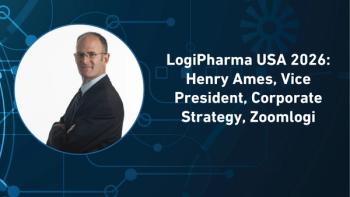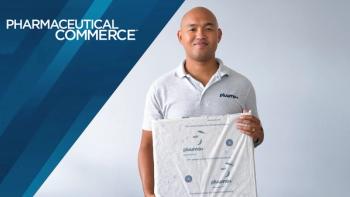
At LogiPharma USA 2026, Cold Chain Technologies' TJ Rizzo explains how gaps in end-to-end cold chain expertise create risk for advanced therapies.
Specialty drugs, cell and gene therapies, and GLP-1s are reshaping pharma distribution, forcing 3PLs to build for both precision and scale.
For decades, pharmaceutical distribution followed a relatively predictable model. Most therapies were small molecules manufactured in large batches, shipped through wholesalers and ultimately dispensed through retail or specialty pharmacy channels.
That model still underpins much of the industry. But the products moving through it are changing.
A specialty-dominated development pipeline, including the rise of personalized cell and gene therapies (CGTs), and the explosive growth of
In a
"The biggest shift that we've seen from a model standpoint is this move away from traditional transactional logistics, moving full pallets of product that ultimately end up at a full-on wholesaler and then moved down through a retail chain or specialty distributor," Williams said. "As we get closer to personalized medicine, more and more of the therapies that are coming out are for smaller patient populations ... you're looking at a model that needs to be much more integrated."
The transformation begins with the pipeline itself. The number of advanced therapies on the market is expected to reach nearly 180 by 2030.1 At the same time, specialty medicines now account for approximately 75% of the nearly 7,000 drugs in development.2
For logistics providers, the changing pipeline is altering both the products moving through distribution networks and the infrastructure needed to support them.
"As more specialty therapies, biologics, and cell and gene therapies move through the pipeline, the challenge is evolving beyond just developing innovative products," said Alina Chesnokova, vice president of global 3PL commercialization at Cencora, in an email statement to Pharmaceutical Commerce. "Today, it's about getting those therapies to patients in a way that is reliable, scalable and operationally sustainable"
Many of those therapies also require temperature-controlled handling. IQVIA estimates that approximately half of all products launching globally through 2027 will require cold-chain storage, up from 37% between 2013 and 2017.3 Concurrently, the global market for temperature-sensitive biologics distribution is projected to reach $39.1 billion by 2033.4 Those trends are already driving infrastructure investments across the industry, such as Cencora’s 40% increase in cold storage across Europe in recent years, alongside additional cryogenic and ultra-low temperature storage in the Netherlands, Chesnokova added.
If specialty medicines are reshaping distribution broadly, cell and gene therapies represent the industry's most operationally demanding segment. Unlike traditional pharmaceuticals, many CGTs are produced for individual patients, creating logistics requirements that extend well beyond standard cold-chain transportation.
"When you start to look at cell and gene therapies, you truly are at personalized medicine," Williams said. "It's an N of one that the product is being created for."
That changes nearly every aspect of distribution.
"You go away from large-scale operations to individual N-of-one movements that have to be highly coordinated," Williams said. "There's a much tighter chain of custody requirement, and we're talking about products that have much greater financial value."
These specialized requirements dictate entirely new handling protocols. In a
"These are very sensitive products, often requiring temperatures either from –80 °C down to –196 °C and the use of liquid nitrogen," Wayment said.
The scale of that challenge is expected to grow. The CGT cold-chain logistics market is projected to more than double from $2.02 billion in 2025 to $4.47 billion by 2031, as increases in the number of gene therapy programs were seen at all stages of pipeline development across 2025.5,6 Companies across the industry have already been expanding infrastructure to prepare.
Beyond specialized storage, the operational demands of
"When a manufacturer gets their drug approved, then it's got to go from manufacturing to packaging and then to another hop somewhere for distribution," Wayment explained. "In most cases, those locations are pretty far apart from each other, so you add extra days into the lead time for those products to hop from one location to the next."
To compress these critical transit windows, there has been an emphasis on geographically closed packaging and logistics centers, aimed at expediting speed to therapy and reducing handoffs.
"By us being so close with packaging and our 3PL operations together, we're able to go from packaging the product to getting it out for distribution and commercialization in seven days or less," Wayment said. "What that really means then is patients who are waiting for these drugs that have gotten approved to impact their lives in positive, meaningful ways can now be on therapy much sooner than they normally would be."
Although CGTs represent the highest level of logistical complexity, they are only one side of the industry's evolving distribution landscape.
If CGTs challenge distribution through precision, GLP-1 therapies are reshaping it through scale. The global GLP-1 receptor agonist market was valued at approximately $82 billion in 2026 and is projected to reach $185 billion by 2033.7 Unlike most specialty therapies, GLP-1 injectables combine massive patient populations with strict temperature-control requirements, creating a distribution challenge that blends consumer-scale demand with cold-chain logistics.
That combination is already driving infrastructure investment. UPS announced a
The challenge is no longer preparing for a single product category but supporting fundamentally different therapies simultaneously. Highly personalized CGTs demand precision, chain of custody and strict timing requirements, whereas GLP-1s require scalable cold-chain networks capable of supporting sustained, high-volume demand.
The pressures reshaping pharmaceutical distribution are arriving simultaneously rather than sequentially. A specialty-heavy pipeline continues to increase demand for individualized handling and temperature-controlled infrastructure. Cell and gene therapies are introducing new levels of logistical complexity, and GLP-1s are expanding cold-chain requirements at unprecedented scale.
Together, those trends are pushing manufacturers, logistics providers and infrastructure partners to rethink assumptions that have defined pharmaceutical distribution for decades. Investments in specialized warehousing, cryogenic storage, temperature-controlled transportation and packaging are no longer preparing the industry for what comes next — they are responding to changes already reshaping the market.
As the pharmaceutical pipeline continues to evolve, so too will the distribution networks supporting it. The challenge for 3PLs is no longer simply moving products efficiently — it's building the specialized infrastructure needed to deliver an increasingly diverse mix of therapies safely, reliably and at scale.
2 months ago
The Role of Artificial Intelligence In Access2 months ago
Rebuilding the Commercial Playbook3 months ago
Overhauling the Models That Reach Patients4 months ago
Roundtable: The State of Hub Services in 20265 months ago
How Direct-to-Patient Is Redefining Drug Pricing