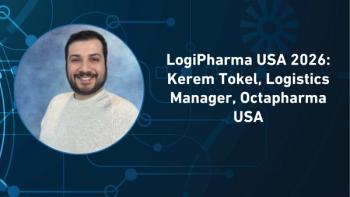
Octapharma USA's Kerem Tokel explains how product value and supply risk should shape freight security, and why complacency remains a persistent gap.
At LogiPharma USA 2026, Swisslog's Garrett Freeman explains why validation, change management and stakeholder alignment now drive automation projects.
As the
For physical automation, that question is complicated by uncertainty about what volumes will look like five, 10 or 15 years out. Freeman says accounting for that uncertainty has been paramount in customer conversations, and that solving the technology and hardware piece is only part of the work. Change management and implementation at scale across the enterprise present their own challenges.
Brownfield projects show what's at stake. When a company is upgrading an existing facility or a node within its network, Freeman says the goal is to eliminate operational and manufacturing disruptions, while maintaining regulatory compliance.
The emphasis on redundancy carries into the engineering details. "We can't have a single point of failure in any of our systems," Freeman says. He adds that customers and the broader market generally do a good job of defining those requirements.
Several sessions at the show reinforced another challenge Freeman says he has felt personally: stakeholder alignment. Getting every party in the supply chain in the room and agreed on the mission, the goal and the execution plan is particularly difficult in pharma, given the number of internal departments, regulatory bodies and quality functions involved. Freeman says technology suppliers have a responsibility to help customers recognize that from the outset, engaging those stakeholders early to capture requirements and position customers to succeed with whatever future network design they pursue.
Watch the first installment of Freeman’s interview: