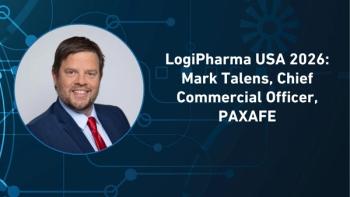
At LogiPharma USA 2026, Mark Talens explains how end-to-end visibility lets pharma see its value chain across functions, and where supply chain monitoring is headed next.
Jon Hamrick, partner at Curatio Advisors, discusses how product attributes, company size and stakeholder alignment shape pharma commercialization strategy.
Curatio Advisors starts its commercialization work with the product, according to Jon Hamrick, a founding partner at the firm, who said new therapies launching today are typically very targeted. FDA figures reflect that focus. Of the 46 novel drugs the FDA's Center for Drug Evaluation and Research (CDER) approved in 2025, 23 received orphan drug designation for rare diseases.1
In a video interview with Pharmaceutical Commerce, Hamrick said Curatio evaluates each therapy against about many product-specific attributes to determine which archetype it falls into. That archetype points to the likely patient journey and provider experience, along with the pain points patients and health care professionals may hit as a patient accesses the drug and begins therapy. Once those pain points are identified and prioritized, the firm designs frameworks and solutions to mitigate the key ones it has an opportunity to solve.
Hamrick describes large pharma and emerging biotech as "two ends of the spectrum." A smaller company launching a single product sometimes has an advantage, he says, because it may not have to balance a broader product portfolio or multiple products within a franchise. But it is typically
Large manufacturers have broader organizations and more stakeholders. "There's power in that, there's resources in that, but there also can sometimes be conflict," he said. In those cases, Hamrick starts with the brand objectives and works to align stakeholders such as brand, market access, patient services and trade and distribution around the objectives tied to that product. From there, Hamrick designs the distribution-to-dispensing model and patient services wrap for that therapy and works out how the trade and distribution strategy can be measured during launch and altered along the way. In a July article for Pharmaceutical Commerce, Hamrick and fellow Curatio founding partner Cheryl Allen examined how commercial trade groups are
Looking ahead, Hamrick says the industry is entering "another golden age of drug discovery" and points to the promise of AI in both discovering new therapies and supporting the commercialization process. Published research already documents AI applications across the drug development workflow, from target identification through post-market surveillance.2
Stay tuned for Pharmaceutical Commerce's
1. US Food and Drug Administration, Center for Drug Evaluation and Research. Advancing Health Through Innovation: New Drug Therapy Approvals 2025. Accessed October 30, 2026.
2. Zhang K, Yang X, Wang Y, et al. Artificial intelligence in drug development. Nature Medicine. 2025;31:45-59. doi:10.1038/s41591-024-03434-4