
UPS' deal for Smartways Logistics adds a dedicated health care courier network in Australia and New Zealand to its Asia Pacific buildout.
Cold Chain Technologies' Vijay Paliwal discusses matching shippers to risk, predicting excursions and cutting packaging waste.
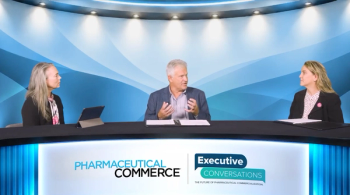
Pharmaceutical Commerce spoke with Vijay Paliwal, vice president of global advanced solutions and customer experience at Cold Chain Technologies, at LogiPharma USA 2026 about how manufacturers can match cold chain packaging to the risks they need to manage. The conversation focused on when reusable, single-use and active shippers make the most sense for a given lane and product.
Paliwal discusses what it takes to move from temperature visibility to predictive monitoring, including building risk profiles and working with carriers to step in on high-risk shipments before an excursion happens.
He also explains why the industry's habit of overqualifying shippers amounts to waste, how the move from expanded polystyrene to reusable vacuum insulated panel solutions is lowering total cost of ownership, and where he expects AI to take excursion management in 2027.
Watch Paliwal's video interview with PC:
Paliwal: It's really about what risk you're trying to manage, not so much about what packaging, but you start with the end in mind. Your goal is to deliver drug products from point A to point B safely, right? The pharmaceutical companies, their core competence is to ensure that they are able to develop and commercialize these drugs, but it's not necessarily cold chain transportation, so they rely on partners like us. And again, our counsel always is to understand what risk you're trying to manage.
If you're working in a lane that is well-established, if you have good stability data on the product, if you have end users who are going to receive these boxes and product, if they are used to working with reusable solutions, and if you care about sustainability, then you might tilt towards going for a reusable solution.
If you're working in lanes that make it difficult for the product to be returned, if you're shipping something to Saudi Arabia, for example, it's going to be economically unfeasible to bring that box back from Saudi Arabia to the U.S. Even if you have a center in the Middle East, you could send the box there, but there might be situations where it might just not be feasible, right?
There's also single-use solutions that are curbside recyclable, cellulose-based insulation, and if you're delivering to consumers at people's homes, a single-use solution that allows these end users to put the box outside on their curbside might be a better fit than a reusable solution where you are paying for the cost of reverse logistics.
When it comes to active, I look at this as if the duration is significantly longer than what these passive shippers can support, then you might want to look at active. So again, it depends on what kind of risk you're trying to manage.
Infrastructure — it takes the desire to actually take action, right? Visibility is easy. You can put a data logger in every shipper and understand where the location of the box is and what the condition of the shipper is, but that itself is not enough. If you want to move towards predictive monitoring, the intention behind predictive monitoring is to be able to do something. You have to make sure that you are looking at more data points and you're able to create risk profiles.
If you're sending a hundred thousand shipments, not all shipments have to be monitored. Ninety-five thousand of those shipments might be no risk. Three thousand might be low risk. And the remaining couple of thousand might be medium risk or high risk. That's what you want to focus on. You don't want to focus on ninety-eight thousand shipments with no or low risk.
To be able to create those risk profiles you have to define risk. You have to be able to work with partners like Cold Chain Technologies or others who can then stitch partnerships with other players, including data logger companies, including 3PLs or logistics service providers, so that you can actually do something about it.
Those two thousand shipments, let's say five hundred shipments are at high risk of excursion. You want a company like Cold Chain to be able to work with, let's say if you're working with a UPS or a FedEx, partner with them and say, "Hey, drive this interception, protect this package, protect the payload, and keep the customer experience intact," right? So, shipping your box to the end user so the end user doesn't even know all of this drama happened in the middle.
It's really a conscious effort in building infrastructure and capabilities to make decisions.
Historically, the industry has used overqualified solutions. They are paying more than they should because you want to be absolutely sure that your payload is protected. And I don't blame them, right? At the end of the day, you're trying to make a decision based on variables you have available, and you're saying, "I would rather use a ninety-six-hour shipper, eventhough I know I'm using next day air. I'll have seventy hours of thermal life left, but I would rather spend the money to keep the product safe.” And I call that waste.
There's also a lot of reliance on EPS-based solutions. If you're a company that cares about sustainability, it becomes a bit challenging, because then you're thinking about, “do I pay a lower cost per shipment and use an EPS shipper, or do I move to a VIP-based solution and it's going to be more expensive?”
Fortunately, we are moving in the right direction where the overall total cost of ownership has come down, especially with reusable parcels. We are seeing the industry evolve and look at the overall cost of the solution, versus worrying about just one variable, and that way they are also able to eliminate waste, not just from a cost standpoint, but also from an environmental impact standpoint, from a risk standpoint.
Depending on what your risk appetite is, there are solutions available now to reduce waste.
It's incredible. The growth has been phenomenal. The pace of innovation has increased. As I said, there has been a transition from single-use shippers, EPS-based shippers, to reusable solutions, VIP-based solutions. That's a good trend.
The other is — there is a significant advancement in terms of technology, especially around AI. So, if your data is clean, you can uncover much deeper insights and take better action today than you could five years ago. The direction in which we are moving is exciting.
We are also seeing continuous innovation in PCM technology and different types of insulations. Even in the cellulose-based insulation, we are seeing a lot of innovation coming in. The durations are increasing. Overall, we are moving in the right direction, and a lot of exciting things are happening.
Everybody's talking about AI. I've been at Logipharma for a day and a half, and in every session I've sat in people are talking about data and AI. So, I think that's a trend to watch, because I don't think a lot of companies have put it to use, right? We are talking about AI, but what are you going to do with all the data that you collect, and is your data clean? Are you able to build agents or engines that can actually do something with that data?
I believe that we're going to evolve from flagging risks, from basic visibility, to now we can predict risk. Today, we are still manually driving intervention interception. I do believe that with AI, over time, all of this end-to-end process could be automated. Is it going to happen in 2027? I don't know. But I think we are going to make a lot of progress in that area.