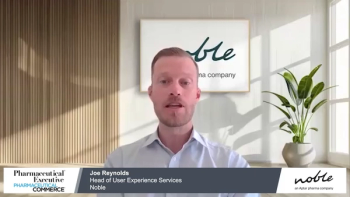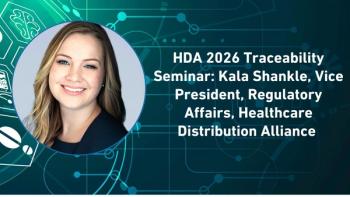

As HRSA's 340B Rebate Model Pilot moves toward its effective date, Valerie Bandy, PharmD, of Tecsys explains what drug-by-drug rebate tracking really demands from hospital and health system pharmacies.
Four pharma experts discuss industry trends in M&A, direct-to-patient sales, patient access and commercial strategy at the H1 midyear mark.
Access our complete H1/H2 industry report:
As the pharmaceutical industry crosses the midpoint of 2026, the landscape is defined by an accelerating dealmaking environment, fast-moving shifts in how patients access and pay for therapies and a widening gap in patient affordability. Concluding its H1 Review/H2 Outlook series, Pharmaceutical Commerce checked back in with four experts spanning M&A, direct-to-patient commercialization, patient access and commercial strategy to see how the forecasts they made earlier this year have held up, and what's to come in H2.
This video synthesizes those four perspectives to provide a comprehensive look at the trends defining H1 2026 for pharma and the challenges awaiting the industry in the final months of the year.
The series started when PC asked a set of experts across different corners of the pharma commercial landscape to lay out what they expected the year ahead to bring. Roel van den Akker, deals partner at PwC, offered his read on where M&A was headed. Chip Parkinson, CEO of Gifthealth, forecast how direct-to-patient sales would evolve. Amy Niles, chief mission officer at the Patient Advocate Foundation, laid out what she was watching on patient access and affordability. And, Emma Banks, CEO of ramarketing, mapped out how commercial strategy and AI adoption would take shape.
What emerged is less a single narrative than four parallel ones. Dealmaking and direct-to-patient commercialization have largely outpaced expectations. Patient affordability and coverage have moved in the opposite direction. And running underneath all of it is a commercial strategy landscape still working out where AI genuinely changes the job and where human judgment still has to close the gap.
Here's how each of those four predictions has held up, straight from the experts who made them.