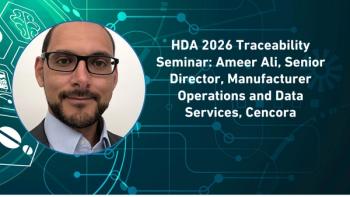
Go behind the scenes of LogiPharma USA 2026 with program director Charleen Ring and McKesson's Chris Van Norman in this Pharma Pulse special.
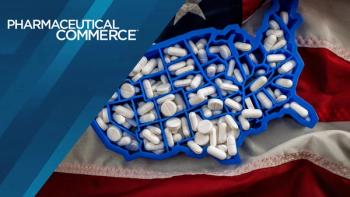
The industry is asking harder questions about how therapies reach people, who can afford them, and what it will take to close the gaps that remain.
Getting a therapy to patients has always required precision. Today, it requires the ability to absorb simultaneous disruption across pricing, logistics, compliance, and access while still executing. The articles in this issue of Pharmaceutical Commerce map the fault lines where that pressure is most acute, as well as the strategies commercial leaders are developing in response.
Nowhere is reinvention more visible than in the supply chain. AI-driven decision intelligence is emerging as the connective tissue linking small molecule and cell and gene therapy operations, automating choices that once required manual coordination across disconnected systems. At the same time, cold chain infrastructure is being stress-tested by a warming climate, demanding smarter logistics and deeper collaboration to ensure therapies arrive safely. And as the regulatory framework governing traceability grows more demanding, AI is proving equally essential to DSCSA compliance, transforming serialization from an operational burden into a scalable, adaptive safeguard for patient safety.
On the commercial side, the economics of launch are being redrawn. The environment that once supported a straightforward path from approval to patient is giving way to something far more demanding, where market access is earned through strategy rather than assumed. Self-pay and cash models are no longer fringe strategies; they are rational responses to a marketplace that has fundamentally changed. Meanwhile, proposed Most Favored Nation pricing frameworks are forcing manufacturers to revisit pipeline economics before therapies ever reach the market, and a coming technical disruption in NDC-12 coding threatens to quietly destabilize reimbursement, brand protection, and market intelligence for companies that are not yet paying attention. Underlying all of it, class of trade research is reasserting itself as a foundational discipline for pricing integrity, contract eligibility, and compliance in an environment in which precision is no longer optional.
Beneath all of it is the patient, particularly those in rural America, for whom access is not an abstraction but a daily negotiation with distance, cost, and a system that too often demands more than it delivers. Their experience remains the industry's most honest measure of progress.
The tools are improving. The stakes are not getting smaller.
The industry is asking harder questions about how therapies reach people, who can afford them, and what it will take to close the gaps that remain. The answers are being built right now, across supply chains, pricing desks, compliance teams, and patient access programs, one decision at a time.
4 months ago
Welcome to the Conversation6 months ago
White Paper: The NDC-12 Revenue Risk6 months ago
Cold Chain Logistics In a Warming World