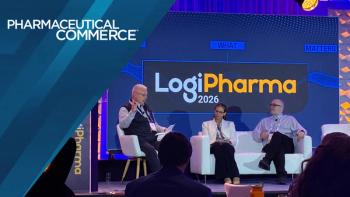

At LogiPharma USA 2026, Swisslog's Garrett Freeman explains how automation cuts human touches, enforces quarantine and consolidates cold storage.
Continuous monitoring, targeted automation and interoperability standards are redefining pharma cold chain custody and cutting temperature excursions.
A single temperature excursion can erase years of development work in a matter of hours. For
Cold chain management has moved from a packaging and carrier discipline into a data and connectivity discipline. The insulated box, the gel pack, and the refrigerated trailer still matter enormously, but they no longer define the competitive edge. The information layer wrapped around every shipment, covering monitoring, automation, and system-to-system connectivity, has become the differentiator for manufacturers and logistics partners trying to protect product integrity across increasingly complex distribution networks.
That information layer is delivering measurable operational results in some areas, accelerating fast under regulatory pressure in others, and still exposing structural gaps the industry has yet to close.
For most of cold chain history, a datalogger sat inside a shipment and recorded conditions silently until someone opened the box at the destination. Excursions were discovered after the fact. The only available responses were documentation, investigation, and disposal.
Continuous, in-transit telemetry changes that sequence. Cellular and satellite-connected sensors now report temperature, humidity, light exposure, and shock data throughout a shipment's journey rather than only at delivery. When a reading trends toward a threshold, a logistics team can act before the excursion becomes irreversible:
The shift is from forensic reconstruction to active intervention, and it is reshaping how chain of custody protocols are written and executed.
Regulatory expectations have followed the same trajectory:
Cold chain visibility and
Automation earns its place in cold chain logistics at a narrower set of points than the broader supply chain conversation sometimes suggests. Full end-to-end robotic delivery is not the near-term story. Automated storage and retrieval inside temperature-controlled distribution centers, and automated verification at high-volume handoff points, are.
Automation in the warehouse serves as a consistency play, directly minimizing the time a product spends outside controlled atmospheric conditions during high-volume picking and pack-out. Manual picking in a 2-8°C zone requires workers to enter and exit controlled environments repeatedly, opening doors and exposing product to ambient air. No two shifts replicate that process identically.
The same logic extends downstream to pack-out. Automated weight checks, barcode confirmation, and thermal-shipper qualification catch errors at the point of packing that used to surface only after a shipment arrived out of spec. A correctly qualified shipper with the right coolant load is doing most of the protective work before a truck ever leaves the dock.
None of this makes automation universal. Three limits define where it currently stops:
Automation, in other words, is a hub-and-spoke solution today, strengthening the core of the network without yet resolving the edges.
Predictive analytics applied to cold chain logistics is not artificial intelligence in the speculative sense. It is pattern recognition applied to historical shipment, customs, and carrier-performance data, used to flag risk before a shipment moves rather than after it fails. Lane-level performance history reveals where excursions actually cluster, and the pattern holds across multiple industry risk assessments. Customs delays, tarmac dwell time, and regional carrier handoffs account for a disproportionate share of temperature failures relative to the actual transit hours involved.4
A shipment can spend the overwhelming majority of its transit time inside validated conditions and still fail. A four-hour dwell period at a single customs checkpoint is often enough.
That data changes two decisions specifically, before a shipment ever leaves the dock:
Preventive risk management and reactive monitoring are complementary, but they are not interchangeable, and mature cold chain programs increasingly run both in parallel.
Sensors are a mature technology. Automation is a proven technology. The genuine bottleneck sits somewhere less visible: data interoperability between manufacturers, carriers, customs brokers, and distribution partners who each run different systems, built on different standards, updated on different schedules.
Legacy data silos between manufacturers and third-party logistics providers persist for structural reasons rather than a lack of will:
Standards-based integration is the unglamorous layer doing the real work of closing that gap. GS1's own EPCIS framework, already central to DSCSA compliance, is increasingly being extended beyond product identity into condition and custody data. That gives trading partners a common electronic language rather than a patchwork of proprietary formats. IATA's CEIV Pharma certification program pushes a similar standardization logic into air cargo handling. It establishes common competency and process benchmarks across freight forwarders and ground handlers that would otherwise operate to inconsistent internal standards.5 Neither initiative solves interoperability outright, but both narrow the gap between systems that were never designed to talk to each other.
Independent market analysis of pharmaceutical logistics has flagged the same pattern from a different angle. It points to digital traceability platforms and IoT-enabled monitoring adoption as a defining factor shaping where logistics providers direct their next round of infrastructure investment.6
Better monitoring and better automation produce a sustainability benefit almost as a side effect of solving the operational problem, and that framing matters more than it might seem. Two mechanisms drive it:
Reducing excursion rates through better visibility and automation reduces waste as a direct mathematical consequence, not as a marketing claim layered on top of the technology afterward.
No single technology defines the current moment in pharmaceutical cold chain logistics. The defining shift is philosophical: treating the cold chain as a continuously managed data system rather than a series of discrete, siloed shipments handed off between parties who rarely see each other's performance history.
Supply chain leaders evaluating where to invest next should prioritize visibility first. Monitoring data underpins every other decision in the chain, from automation deployment to lane validation to regulatory reporting. Automation deserves investment at high-volume nodes where its consistency benefit is measurable, with clear-eyed acknowledgment of where its reach currently ends. Interoperability is the long game. It requires sustained commitment to shared standards rather than a single procurement decision and will likely remain the slowest-moving piece of the puzzle even as sensors and automation continue to mature.
Chain of custody, in the end, is not a compliance checkbox sitting alongside the cold chain function. It is the cold chain function, expressed in regulatory language. Every technology covered here earns its adoption to the extent it strengthens that custody record, from the moment the product leaves a manufacturing site to the moment it reaches a patient.
References