



Business and Finance
Latest News
Advertisement
Latest Videos




Podcasts
Advertisement
More News

Nine drugs from leading manufacturers will participate in HRSA’s new 340B rebate model pilot program, set to begin in 2026, which aims to evaluate a rebate-based framework for future drug pricing models amid ongoing industry litigation.

The investment is aimed at boosting oral medicine manufacturing capacity.
The CDMO’s latest investment will boost capacity at its Charles City, IA facility by 40%, underscoring Cambrex’s focus on reshoring drug manufacturing, advancing peptide and small molecule production, and supporting the long-term stability of the US pharma supply chain.

The acquisition brings together two leaders in mRNA innovation, strengthening BioNTech’s oncology strategy and expanding its R&D and commercialization capabilities.
In the second part of her Pharma Commerce video interview Megan Wetzel, VP, product, access & affordability at CoverMyMeds, describes how high development costs, personalized treatment models, and an aging population are intensifying the imbalance.

At HLTH 2025, the entrepreneur announced a collaboration between Cost Plus Drugs and President Trump’s TrumpRx platform aimed at improving transparency, reducing drug costs, and reshaping how Americans access their prescriptions.

The new partnership aims to transform cold chain logistics for life sciences, creating a connected air transport network designed to ensure temperature integrity, regulatory compliance, and faster delivery of critical therapies.

The company’s new 400,000-square-foot facility in Elkton will boost small molecule manufacturing, create hundreds of jobs, and strengthen US innovation and supply chain resilience.
This episode of Pharma Pulse discusses new research revealing persistent disparities in women’s cancer outcomes, record-high physician pay amid steady productivity, and AstraZeneca’s major Texas expansion to double production of its hyperkalemia treatment, Lokelma.
The $445 million expansion of AstraZeneca’s Coppelsite will boost global production capacity for Lokelma, enhance local job growth, and strengthen the company’s US manufacturing footprint amid industry-wide onshoring trends.
This episode of Pharma Pulse covers the FDA’s approval of a rapid one-minute HIV self-test, the US government’s decision to delay tariffs on pharmaceutical exports from Singapore, and CVS Pharmacy’s acquisition of more than 600 Rite Aid stores across three states to expand its community health footprint.

A planned 100% tariff on branded and patented drugs from Singapore is being postponed as US and Singapore officials explore potential exemptions.
This episode of Pharma Pulse covers the nationwide Kaiser Permanente strike involving more than 40,000 healthcare workers, Takeda’s new AI-driven antibody discovery partnership with Nabla Bio, and the FDA’s OAI designation for Novo Nordisk’s Bloomington manufacturing facility.
The fallout is impacting partners Scholar Rock and Regeneron, both of whom have pending regulatory applications tied to the facility.
This episode of Pharma Pulse covers how recent CDC layoffs are fueling concerns about disease surveillance, Ypsomed’s new autoinjector manufacturing site in North Carolina, and Lupin’s $250 million investment to build a respiratory and specialty drug facility in Florida.

The global generics maker’s new Florida site will produce more than 25 critical respiratory medicines, create over 200 jobs, and reinforce domestic manufacturing and drug security.
This episode of Pharma Pulse covers how Mark Cuban’s direct-to-consumer pharmacy is challenging traditional drug pricing models, AstraZeneca’s $4.5 billion investment to expand its Virginia manufacturing site, and Bristol Myers Squibb’s $1.5 billion acquisition of Orbital Therapeutics to advance RNA-based medicines.

The new Albemarle County site—reportedly the largest investment in AstraZeneca’s history—will focus on API and ADC production, create 3,600 jobs, while strengthening US pharma supply chain resilience.

Set to debut in California this December, Amazon’s new pharmacy kiosks aim to streamline care by letting One Medical patients pick up prescriptions right after appointments, eliminating the need for a separate pharmacy visit.
This episode of Pharma Pulse covers the CDC’s new individualized approach to COVID-19 vaccination and changes to chickenpox guidance for toddlers, new research showing how GLP-1 therapies can interfere with PET-CT imaging results, and the Third Circuit Court’s rejection of Novo Nordisk’s IRA challenge.
This episode of Pharma Pulse covers the FDA’s approval of golimumab for pediatric ulcerative colitis, AstraZeneca’s new multi-target neuroscience partnership with Algen, and Peli BioThermal’s acquisition of Evo to strengthen its global cold chain portfolio.

The addition of Evo’s cryogenic shipping and tracking technology enhances Peli BioThermal’s reach across the pharma value chain, driving innovation and integration in temperature-controlled logistics while supporting these therapies.
This episode of Pharma Pulse covers allegations of retaliation against a former NIAID director following whistleblower complaints, new research suggesting ALS may be an autoimmune disease, and the wave of hospital layoffs affecting thousands of healthcare workers across the United States.
This episode of Pharma Pulse covers the FDA’s quiet approval of the first generic mifepristone tablet, Takeda’s decision to discontinue cell therapy research programs, and SciSafe’s expansion of biopharma storage capacity with a new East Brunswick, New Jersey facility.
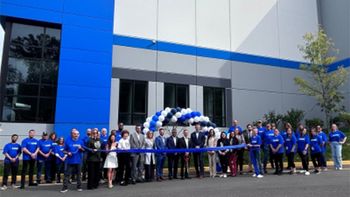
The new 5-million-cubic-foot biorepository enhances cold chain logistics, expands biopharma storage capacity, and strengthens New Jersey’s position as a life sciences hub.
Advertisement
Advertisement
Trending on Pharmaceutical Commerce
1
Pharma Pulse: EU's Pharma Package and Specialty Drug Tariff Exemptions
2
How the GLP-1 Boom Stress-Tests the Pharma Cold Chain
3
Why Waltz Health, Fresenius Kabi Are Taking Biosimilars Direct
4
Doceree CEO: AI Should Extend the Field Force, Not Replace It
5