


Business and Finance
Latest News
Advertisement
Latest Videos



Podcasts
Advertisement
More News
In the fourth part of his Pharma Commerce video interview, Alan Balch, PhD, CEO of the Patient Advocate Foundation and the National Patient Advocate Foundation, outlines the financial pressures that make sustained safety net protections a healthcare imperative.

In the third part of his Pharma Commerce video interview, Alan Balch, PhD, CEO of the Patient Advocate Foundation and the National Patient Advocate Foundation, points out that from employer-paid premiums to Medicare and Medicaid subsidies, the US system relies on layered financial support to keep coverage within reach—underscoring how few individuals can realistically pay the full cost of care or insurance on their own.

The company’s latest preview report projects a guarded rebound for biopharma, as investor confidence returns and M&A activity accelerates.
The company will participate in the Trump administration’s direct-to-patient drug platform, while committing $100 billion to US R&D and manufacturing.
In the final part of his Pharma Commerce video interview, Franco Stevanato, CEO of Stevanato Group, explains that with plant buildouts and validation requiring three to five years, today’s reshoring momentum reflects near-term policy pressures, but global demand and overseas biosimilar growth will ultimately shape the industry’s next phase.
The pharma giant will invest in a 35,000-square-foot RLT manufacturing site in Winter Park, FL as part of its $23 billion US infrastructure expansion.

In the third part of his Pharma Commerce video interview, Franco Stevanato, CEO of Stevanato Group, shares how automatic contract adjustments tied to labor, energy, and inflation—combined with the critical role of supply reliability—allow the company to pass through limited surcharges while maintaining strong client relationships.

Novo Nordisk’s newly approved oral semaglutide is now available nationwide through Amazon Pharmacy with insurance and cash-pay options.

The pharma giant becomes the latest manufacturer to participate in the Trump Administration’s direct-to-patient pricing platform, aligning US drug costs with European benchmarks while reinforcing its domestic manufacturing investments.
In the first part of his Pharma Commerce video interview, Franco Stevanato, CEO of Stevanato Group, explains how near-term tariff pressures are creating short-term headwinds while accelerating longer-term investment in regional manufacturing footprints—especially in the US.

Backed by Frazier Healthcare Partners and strengthened by the acquisition of eBlu Solutions, CareTria aims to accelerate patient access by combining provider technology, digital enrollment, and multi-modal fulfillment into a single end-to-end platform.
In the final part of his Pharma Commerce video interview, Philip Sclafani, PwC’s pharmaceutical and life sciences lead, points out that from biosimilars and site-of-care shifts to AI, value-based reimbursement, and potential legislative action, market deflators—not simple cost shifting—will determine whether affordability improves across employer-sponsored plans, Medicaid, and Medicare.

A new Foreign Trade Zone–enabled facility in Annville strengthens the company’s temperature-controlled, compliant logistics capabilities, while accelerating customs processing and last-mile healthcare delivery.
In the third part of his Pharma Commerce video interview, Philip Sclafani, PwC’s pharmaceutical and life sciences lead, explains as medical inflation persists and benefit designs strain under rising drug spend—especially GLP-1s—employers are reaching the limits of what they can absorb, accelerating cost-shifting and fragmenting how employees pay for care.
In the second part of his Pharma Commerce video interview, Philip Sclafani, PwC’s pharmaceutical and life sciences lead, points out that a Medicaid spending tightens and ACA subsidies lapse, reduced public coverage is driving spillover effects—shifting costs to hospitals, employers, and commercial drug pricing in an increasingly interconnected healthcare market.

The healthcare pricing platform is expanding access to Novo Nordisk’s newly approved oral GLP-1 for weight management, pairing transparent cash pricing with telehealth support nationwide.
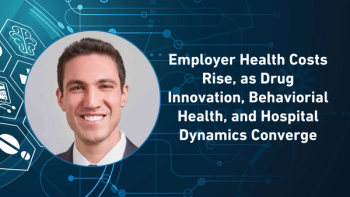
In the first part of his Pharma Commerce video interview, Philip Sclafani, PwC’s pharmaceutical and life sciences lead, discusses how from GLP-1 adoption to specialty drugs, behavioral health utilization, and hospital consolidation, multiple forces are reshaping employer-sponsored healthcare costs—and pushing premiums and cost-sharing higher.
In today’s Pharma Pulse, the FDA clears new denosumab biosimilars for osteoporosis and cancer-related bone loss, while healthcare leaders grapple with a surge in "nuclear verdicts" driven by shifting public sentiment.
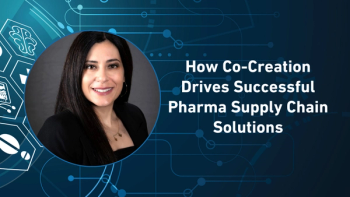
In the second part of her Pharma Commerce video interview, Tina Martinez, vice president and head of global products and solutions at Cencora, outlines a customer-first approach to partnering with pharmaceutical manufacturers—centered on active listening, early problem validation, and iterative piloting—to co-develop scalable solutions that support late-stage clinical programs through commercial launch.

In the first part of her Pharma Commerce video interview, Tina Martinez, vice president and head of global products and solutions at Cencora, describes how the company uses deep customer relationships and cross-enterprise collaboration to develop new products and solutions that address evolving market dynamics, improve efficiency, and support healthier outcomes.

The acquisition strengthens Yusen Logistics’ healthcare footprint across Europe, adding specialized transportation, warehousing, digital, and GDP-compliant capabilities to its regional and global network.
In today’s Pharma Pulse, Samsung Biologics enters the US market with a $280 million site acquisition, AstraZeneca secures a multi-billion-dollar cancer deal, and new research identifies occupational drivers of long COVID.

The South Korea–based CDMO acquires its first US manufacturing facility in Rockville, MD, expanding its global footprint and strengthening biologics capacity.
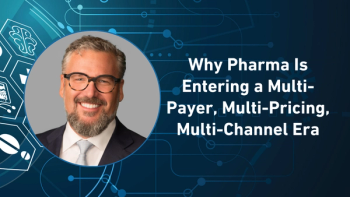
Bill Roth, general manager and managing partner of IntegriChain’s consulting business, previews his new six-part series by outlining how rising payer fragmentation, divergent cash and insurance models, and supply-chain constraints are reshaping brand strategy.

The acquisition strengthens CEVA’s global project logistics footprint, adding heavy-lift expertise, specialized engineering talent, and integrated solutions across key regions.
Advertisement
Advertisement
Trending on Pharmaceutical Commerce
1
Inside Cencora's Approach to AI-Driven Demand Sensing
2
BioPharma Supply Chains of the Future: What to Know About Localization
3
BMS’s Kevin Cook on Moving CMO Partnerships Beyond Transactions
4
What AI Changes, and Doesn’t, in Exception Handling
5