



Pricing
Latest News
Advertisement
Latest Videos
Podcasts
Advertisement
More News
In today’s Pharma Pulse, learn how digital pharmacy safety gaps, Novo Nordisk’s introductory programs for Wegovy and Ozempic, and Scott Gottlieb’s new role at UnitedHealth are shaping patient access and industry strategy.
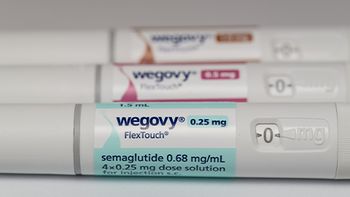
The company is launching new self-pay pricing options, expanded savings programs, and partnerships with telehealth and retail providers. all while its obesity portfolio gains momentum under the FDA’s National Priority Voucher program.
This episode of Pharma Pulse discusses how the FDA’s new plausible mechanism pathway, WeightWatchers’ plans to offer oral Wegovy, and emerging evidence on berberine are shaping the future of obesity and metabolic health care.
As FDA fast-tracks GLP-1 treatments under its new pilot National Priority Voucher program, WeightWatchers prepares to position itself to compete in the fast-evolving weight-loss drug market driven by affordability and accessibility.
This episode of Pharma Pulse explores a major review finding no link between maternal acetaminophen use and autism or ADHD, CMS launching initiatives to cut Medicaid drug costs, and Eli Lilly expanding its gene therapy collaborations.
Launching next year, the new CMS Innovation Center initiative—known as the GENEROUS Model—aims to align Medicaid drug prices with global standards, reduce prescription spending, and strengthen the program’s long-term sustainability through fairer state purchasing and transparent pricing rules.

Lilly announced a new agreement with the Trump administration to expand access to its GLP-1 therapies, including Zepbound and orforglipron, offering the drugs to Medicare beneficiaries for $50 per month and through Medicaid programs starting in 2026.

Pharma’s push into direct-to-patient sales is reshaping the front end of drug distribution, but wholesalers like Cencora, McKesson, and Cardinal Health remain indispensable as the backbone of the industry’s regulated, specialty, and logistics infrastructure.

As the three models converge, expect a bigger role for sales reps, minimal impact on incentive compensation, and a boon to the healthcare system.
The partnership will provide DTC options at locations nationwide.
This episode of Pharma Pulse covers MJH Life Sciences’ acquisition of BPD Healthcare to deepen its reach into hospitals and health systems, investor reaction to Novo Nordisk’s recent board changes, and Mark Cuban’s latest partnership expanding his Cost Plus Drugs platform to disrupt traditional pharmacy pricing models.

At HLTH 2025, the entrepreneur announced a collaboration between Cost Plus Drugs and President Trump’s TrumpRx platform aimed at improving transparency, reducing drug costs, and reshaping how Americans access their prescriptions.
This episode of Pharma Pulse discusses new research linking severe COVID-19 to increased stroke risk among asthma patients, a KFF poll showing divided parental support for vaccine-related agendas, and US News & World Report’s 2026 list of top Medicare Advantage and Part D plan providers.

Aetna, Devoted Health, and UnitedHealth headline the list best Medicare Advantage insurers for next year, while Centene and Humana lead the pack in Part D prescription drug coverage.

A planned 100% tariff on branded and patented drugs from Singapore is being postponed as US and Singapore officials explore potential exemptions.
This episode of Pharma Pulse covers how Mark Cuban’s direct-to-consumer pharmacy is challenging traditional drug pricing models, AstraZeneca’s $4.5 billion investment to expand its Virginia manufacturing site, and Bristol Myers Squibb’s $1.5 billion acquisition of Orbital Therapeutics to advance RNA-based medicines.

The appellate court upheld Medicare’s authority to negotiate lower drug prices under the Inflation Reduction Act, following similar rulings against AstraZeneca, Bristol Myers Squibb, and Novartis.

From patent cliffs and government price controls, to self-pay models and staff-model HMOs, a look at the forces that could deflate the bubble—and those factors likely to keep it afloat a while longer.

Amid pressures on pharma to match the lowest international prices, experts warn of “policy laundering” and discriminatory impact.
This episode of Pharma Pulse covers the Trump administration’s plan to launch a government-run healthcare website for patients, new data showing gabapentin has become the fifth most prescribed drug in community pharmacies, and promising trial results from a novel gene therapy that slows the progression of Huntington’s disease.

The draft assessment finds that the popular weight loss drugs are costly but worth the price tag, while also urging for broader coverage and policy solutions.
This episode of Pharma Pulse covers the FDA’s decision to restrict bulk ingredients for compounded GLP-1 therapies, new evidence showing RSV vaccines improve cardiorespiratory outcomes in adults over 60, and pharmacy owners’ concerns over barriers to participating in the Medicaid Drug Price Negotiation Program.
This episode of Pharma Pulse covers ACOG’s renewed support for COVID-19 vaccination during pregnancy, new real-world evidence confirming the safety of dapagliflozin and empagliflozin for type 2 diabetes, and a partnership between EVERSANA and Waltz Health to improve affordability and patient access.

The merger integrates EVERSANA’s commercialization services with Waltz Health’s AI-powered payer tools to address patient affordability, streamline drug access, and reduce costs for high-expense therapies such as GLP-1s.
This episode of Pharma Pulse covers a new collaboration to expand access to GLP-1 therapies via LillyDirect, Pfizer’s Phase III miss in sickle cell disease, and how patient portals are improving access to care while creating new workload challenges for providers.
Advertisement
Advertisement
Trending on Pharmaceutical Commerce
1
Epic, Amazon, Cost Plus Announce Point-of-Care Cash Price Tool
2
Inside Cencora's Approach to AI-Driven Demand Sensing
3
Predicting Excursions and Right-Sizing Shippers: Two Paths to a Leaner Cold Chain
4
How Pharma Automates Without Disrupting Operations
5