


Pricing
Latest News


Amazon Pharmacy Adds FDA-Approved Wegovy Pill, the First Oral GLP-1 for Weight Loss
Advertisement
Latest Videos



Podcasts
Advertisement
More News

Nine more companies have joined the DTC government-run website, which is set to launch sometime next year.
In today’s Pharma Pulse, major pharma players commit to most-favored-nation pricing, as DHL bolsters West Coast logistics for temperature-sensitive drugs.
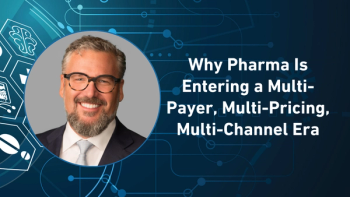
Bill Roth, general manager and managing partner of IntegriChain’s consulting business, previews his new six-part series by outlining how rising payer fragmentation, divergent cash and insurance models, and supply-chain constraints are reshaping brand strategy.

In a discussion on emerging channel strategies, Bill Roth, general manager and managing partner of IntegriChain’s consulting business, explains why DTP models must extend beyond simple cash-pay offerings—highlighting how packaging innovation, insurance-flow backups, and improved patient compliance could unlock new revenue, streamline access, and better reflect clinical outcomes.

Traditional market access practices are being transformed by an increasingly rocky landscape of rebate, discount, and direct-distribution practices, but artificial intelligence may clear the pathways to profitability.

CoverMyMeds’ Megan Wetzel unpacks the forces behind rising specialty spend, the real impact of access barriers, and how field reimbursement teams help providers guide patients through today’s fragmented system.

How pharma can productively coexist with PBMs—and still lower drug costs faster.
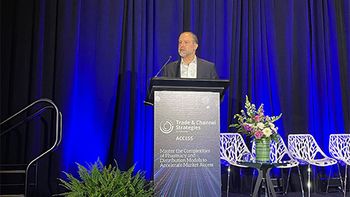
A session explores how manufacturers can refine GTN strategy, strengthen pricing governance, and navigate increasingly complex distribution-channel economics, while maintaining both commercial performance and patient affordability.

In a wide-ranging keynote on disruption across pharmaceutical channels, Bill Roth, general manager and managing partner of IntegriChain’s consulting business, outlines why 2025 marks the beginning of a profound regulatory and commercial transformation—from sweeping policy shifts and accelerating WAC reductions to new debates on direct-to-patient strategies and looming instability in medical benefit reimbursement.

The fracturing of the US drug market’s traditional model is forcing a demand for a strategic bifurcation to maintain profitability, compliance, and patient access in the decade ahead.
Welcome to Pharma Pulse, a Pharmaceutical Commerce podcast where we bring you the latest insights shaping patient access, supply chain/logistics, data & tech, and healthcare innovation. I’m your host, and let’s get into today’s headlines.

Various agreements with the Trump administration could have long-term ramifications for Medicaid access and global pricing strategy.
In today’s Pharma Pulse, the University of Maryland expands its medical class to combat physician shortages and much more.

Commercialization expert Bill Roth outlines the critical need for "adaptive capacity," detailing how accelerating government regulation and massive patent cliffs are forcing a complete overhaul of commercial strategies across various markets.
In today’s Pharma Pulse, the ACIP votes to end the decades-long universal hepatitis B birth dose recommendation; meanwhile, former FDA commissioners warn that new vaccine policies are compromising the long-standing regulatory framework and jeopardizing public health security.

The entrepreneur urges the Trump administration to eliminate costly FDA generic drug fees, part of a broader push to scale domestic production, address shortages, and challenge PBM-driven pricing models.

In the final part of his Pharma Commerce video interview, Ed Schoonveld, value and access advisor for Schoonveld Advisory and author of The Price of Global Health, previews his December column, exploring US price-referencing guidance, its impact on innovation, and whether this marks the beginning of broader pricing controls.
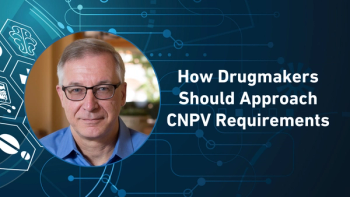
In the first part of his Pharma Commerce video interview, Ed Schoonveld, value and access advisor for Schoonveld Advisory and author of The Price of Global Health, explains that affordability is only one pathway to securing a voucher—and reducing list prices isn’t the only way to demonstrate value.
In the first part of his Pharma Commerce video interview, Colin Banas, MD, DrFirst’s chief medical officer, explains that with updated certification requirements for drug pricing transparency and electronic prior authorization, providers will see momentum build toward more efficient, patient-focused medication workflows.

The agreement includes exemptions for UK-produced drugs and medical devices from Section 232 tariffs, but mandates a significant change to the UK's NICE value appraisal framework.
From billions in drug savings and more, we present to you today’s Pharma Pulse.

The Trump administration has announced new negotiated Medicare prices for a second wave of blockbuster treatments, yielding an estimated $12 billion in savings for 2027, when compared to Medicare’s 2024 net spending.
In today’s Pharma Pulse, the federal government prepares to unveil newly negotiated Medicare prices for 15 high-cost drugs, while Novartis receives FDA approval for Itvisma, a one-time gene therapy offering a new treatment pathway for older children and adults with spinal muscular atrophy.

As the federal government prepares to release newly negotiated Medicare drug prices, weight-loss blockbusters Ozempic and Wegovy remain in the spotlight, while CMS advances a model to cut Medicaid spending and broaden access to affordable treatments.
In today’s Pharma Pulse, learn how digital pharmacy safety gaps, Novo Nordisk’s introductory programs for Wegovy and Ozempic, and Scott Gottlieb’s new role at UnitedHealth are shaping patient access and industry strategy.
Advertisement
Advertisement
Trending on Pharmaceutical Commerce
1
The PBM Entity No Pharmaceutical Company Directly Contracted With
2
FAQ: What's Next for Pharma Traceability After DSCSA
3
Pharma Pulse: Independent Pharmacies Sue Express Scripts, Novo Taps Anthropic, Pharma Joins Clean Heat
4
Q&A: Inside the NDC-12 Transition
5