In today’s Pharma Pulse, Johnson & Johnson secures a major tariff deal by joining the federal drug discount portal, while new data warns that missing early infant shots is the leading predictor of skipped MMR vaccines.
In today’s Pharma Pulse, Johnson & Johnson secures a major tariff deal by joining the federal drug discount portal, while new data warns that missing early infant shots is the leading predictor of skipped MMR vaccines.

The pharma giant becomes the latest manufacturer to participate in the Trump Administration’s direct-to-patient pricing platform, aligning US drug costs with European benchmarks while reinforcing its domestic manufacturing investments.
In the first part of his Pharma Commerce video interview, Franco Stevanato, CEO of Stevanato Group, explains how near-term tariff pressures are creating short-term headwinds while accelerating longer-term investment in regional manufacturing footprints—especially in the US.
In today’s Pharma Pulse, healthcare leaders brace for a surge in dealmaking, Eli Lilly secures a suite of oral NLRP3 inhibitors, and Knipper Health rebrands to streamline the path from order to therapy.

Backed by Frazier Healthcare Partners and strengthened by the acquisition of eBlu Solutions, CareTria aims to accelerate patient access by combining provider technology, digital enrollment, and multi-modal fulfillment into a single end-to-end platform.
In the final part of his Pharma Commerce video interview, Philip Sclafani, PwC’s pharmaceutical and life sciences lead, points out that from biosimilars and site-of-care shifts to AI, value-based reimbursement, and potential legislative action, market deflators—not simple cost shifting—will determine whether affordability improves across employer-sponsored plans, Medicaid, and Medicare.
In today’s Pharma Pulse, the FDA issues two high-stakes priority vouchers for cholesterol and cancer therapies, GSK leverages genomic data to refine drug targets, and DHL completes a one-million-square-foot logistics center of excellence.
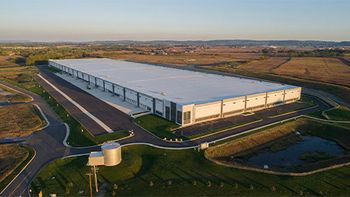
A new Foreign Trade Zone–enabled facility in Annville strengthens the company’s temperature-controlled, compliant logistics capabilities, while accelerating customs processing and last-mile healthcare delivery.
In the third part of his Pharma Commerce video interview, Philip Sclafani, PwC’s pharmaceutical and life sciences lead, explains as medical inflation persists and benefit designs strain under rising drug spend—especially GLP-1s—employers are reaching the limits of what they can absorb, accelerating cost-shifting and fragmenting how employees pay for care.
In today’s Pharma Pulse, federal officials slash the childhood immunization schedule, new data underscores the life-saving impact of COVID vaccines for COPD patients, and Eli Lilly targets the AMPK pathway in a massive new oral obesity collaboration.
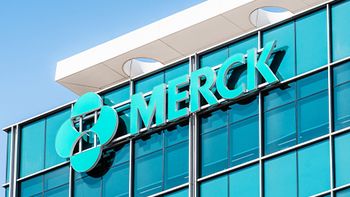
Merck’s decision to shutter its Riverside, PA antibiotic API facility underscores how decades of cost-driven optimization have eroded domestic manufacturing of essential medicines—exposing systemic vulnerabilities in US drug supply resilience that markets alone are unlikely to fix.
In the second part of his Pharma Commerce video interview, Philip Sclafani, PwC’s pharmaceutical and life sciences lead, points out that a Medicaid spending tightens and ACA subsidies lapse, reduced public coverage is driving spillover effects—shifting costs to hospitals, employers, and commercial drug pricing in an increasingly interconnected healthcare market.
In today’s Pharma Pulse, GoodRx slashes cash prices for the new Wegovy pill, a federal judge halts the 340B rebate pilot, and Sanofi doubles down on Earendil Labs’ AI platform for autoimmune breakthroughs.

The healthcare pricing platform is expanding access to Novo Nordisk’s newly approved oral GLP-1 for weight management, pairing transparent cash pricing with telehealth support nationwide.
In the first part of his Pharma Commerce video interview, Philip Sclafani, PwC’s pharmaceutical and life sciences lead, discusses how from GLP-1 adoption to specialty drugs, behavioral health utilization, and hospital consolidation, multiple forces are reshaping employer-sponsored healthcare costs—and pushing premiums and cost-sharing higher.
In today’s Pharma Pulse, Vanda Pharmaceuticals secures landmark approval for Nereus, while Hoth Therapeutics files dual patents to tackle treatment-induced skin toxicities.
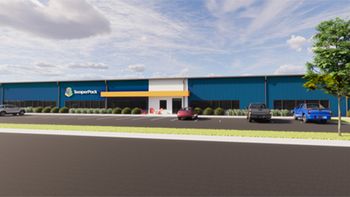
The sustainable packaging company relocates its branded foam production to a more expansive Lansing site, boosting capacity, efficiency, and support for growing demand in the life science market.
In the final part of his Pharma Commerce video interview, Arthur Axelrad, co-founder and CEO of Dispatch Science, explains how outdated, batch-based communication between shippers and carriers is undermining last-mile resilience—and why APIs, cloud platforms, and real-time connectivity are essential to improving transparency, safety, and speed in healthcare logistics.
In today’s Pharma Pulse, the FDA clears new denosumab biosimilars for osteoporosis and cancer-related bone loss, while healthcare leaders grapple with a surge in "nuclear verdicts" driven by shifting public sentiment.
In the final part of her Pharma Commerce video interview, Tina Martinez, vice president and head of global products and solutions at Cencora, explains how streamlining clinical supply services, reducing fragmentation, and piloting data-driven tools like real-time adherence tracking are translating innovation into quantifiable efficiency, visibility, and commercial impact for manufacturers worldwide.
In the second part of his Pharma Commerce video interview, Arthur Axelrad, co-founder and CEO of Dispatch Science, outlines how lapses in digital verification, real-time tracking, and chain-of-custody controls—from pickup through delivery—create security, compliance, and temperature-risk challenges in the final mile of medical logistics.
In the first part of his Pharma Commerce video interview, Arthur Axelrad, co-founder and CEO of Dispatch Science, discusses growing concerns around cargo theft and fraud in healthcare logistics—and how enhanced security features and platform innovation are helping manufacturers protect chain of custody and compliance.

With a planned US launch in early 2026, the approval expands treatment options following strong late-stage trial results.
In today’s Pharma Pulse, Novo Nordisk secures a landmark approval for a weight-loss pill, while Yusen Logistics expands its end-to-end supply chain capabilities across Europe.

The acquisition strengthens Yusen Logistics’ healthcare footprint across Europe, adding specialized transportation, warehousing, digital, and GDP-compliant capabilities to its regional and global network.
As drugmakers experiment with direct-to-patient sales, Thani Jambulingam, PhD, professor of food, pharma, and healthcare business at Saint Joseph’s University’s Erivan K. Haub School of Business, shares why wholesalers remain indispensable to pharmaceutical distribution—supporting cold chain management, regulatory compliance, billing, and large-scale logistics that manufacturers are not equipped to handle on their own.
In today’s Pharma Pulse, Samsung Biologics enters the US market with a $280 million site acquisition, AstraZeneca secures a multi-billion-dollar cancer deal, and new research identifies occupational drivers of long COVID.

Nine more companies have joined the DTC government-run website, which is set to launch sometime next year.

The South Korea–based CDMO acquires its first US manufacturing facility in Rockville, MD, expanding its global footprint and strengthening biologics capacity.

Thani Jambulingam, PhD, professor of food, pharma, and healthcare business at Saint Joseph’s University’s Erivan K. Haub School of Business, describes why uncertainty around final tariff rules is forcing manufacturers into a wait-and-see position.