
The industry veteran will lead the company’s next phase of growth, focusing on faster treatment initiation through integrated digital platforms and optimized fulfillment strategies.
Nicholas Saraceno is Editor of Pharmaceutical Commerce. He can be reached at nsaraceno@mjhlifesciences.com.
The industry veteran will lead the company’s next phase of growth, focusing on faster treatment initiation through integrated digital platforms and optimized fulfillment strategies.

The agreement grants LEO Pharma exclusive rights to the branded form of spesolimab for generalized pustular psoriasis and potentially, other IL-36–driven conditions.
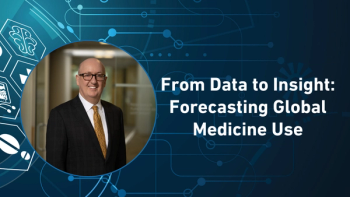
In the first part of his Pharma Commerce video interview, Murray Aitken, executive director, IQVIA Institute for Human Data Science, describes the process behind developing the “Global Use of Medicines Outlook Through 2029” report.
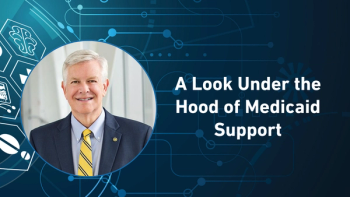
In the final part of his Pharma Commerce video interview, Marschall Runge, MD, PhD, dean of the University of Michigan Medical School and author of The Great Healthcare Disruption, details the role that academic medical centers play in shaping Medicaid policy.

New research finds that nearly half of the racial and ethnic disparities in outpatient COVID-19 antiviral prescriptions stem from encounter-level care barriers, such as limited access to rapid tests and telehealth, which emphasizes the need for systemic and practice-level reforms.

In the third part of this roundtable discussion, a panel of thought leaders explore the value of serialization, data sharing, and predictive analytics in identifying potential quality issues before they arise.
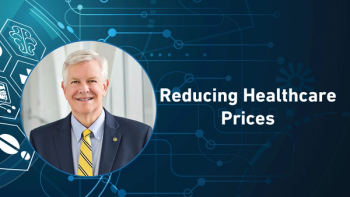
In the third part of his Pharma Commerce video interview, Marschall Runge, MD, PhD, dean of the University of Michigan Medical School and author of The Great Healthcare Disruption, proposes ways to ensure both fiscal responsibility and the sustainability of hospital funding.

Through a strategic, non-profit agreement, Gilead will supply up to two million doses of the long-acting HIV prevention drug across 120 low- and lower-middle-income countries over the next three years.

The US president says the levies on pharmaceutical imports are imminent, but won’t take effect for a year to a year and a half.

In the second part of his Pharma Commerce video interview, Marschall Runge, MD, PhD, dean of the University of Michigan Medical School and author of The Great Healthcare Disruption, outlines how the federal cap on Medicaid provider taxes could affect access to care for Medicaid patients.

The Craigavon investment enhances Almac’s global clinical supply network with upgraded storage, distribution, and shipping capabilities to meet the growing demand for temperature-sensitive medicines.

Amid the push for reshoring and fiscal reform, the tariffs are part of a broader effort to rebalance trade and fund domestic initiatives, as the pharma sector awaits potential levies of its own.

A qualitative study explores how MA plan leaders, kidney care managers, and dialysis providers perceive the benefits, risks, and marketing practices surrounding MA enrollment for patients with end-stage kidney disease.

In the first part of his Pharma Commerce video interview, Marschall Runge, MD, PhD, dean of the University of Michigan Medical School and author of The Great Healthcare Disruption, explains how a federal cap on Medicaid provider taxes could potentially impact hospital systems.

The company joins a wave of global pharma companies reshoring operations to strengthen the US supply chain and meet patient needs through domestic innovation and capacity.

In the final part of his Pharma Commerce video interview, Mark Sawicki, PhD, Cryoport Systems’ president and CEO, predicts how he anticipates the model growing over the next three to five years, especially as global demand and regulatory complexities increase.

State Medicaid leaders create a plan to ensure safety, affordability, and equitable access for children and families living with rare diseases.

Access to the GLP-1 will be streamlined, and starting July 1, will result in a limited-time $299 price for eligible self-pay patients.

In the fourth part of his Pharma Commerce video interview, Mark Sawicki, PhD, Cryoport Systems’ president and CEO, explains the lessons pharma leaders in traditional therapeutic areas can learn from CGT’s highly specialized operational strategies, particularly in terms of supply chain resilience and adaptability.
In the second part of this roundtable discussion, a panel of key opinion leaders dive into the key risk factors impacting the pharma manufacturing space, and how the industry should aim to address them.

Dipanwita Das, CEO and co-founder of Sorcero, chats with Pharma Commerce to dig into the evolving drug development landscape, being regulatorily compliant, and the rapid advancements in artificial intelligence.

Analysis compares care quality and efficiency within physician groups that treat Medicare Advantage patients under at-risk contracts, versus fee-for-service.

In the third part of his Pharma Commerce video interview, Mark Sawicki, PhD, Cryoport Systems’ president and CEO, describes to what extent he believes artificial intelligence should be used at this particular point in time.

The collaborative research initiative will be focused on advancing approaches to enhance the therapeutic efficacy of regulatory T cells and tumor-infiltrating lymphocytes.

In the second part of his Pharma Commerce video interview, Mark Sawicki, PhD, Cryoport Systems’ president and CEO, explains how recent shifts in FDA leadership, funding constraints, and evolving CMC standards have each played a role in this process.

When automatically moved from a zero-dollar silver plan to one that requires a premium due to plan turnover, do lower-income health insurance marketplace enrollees lose or switch coverage?

In the first part of his Pharma Commerce video interview, Mark Sawicki, PhD, Cryoport Systems’ president and CEO, discusses both the successes and challenges in commercializing cell and gene therapies.

The report spotlights China’s rapid biopharma advancement, alongside a GLP-1 surge, caution surrounding M&A, and a rise in biologics.
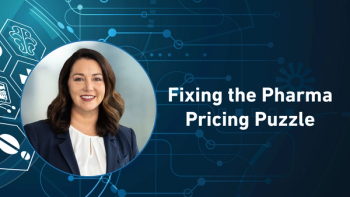
In the final part of her Pharma Commerce video interview, LeAnn Boyd, Liviniti’s founder and CEO, describes what meaningful drug pricing reform looks like to her.
In the first part of this roundtable discussion, a panel of subject matter experts introduce themselves, while discussing the strategies that are most effective in ensuring resilience across the global supply chain.