




Artificial Intelligence
Latest News
Advertisement
Latest Videos




Advertisement
More News
This episode of Pharma Pulse covers Alkermes’ acquisition of Avadel Pharmaceuticals to expand its portfolio, BioNTech’s public exchange offer for CureVac to strengthen its mRNA pipeline, and a new report revealing how US medical device manufacturers are adopting digital-first models to boost compliance and patient engagement.
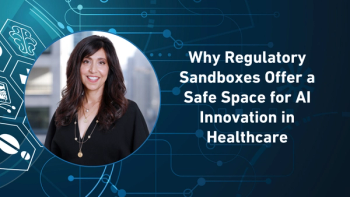
In the second part of her Pharma Commerce video interview, Linda Malek, JD, partner at Crowell & Moring, notes that by bringing regulators and innovators together, regulatory sandboxes could help US healthcare organizations test and refine AI tools responsibly, which allows oversight agencies to keep pace with rapid technological change.

Christy Christian, senior industry principal with Kinaxis, and Hari Kiran Chereddi, CEO of HRV Pharma, explain why AI’s reliability depends on product stability, how human judgment still matters, and how a digital, AI-validated manufacturing backbone is accelerating regulatory reviews, strengthening supplier management, and transforming global production readiness.
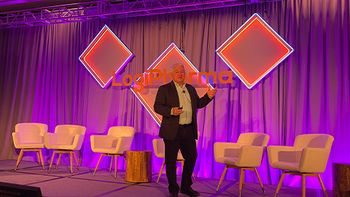
Bayer’s Luiz Barberini highlights how artificial intelligence is transforming supply chain operations, while emphasizing the irreplaceable value of trust, transparency, and human relationships.
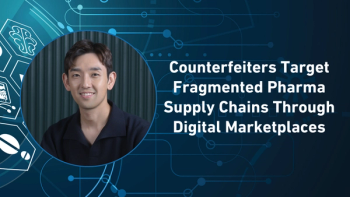
In the second part of his Pharma Commerce video interview, Mark Lee, MarqVision’s founder and CEO, explains how wide regional price gaps and lack of visibility in global distribution create openings for counterfeit sellers—with many now specializing in categories like oncology—who exploit platforms such as Facebook and Instagram to market fake drugs.
In the first part of his Pharma Commerce video interview, Mark Lee, MarqVision’s founder and CEO, warns that counterfeiters are using generative AI to clone pharmaceutical packaging, build convincing fake websites, and manipulate search results. rapidly outpacing enforcement efforts and putting patients at serious risk.

Ways to address limitations while also enhancing the decision-making process.

In order to succeed in today’s outcomes-driven healthcare landscape, pharmaceutical companies must move from traditional sales models to strategic, measurable partnerships with integrated delivery networks (IDNs).

How artificial intelligence tools are helping to optimize the pharmaceutical transport process.

How data-driven insights can help pharma companies balance their revenue management and innovation strategies—including resource allocation, pricing, and market access.

Taking stock of today's gains and tomorrow's potential for generative artificial intelligence in reshaping the industry.

Despite challenges surrounding communication overload, drug shortages, and cybersecurity risks, this term is revolutionizing medication management and patient care through the use artificial intelligence and predictive forecasting.
Advertisement
Advertisement