



Legal & Regulatory
Latest News
Advertisement
Latest Videos





Podcasts

Advertisement
More News
In this week's Pharma Pulse, Eli Lilly sues companies over black-market retatrutide sales, Bristol Myers Squibb commits $2.3 billion to a new Houston manufacturing campus, and FDA opens an assessment of small dispensers' DSCSA tracing capabilities.

The Critical Layer for Pharma's Growing Direct-to-Patient Play
Published: | Updated:
DTP programs are outpacing regulatory guidance. Chander Viswanathan and Shannon Wiley, JD, make the case for compliance-by-design infrastructure over reactive fixes.

AMCP's Adam Colborn breaks down survey findings on how health plans and PBMs view the TrumpRx platform.
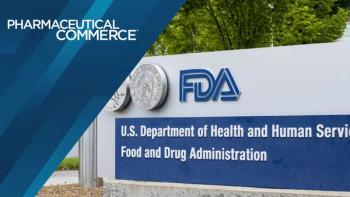
FDA is evaluating small pharmacies' package-level tracing capabilities while extending certain Drug Supply Chain Security Act exemptions to those dispensers through November 2027.

The Section 232 tariff deadline for 17 major drugmakers has arrived. Here's what pharma supply chain teams need to know now.

Domestic manufacturing can reduce certain dependencies, but reliable pharmaceutical commercialization requires qualified redundancy, sustainable economics, quality maturity and decision-ready visibility across the full supply network.
Four pharma commerce experts revisit their 2026 predictions on dealmaking, patient access and commercialization at the year's midpoint.

Gifthealth's Chip Parkinson says direct-to-patient adoption has accelerated since January, driven by structural, not cyclical, market forces.

Shortages of antibiotics, IV fluids and sterile injectables are hardening as new EU and US rules push pharma to fix the incentives behind them.
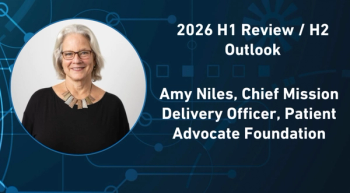
Amy Niles of the Patient Advocate Foundation on Medicaid work requirements, ACA subsidy expiration and patient affordability in 2026.
In this week's Pharma Pulse, Cardinal Health expands its at-Home Solutions business with two acquisitions, President Trump lays out a phased tariff schedule for generic drugs, and Novo Nordisk sues Eli Lilly over GLP-1 advertising claims.

Novo Nordisk’s complaint argues that Lilly's campaigns leave out information about the most effective injectable doses of Wegovy (semaglutide) and Ozempic (semaglutide), a dispute that could reshape how both companies compete for share in the GLP-1 market.
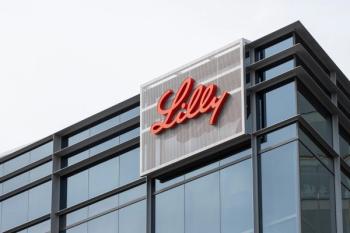
Eli Lilly's acquisition of AtaiBeckley signals growing pharmaceutical industry commitment to psychedelic-based treatments for treatment-resistant depression.

The API Innovation Center's Gerren McHam on China's new supply chain rules, reshoring policy, and where US drug manufacturing goes next.

Germany's new health insurance law more than doubles mandatory drug rebates. Here is why it matters for US pharma pricing and launches.

As China tightens supply chain rules, tariff pressure persists, and the FDA's PreCheck Program takes shape, this FAQ breaks down how pharma reshoring stands in 2026.
Trutakna's FDA approval for IgAN highlights how patient support programs like TRU SUPPORT coordinate access and adoption in specialty drug launches.
The FDA selected seven companies, including two CGT manufacturers, for its PreCheck Pilot to accelerate domestic manufacturing approvals and bolster supply chain resilience.

A US Section 301 probe into Germany's drug pricing could bring tariffs on APIs and finished drugs, raising new supply chain and pricing risks.
CMS' proposed framework for 2029 and beyond closes a potential formulation loophole and raises the stakes for launch planning.

A new CMS demonstration launching July 1 will offer eligible Part D beneficiaries access to branded obesity drugs at a $50 copay. Here's what manufacturers, payers, and pharmacies need to know.
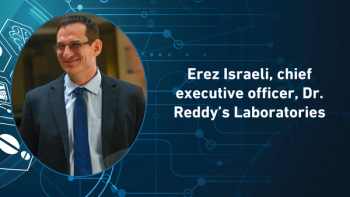
Erez Israeli explains how Dr. Reddy's approached commercial readiness for its generic semaglutide launch in Canada and what vertical integration in peptide manufacturing means for the GLP-1 market.
FDA approves Shionogi's Xocova, the first oral post-exposure COVID-19 prevention therapy, reducing infection risk by 67% in Phase III trials.

The Supreme Court declined pharma appeals, letting Medicare drug price negotiations under the IRA proceed, solidifying federal pricing authority.

US pharma supply chains are shifting amid regulation and geopolitics, with BIOSECURE driving less Asia reliance and more complex, distributed networks.
Advertisement
Advertisement