



Cold Chain
Latest News
Advertisement
Latest Videos



Advertisement
More News

The logistics provider has launched a temperature-controlled network with new dedicated capacity and aviation routes designed to enhance the transport of time-critical pharmaceuticals and biologics, responding to the rising demand for reliable, compliant cold-chain logistics.

Sector leaders explore how third-party logistics providers are adapting to advanced therapies, tighter regulations, digital transformation, and expanding cold chain demands.

The company brings its temperature-controlled Superbox to the US pharma industry, aiming to improve speed, compliance, and resilience in the cold chain process.
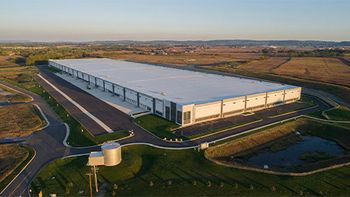
A new Foreign Trade Zone–enabled facility in Annville strengthens the company’s temperature-controlled, compliant logistics capabilities, while accelerating customs processing and last-mile healthcare delivery.
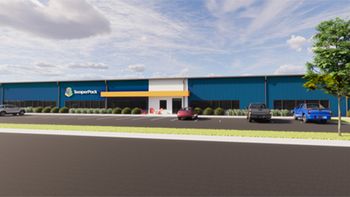
The sustainable packaging company relocates its branded foam production to a more expansive Lansing site, boosting capacity, efficiency, and support for growing demand in the life science market.
In the final part of his Pharma Commerce video interview, Arthur Axelrad, co-founder and CEO of Dispatch Science, explains how outdated, batch-based communication between shippers and carriers is undermining last-mile resilience—and why APIs, cloud platforms, and real-time connectivity are essential to improving transparency, safety, and speed in healthcare logistics.

The acquisition strengthens Yusen Logistics’ healthcare footprint across Europe, adding specialized transportation, warehousing, digital, and GDP-compliant capabilities to its regional and global network.
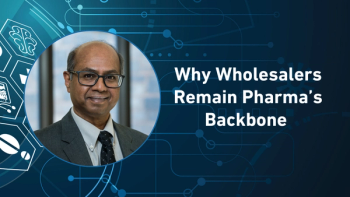
As drugmakers experiment with direct-to-patient sales, Thani Jambulingam, PhD, professor of food, pharma, and healthcare business at Saint Joseph’s University’s Erivan K. Haub School of Business, shares why wholesalers remain indispensable to pharmaceutical distribution—supporting cold chain management, regulatory compliance, billing, and large-scale logistics that manufacturers are not equipped to handle on their own.

A $1.5 million investment in its facilities located near Los Angeles International Airport strengthens DHL’s cold chain capacity, supporting pharmaceutical and healthcare shipments while advancing the company’s long-term health logistics strategy for the Americas.

The acquisition strengthens CEVA’s global project logistics footprint, adding heavy-lift expertise, specialized engineering talent, and integrated solutions across key regions.

The pharma distribution giant is scaling its third-party logistics network across Europe and the United States, adding cryogenic capacity, new facilities, and enhanced cold chain services, to support rising demand for specialty pharmaceuticals and global market access.
This episode of Pharma Pulse explores how regulators modernize safety information for hormone therapy, new data that reinforces SGLT2 inhibitors’ clinical value, and Arsenal Capital expanding its life sciences logistics portfolio with the ThermoSafe acquisition.

The deal—with the potential to be valued at up to $725 million—positions ThermoSafe for accelerated growth and innovation in temperature-controlled packaging solutions, with Arsenal aiming to expand global reach and technological capabilities.

Cencora's investment includes new automated centers in Ohio and California and a major cold chain expansion in Alabama to enhance capacity, efficiency, and supply chain resilience.

At LogiPharma USA, industry leaders from Tive, McKesson, and the broader healthcare logistics community discussed the sector’s transition from passive monitoring to real-time control, the growing influence of advanced therapies, and the importance of diversity and innovation in shaping the future of pharma supply chains.
This episode of Pharma Pulse discusses new data showing a post-Dobbs surge in telehealth medication abortion requests, the FDA’s expedited review of Tzield under its new National Priority Voucher Program, and the launch of a dedicated biopharma air logistics network by Frontier Scientific Solutions and ATSG.

The new partnership aims to transform cold chain logistics for life sciences, creating a connected air transport network designed to ensure temperature integrity, regulatory compliance, and faster delivery of critical therapies.

The collaboration demonstrates that ocean freight can safely transport temperature-sensitive medicines, offering the pharma industry a cost-effective, sustainable alternative to air cargo.
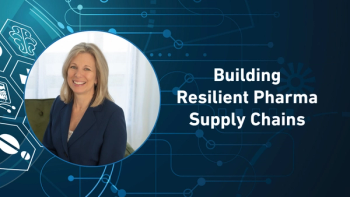
Ammie McAsey, SVP of Supply Chain Operations, McKesson, explains the critical role of real-time visibility, digital tools, and cold chain innovation in ensuring product quality, reducing disruptions, and strengthening patient care.
This episode of Pharma Pulse covers the FDA’s approval of golimumab for pediatric ulcerative colitis, AstraZeneca’s new multi-target neuroscience partnership with Algen, and Peli BioThermal’s acquisition of Evo to strengthen its global cold chain portfolio.
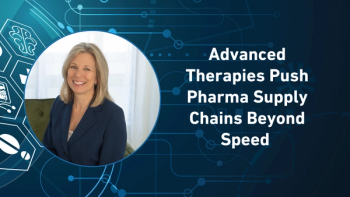
As precision medicine reshapes drug distribution, Ammie McAsey, SVP of Supply Chain Operations, McKesson, highlights the need for deeper investments in technology, temperature control, and end-to-end visibility to ensure quality and patient safety in advanced therapy supply chains.

In a video interview with Pharma Commerce, Kirsten Newquist, Identiv’s CEO, and Mark Sawicki, PhD, Cryoport Systems’ president and CEO, explain how embedded product intelligence—paired with cautious, strategic adoption of AI—is redefining pharmaceutical cold chain reliability and supply-chain decision-making.

The addition of Evo’s cryogenic shipping and tracking technology enhances Peli BioThermal’s reach across the pharma value chain, driving innovation and integration in temperature-controlled logistics while supporting these therapies.
Cencora executive Heather Zenk discusses how innovations in cold chain, data visibility, and sustainability strategies are transforming the drug delivery process.
This episode of Pharma Pulse covers the FDA’s quiet approval of the first generic mifepristone tablet, Takeda’s decision to discontinue cell therapy research programs, and SciSafe’s expansion of biopharma storage capacity with a new East Brunswick, New Jersey facility.
Advertisement
Advertisement
Trending on Pharmaceutical Commerce
1
FAQ: How Is AI Being Deployed in Pharma Supply Chains?
2
Epic, Amazon, Cost Plus Announce Point-of-Care Cash Price Tool
3
How AI Agents Speed Quality Decisions After a Cold Chain Excursion
4
BioPharma Supply Chains of the Future: What to Know About Localization
5