


Supply Chain
Latest News
Advertisement
Latest Videos

Advertisement
More News

The partnership is centered around cutting cold chain costs and emissions with smart packaging and carbon-neutral same-day delivery.

Trump anticipates that the executive order will help lower drug prices by 30% to 80%.

The financial decision is due to customer demand stemming from the reshoring of drug supply services.
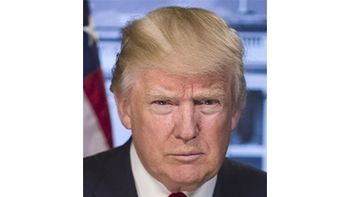
The President plans to sign an executive order on Monday morning to enforce the trade clause.

Ways to reimagine pharma’s operating model and KPIs for commercial success in an AI-driven future.

The track-and-trace systems provider expands its life sciences portfolio by integrating the high-speed, adaptable ETF-300 precision labeler through a partnership that brings Industry 4.0-ready capabilities, advanced printing tech, and enhanced data security to pharmaceutical packaging.

The move bolsters the CDMO’s commitment to cell and gene therapy by incorporating advanced manufacturing and fill-finish capabilities.

As the adoption of biologics rises, demand for home healthcare grows, and conditions like diabetes and autoimmune disorders become more prevalent, self-injectables are here to stay.
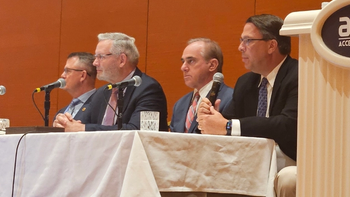
The Zensights Federated Healthcare Advisory Panel explores how shifting global dynamics are reshaping access and strategic planning across the healthcare system.
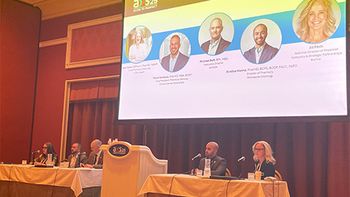
A panel of experts examines how stakeholders can support strategies that improve patient outcomes, while also navigating various distribution models.

IQVIA’s Doug Long offers a lay of the land, including trends and developing issues that are shaping the current market.

The company’s branded form of nadofaragene firadenovec-vncg will also be produced at a hub in Parsippany, NJ.
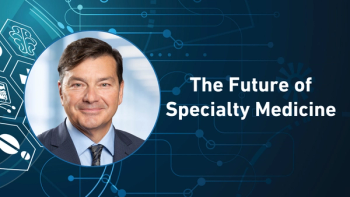
In the second part of his video interview with Pharma Commerce Editor Nicholas Saraceno, Paul Levesque, CEO of Theratechnologies, describes potential availability challenges brought on by supply chain obstacles.

The program measures a company’s air cargo supply chain efforts when it comes to quality, safety, and compliance.
In the first part of his video interview with Pharma Commerce Editor Nicholas Saraceno, Paul Levesque, CEO of Theratechnologies, outlines how US tariffs on Canadian goods have impacted the company’s operations, particularly in terms of cost and supply chain management in the US market.
In the final part of his video interview with Pharma Commerce Editor Nicholas Saraceno, Jody Hatcher, CEO of Morris & Dickson and chair of HDA’s board of directors, outlines the implications that potential 25% tariffs on pharmaceuticals could have, as far as manufacturers reshoring their production services are concerned.

The Carlsbad plant is expected to accelerate both the development and commercialization of cell therapies.
In the third part of his video interview with Pharma Commerce Editor Nicholas Saraceno, Jody Hatcher, CEO of Morris & Dickson and chair of HDA’s board of directors, comments on the steps needed to achieve Drug Supply Chain Security Act compliance.

In the second part of his video interview with Pharma Commerce Editor Nicholas Saraceno, Jody Hatcher, CEO of Morris & Dickson and chair of HDA’s board of directors, describes his day-to-day workflow at Morris & Dickson, and how it supports the efficiency and reliability of the distributor’s operations.
In the first part of his video interview with Pharma Commerce Editor Nicholas Saraceno, Jody Hatcher, CEO of Morris & Dickson and chair of HDA’s board of directors, explains how he foresees the future of the organization, along with the role he hopes to play in shaping its direction.

Will Robinson, program director, LogiPharma, explains how artificial intelligence and sustainability are driving a clear shift in priorities across the pharmaceutical supply chain.

The new firm—with 13 manufacturing facilities spanning France, Sweden, and Spain—will support the pharma supply chain through to commercialization.

Vendors are growing, and product and service offerings are expanding.
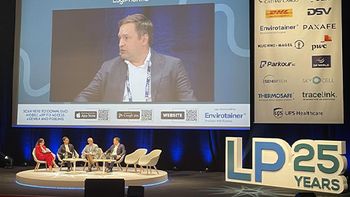
A panel discussion uncovers ways to deliver personalized therapy ops in a timely fashion.
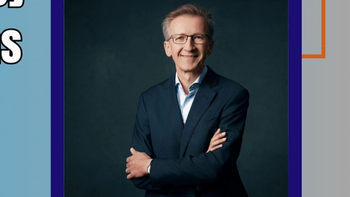
Steffen Lang, president, operations, executive committee member, Novartis, discusses how technology will continue to enhance operations and how it will impact patients.
Advertisement
Advertisement
Trending on Pharmaceutical Commerce
1
Pharma Pulse: Cardinal Health Bulks Up Home Care, Trump Unveils Phased Generics Tariffs
2
The Data Problem Behind Prescription Drug Waste
3
Mid-Year Check-In: Is Patient Affordability Getting Worse?
4
What Cold Chain Tech Trends Are Reshaping Pharma Logistics?
5