


Supply Chain
Latest News
Advertisement
Latest Videos

Advertisement
More News
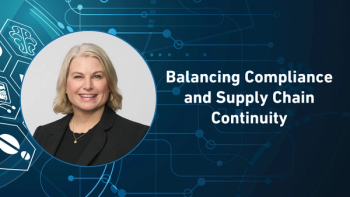
In the third part of her Pharma Commerce video interview, Heather Zenk, Cencora’s president of US supply chain, explores how public-private collaboration, smarter sourcing strategies, and long-term manufacturer support are helping to fortify pharmaceutical supply chains against future crises.
In the fourth part of his video interview with Pharma Commerce Editor Nicholas Saraceno, Nate Chenenko, principal with Ducker Carlisle, shares best practices for reducing greenhouse gas emissions across distribution channels without disrupting supply chain efficiency.

Is the industry ready for the Aug. 1 deadline of when these levies go into effect?
In the third part of his video interview with Pharma Commerce Editor Nicholas Saraceno, Nate Chenenko, principal with Ducker Carlisle details how manufacturers can overcome the data gaps from suppliers and third parties when aiming for sustainability certifications or ESG reporting compliance.
In the first part of her Pharma Commerce video interview, Heather Zenk, Cencora’s president of US supply chain, explores how public-private collaboration, smarter sourcing strategies, and long-term manufacturer support are helping to fortify pharmaceutical supply chains against future crises.
In the final part of his Pharma Commerce video interview, Hyung Heon Kim, CEO of MetaVia, discusses the potential repercussions of telehealth companies selling GLP-1s.
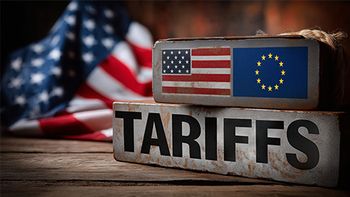
The new deal imposes 15% tariffs on most EU exports, including pharmaceuticals.
In the second part of his video interview with Pharma Commerce Editor Nicholas Saraceno, Nate Chenenko, principal with Ducker Carlisle, dives into the metrics pharma companies can track today in order to measure distribution-related sustainability performance.
In the first part of his video interview with Pharma Commerce Editor Nicholas Saraceno, Nate Chenenko, principal with Ducker Carlisle, explains the meaning behind Scope 3 emissions, including why they pose such a challenge for pharma manufacturers.
In the fourth part of his Pharma Commerce video interview, Hyung Heon Kim, CEO of MetaVia, explains the market dynamics or stakeholder misalignments that need to be resolved in order for the next generation of weight-loss drugs to reach scale without overburdening payers.
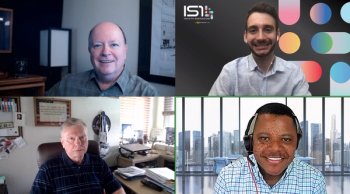
In the fifth part of this roundtable discussion, a panel of KOLs explore how the chain of custody and chain of ownership are impacted by supply chain challenges, such as last-mile distribution and DSCSA data security.

As new pricing and trade policies take shape, 60% of life sciences and healthcare executives anticipate business disruption, according to a new survey from Deloitte.
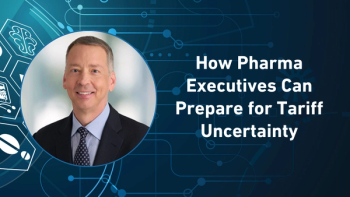
In the final part of his video interview with Pharma Commerce Editor Nicholas Saraceno, Brad Stewart, BDO’s national life sciences co-leader, covers the operational or strategic steps that pharma executives ought to be taking now in order to mitigate risks while awaiting clarity on tariff implementation.

These innovations are revolutionizing pharmaceutical packaging by enhancing drug safety, combating counterfeiting, ensuring regulatory compliance, and improving patient adherence across the supply chain.
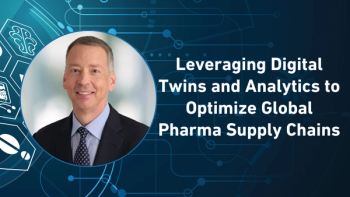
In the third part of his video interview with Pharma Commerce Editor Nicholas Saraceno, Brad Stewart, BDO’s national life sciences co-leader, outlines the role digital supply chain tools and analytics can play in helping manufacturers respond to pricing and sourcing volatility caused by sudden policy shifts.

A timeline of key developments surrounding Sarepta Therapeutics' Duchenne muscular dystrophy drug Elevidys, and the potential future impacts for gene therapy regulation and market access.
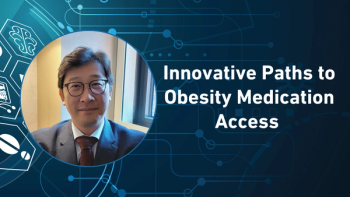
In the third part of his Pharma Commerce video interview, Hyung Heon Kim, CEO of MetaVia, outlines alternative reimbursement or value-based contracting models that could be feasible in the short term, given CMS’ decision not to finalize coverage for obesity meds in 2026.
In the second part of his video interview with Pharma Commerce Editor Nicholas Saraceno, Brad Stewart, BDO’s national life sciences co-leader, comments on how pharma companies should prioritize reshoring strategies in response to these tariff threats, especially when infrastructure isn’t yet in place.

Meanwhile, President Trump continues to push reciprocal levies and reshoring efforts, while pharma prepares for escalating costs.

In the second part of his Pharma Commerce video interview, Hyung Heon Kim, CEO of MetaVia, explains how dual-action metabolic therapies can address clinical or tolerability gaps observed in first-generation GLP-1s.
In the first part of his video interview with Pharma Commerce Editor Nicholas Saraceno, Brad Stewart, BDO’s national life sciences co-leader, describes the immediate and long-term impacts of this potential levy on pharma imports.
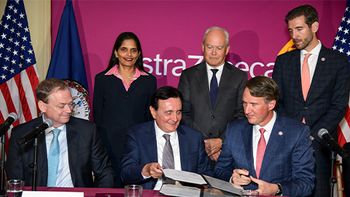
The investment is highlighted by a state-of-the-art API facility in Virginia and expansions across multiple states.
In the first part of his Pharma Commerce video interview, Hyung Heon Kim, CEO of MetaVia, describes the US payer ecosystem’s level of preparedness to support broader access and long-term affordability for these therapies.
In the final part of his Pharma Commerce video interview, Sean O’Hearen, founder and principal consultant at 1st Line Partners, offers communication strategies for staying confident in genuine pharmaceuticals while also remaining vigilant against counterfeit threats.
In the final part of his Pharma Commerce video interview, Murray Aitken, executive director, IQVIA Institute for Human Data Science, details how he sees the competitive landscape evolving
Advertisement
Advertisement
Trending on Pharmaceutical Commerce
1
How Early Development Decisions Shape Commercial Readiness for Biologics
2
FAQ: What Comes Next for the 340B Rebate Pilot
3
Why Early, Big-Picture Planning Is Key to Execution Across the CGT Lifecycle
4
Pharma Pulse: Vicapsys-Stateline Merger and Veritiv's TempSafe RxShield
5