The fallout is impacting partners Scholar Rock and Regeneron, both of whom have pending regulatory applications tied to the facility.
Nicholas Saraceno is Editor of Pharmaceutical Commerce. He can be reached at [email protected].

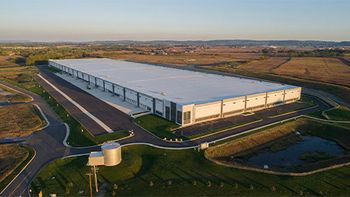
The fallout is impacting partners Scholar Rock and Regeneron, both of whom have pending regulatory applications tied to the facility.

Krenar Komoni, founder and CEO of Tive, predicts that AI-driven automation and its accelerating impact on pharmaceutical supply chains will remain a headline topic at LogiPharma USA, as the industry faces growing pressure to innovate while balancing strict regulatory requirements.

This episode of Pharma Pulse covers how recent CDC layoffs are fueling concerns about disease surveillance, Ypsomed’s new autoinjector manufacturing site in North Carolina, and Lupin’s $250 million investment to build a respiratory and specialty drug facility in Florida.

The global generics maker’s new Florida site will produce more than 25 critical respiratory medicines, create over 200 jobs, and reinforce domestic manufacturing and drug security.

Krenar Komoni, founder and CEO of Tive, highlights the transition in pharma from passive to real-time temperature control, noting delays in technology adoption but emphasizing how AI and automation will soon drive cost savings, improved quality, and stronger customer experience.

This episode of Pharma Pulse covers how Mark Cuban’s direct-to-consumer pharmacy is challenging traditional drug pricing models, AstraZeneca’s $4.5 billion investment to expand its Virginia manufacturing site, and Bristol Myers Squibb’s $1.5 billion acquisition of Orbital Therapeutics to advance RNA-based medicines.

In the final part of his Pharma Commerce video interview, Shawn Opatka, VP and GM, Honeywell Life Sciences, explains that as pharma quality systems evolve, AI is shifting from reactive problem-solving to proactive, closed-loop risk prevention, enhancing operator insight, decision-making, and continuous process improvement.

Ammie McAsey, SVP of Supply Chain Operations, McKesson, explains the critical role of real-time visibility, digital tools, and cold chain innovation in ensuring product quality, reducing disruptions, and strengthening patient care.

The new Albemarle County site—reportedly the largest investment in AstraZeneca’s history—will focus on API and ADC production, create 3,600 jobs, while strengthening US pharma supply chain resilience.

Set to debut in California this December, Amazon’s new pharmacy kiosks aim to streamline care by letting One Medical patients pick up prescriptions right after appointments, eliminating the need for a separate pharmacy visit.

This episode of Pharma Pulse covers the CDC’s new individualized approach to COVID-19 vaccination and changes to chickenpox guidance for toddlers, new research showing how GLP-1 therapies can interfere with PET-CT imaging results, and the Third Circuit Court’s rejection of Novo Nordisk’s IRA challenge.

In the second part of his Pharma Commerce video interview, Shawn Opatka, VP and GM, Honeywell Life Sciences, notes that nearly all pharma organizations are experimenting with AI to address labor shortages, data challenges, and regulatory demands, but full-scale adoption remains on the horizon as companies balance innovation with compliance.

The appellate court upheld Medicare’s authority to negotiate lower drug prices under the Inflation Reduction Act, following similar rulings against AstraZeneca, Bristol Myers Squibb, and Novartis.

Krenar Komoni, founder and CEO of Tive, explains how the pharmaceutical industry’s transition from passive to real-time temperature control creates short-term challenges but will ultimately enable AI-driven automation, lower costs, higher quality, and better customer experiences.

This episode of Pharma Pulse covers the FDA’s approval of golimumab for pediatric ulcerative colitis, AstraZeneca’s new multi-target neuroscience partnership with Algen, and Peli BioThermal’s acquisition of Evo to strengthen its global cold chain portfolio.

As precision medicine reshapes drug distribution, Ammie McAsey, SVP of Supply Chain Operations, McKesson, highlights the need for deeper investments in technology, temperature control, and end-to-end visibility to ensure quality and patient safety in advanced therapy supply chains.

Introducing our deep dive into the state of biopharma at the moment—directly from the voices of those decision-makers most impacted by the current industry volatility.

In a video interview with Pharma Commerce, Kirsten Newquist, Identiv’s CEO, and Mark Sawicki, PhD, Cryoport Systems’ president and CEO, explain how embedded product intelligence—paired with cautious, strategic adoption of AI—is redefining pharmaceutical cold chain reliability and supply-chain decision-making.

The addition of Evo’s cryogenic shipping and tracking technology enhances Peli BioThermal’s reach across the pharma value chain, driving innovation and integration in temperature-controlled logistics while supporting these therapies.

As AI adoption accelerates across life sciences, Shawn Opatka, VP and GM of Honeywell Life Sciences, and Linda Malek, JD, partner at Crowell & Moring, discuss how regulatory expectations and federal initiatives—like the White House AI Action Plan—are shaping the technology’s future role in pharma quality, traceability, and healthcare systems.

This episode of Pharma Pulse covers new research showing how obesity at age 20 increases postpartum diabetes risk, Amgen’s new direct-to-consumer digital platform aimed at improving treatment access, and Eli Lilly’s $1 billion investment to strengthen manufacturing in India.

The investment will establish a new hub overseeing contract manufacturing across India and expand Lilly’s global supply of medicines for Alzheimer’s, diabetes, obesity, and cancer, amid shifting US trade and tariff policies.

In a recent panel discussion, Krenar Komoni, founder and CEO of Tive, highlighted how combating rising supply chain theft requires a multi-layered, technology-driven security strategy.

This episode of Pharma Pulse covers allegations of retaliation against a former NIAID director following whistleblower complaints, new research suggesting ALS may be an autoimmune disease, and the wave of hospital layoffs affecting thousands of healthcare workers across the United States.

Ammie McAsey, SVP of Supply Chain Operations, McKesson, emphasizes the critical role of collaboration, technology, and partnerships in ensuring advanced and specialty therapies reach patients safely and effectively.

Cencora executive Heather Zenk discusses how innovations in cold chain, data visibility, and sustainability strategies are transforming the drug delivery process.

A new report underscores how 2D barcodes and automated data capture powered by GS1 standards can help logistics and life sciences companies overcome outdated systems, labeling issues, and visibility gaps.

Dave Malenfant, healthcare supply chain expert, outlines the topics that are top of mind at the show.

This episode of Pharma Pulse covers the FDA’s quiet approval of the first generic mifepristone tablet, Takeda’s decision to discontinue cell therapy research programs, and SciSafe’s expansion of biopharma storage capacity with a new East Brunswick, New Jersey facility.

The new 5-million-cubic-foot biorepository enhances cold chain logistics, expands biopharma storage capacity, and strengthens New Jersey’s position as a life sciences hub.