



Manufacturing & Packaging
Latest News

Advertisement
Latest Videos






Advertisement
More News
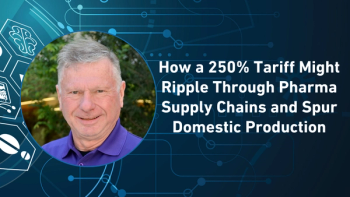
In the second part of his Pharma Commerce video interview, Dave Malenfant, a healthcare supply chain expert, outlines how the impact of a steep pharmaceutical import tariff varies across raw materials, components, and finished products, along with why such a policy could incentivize companies to shift production to the US.

The directive calls for building a six-month Strategic Active Pharmaceutical Ingredients Reserve, updating the essential medicines list, and prioritizing US-made APIs.

Despite the ongoing turmoil over tariffs, medicine costs, and FDA policy, US wholesalers are performing well.
This episode of Pharma Pulse explores AbbVie’s $195 million investment to expand US API production, new survey results showing mail-order and supermarket pharmacies outpacing traditional chains in customer satisfaction, and rising affordability pressures as insurers restrict GLP-1 coverage.

The new North Chicago facility, slated to open in 2027, will boost domestic production of key drug ingredients for immunology, neuroscience, and oncology therapies, reinforcing US pharmaceutical capacity amid industry reshoring and tariff concerns.

In the first part of his Pharma Commerce video interview, Dave Malenfant, a healthcare supply chain expert, explains how steep pharmaceutical import tariffs might affect costs at different points in the supply chain, why component pricing poses a bigger risk than active ingredients, and how insurers, distributors, and manufacturers may negotiate to shield patients from price increases.
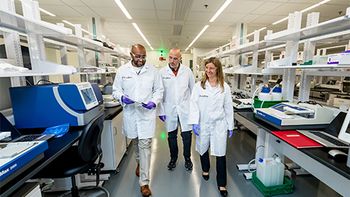
The CDMO’s new services at its Hopewell, NJ facility delivers scalable, phase-appropriate production, in-house quality control, and domestic sourcing to help gene therapy developers reduce complexity, speed timelines, and ensure regulatory compliance.
A new two-phase initiative aims to streamline facility approvals, reduce reliance on foreign pharmaceutical production, and bolster domestic supply chain resilience amid rising tariffs and reshoring investments.

Meanwhile, drugmakers ramp up US manufacturing investments to navigate policy shifts and protect supply chain resilience, as the Trump administration enacted tariff rates between 10% to 50% on various trading partners early this morning.
In the final part of her Pharma Commerce video interview, Heather Zenk, Cencora’s president of US supply chain, outlines practical, cost-conscious strategies for reducing Scope 3 emissions in pharma supply chains, from smarter warehouse lighting and returnable cold chain packaging, to order consolidation and AI-enabled delivery optimization.

With 14 new lawsuits filed and 132 total complaints across 40 states, Novo Nordisk is intensifying efforts to protect patients from unapproved compounded semaglutide products by targeting pharmacies, telehealth providers, and deceptive marketing practices that compromise safety, mislead consumers, and violate FDA regulations.
In the fifth part of her Pharma Commerce video interview, Heather Zenk, Cencora’s president of US supply chain, explores how public-private collaboration, smarter sourcing strategies, and long-term manufacturer support are helping to fortify pharmaceutical supply chains against future crises.
In the fourth part of her Pharma Commerce video interview, Heather Zenk, Cencora’s president of US supply chain, explores how public-private collaboration, smarter sourcing strategies, and long-term manufacturer support are helping to fortify pharmaceutical supply chains against future crises.

The Spain-based CDMO strengthens its North American presence and capabilities through its purchase, while also acquiring a new rare disease treatment from Sanofi one month prior.
In the final part of his video interview with Pharma Commerce Editor Nicholas Saraceno, Nate Chenenko, principal with Ducker Carlisle, explains that as regulatory frameworks tighten across Europe and the United States, and customer preferences lean greener, pharma logistics leaders must balance compliance, cost, and innovation to meet mounting sustainability demands.

The letters demand US drug prices match or undercut global lows, triggering a 60-day compliance timeline, and prompting strategic responses from players in the space, including Celltrion.

Regeneron has received a second complete response letter from the FDA for odronextamab and anticipates delays for Eylea HD due to inspection findings at a Catalent manufacturing site, despite continued strong revenue growth and pipeline momentum.
In the fourth part of his video interview with Pharma Commerce Editor Nicholas Saraceno, Nate Chenenko, principal with Ducker Carlisle, shares best practices for reducing greenhouse gas emissions across distribution channels without disrupting supply chain efficiency.
In the third part of his video interview with Pharma Commerce Editor Nicholas Saraceno, Nate Chenenko, principal with Ducker Carlisle details how manufacturers can overcome the data gaps from suppliers and third parties when aiming for sustainability certifications or ESG reporting compliance.
In the first part of her Pharma Commerce video interview, Heather Zenk, Cencora’s president of US supply chain, explores how public-private collaboration, smarter sourcing strategies, and long-term manufacturer support are helping to fortify pharmaceutical supply chains against future crises.

The new deal imposes 15% tariffs on most EU exports, including pharmaceuticals.
In the second part of his video interview with Pharma Commerce Editor Nicholas Saraceno, Nate Chenenko, principal with Ducker Carlisle, dives into the metrics pharma companies can track today in order to measure distribution-related sustainability performance.
In the first part of his video interview with Pharma Commerce Editor Nicholas Saraceno, Nate Chenenko, principal with Ducker Carlisle, explains the meaning behind Scope 3 emissions, including why they pose such a challenge for pharma manufacturers.

These innovations are revolutionizing pharmaceutical packaging by enhancing drug safety, combating counterfeiting, ensuring regulatory compliance, and improving patient adherence across the supply chain.

Cellular Origins, CGT Catapult, and Resolution Therapeutics partner up to design a fully automated, scalable CGT manufacturing solution, with the goal of accelerating patient access to cell therapies.
Advertisement
Advertisement
Trending on Pharmaceutical Commerce
1
Inside Cencora's Approach to AI-Driven Demand Sensing
2
What AI Changes, and Doesn’t, in Exception Handling
3
BMS’s Kevin Cook on Moving CMO Partnerships Beyond Transactions
4
BioPharma Supply Chains of the Future: What to Know About Localization
5