




Manufacturing & Packaging
Latest News
Advertisement
Latest Videos






Advertisement
More News

The installation of the new vial, syringe, and cartridge line is expected to take place throughout the coming year.

In the third part of his Pharma Commerce video interview, Michael Rowe, Two Labs’ senior director of DSCSA/serialization compliance services, shares the challenges that stakeholders are encountering, along with a possible change to the national drug code that could be on the way.
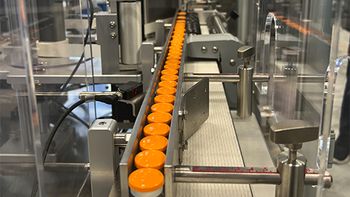
The track-and-trace systems provider expands its life sciences portfolio by integrating the high-speed, adaptable ETF-300 precision labeler through a partnership that brings Industry 4.0-ready capabilities, advanced printing tech, and enhanced data security to pharmaceutical packaging.

In the first part of his Pharma Commerce video interview, Michael Rowe, Two Labs’ senior director of DSCSA/serialization compliance services, shares his overall thoughts on this year’s DMC.

The move bolsters the CDMO’s commitment to cell and gene therapy by incorporating advanced manufacturing and fill-finish capabilities.
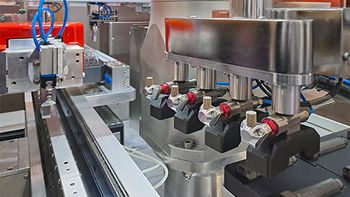
As the adoption of biologics rises, demand for home healthcare grows, and conditions like diabetes and autoimmune disorders become more prevalent, self-injectables are here to stay.
The company’s branded form of nadofaragene firadenovec-vncg will also be produced at a hub in Parsippany, NJ.
In the third part of his video interview with Pharma Commerce Editor Nicholas Saraceno, Paul Levesque, CEO of Theratechnologies, explains what the mindset be for companies who are just starting the reshoring process.
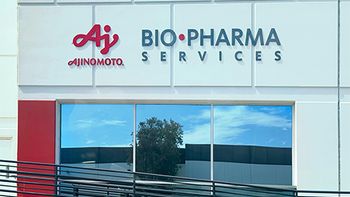
The deal for the San Diego hub provides the CDMO with its first-ever North American manufacturing location for prefilled syringes and cartridges.

The new firm—with 13 manufacturing facilities spanning France, Sweden, and Spain—will support the pharma supply chain through to commercialization.

Vendors are growing, and product and service offerings are expanding.

When delays and disruptions threaten not only product integrity but patient well-being, thorough risk assessment and mitigation are essential.

Exploring the importance of contract development and manufacturing organizations in advancing the latest technology for effective delivery of temperature-sensitive medicines.

Taking stock of today's gains and tomorrow's potential for generative artificial intelligence in reshaping the industry.
New facility is expected to serve as a global hub for accelerating the development of next-generation antibody-drug conjugates for the treatment of cancer.

The parties aim to create an end-to-end digital thread that links research data all the way through to life sciences manufacturing.
In the third part of his video interview with Pharma Commerce Editor Nicholas Saraceno, Brad Stewart, BDO’s national life sciences co-leader, outlines the ways that tariffs disrupt pharma supply chains, along with how leaders can evaluate and prepare for the resulting challenges.

In the final part of his video interview with Pharma Commerce Editor Nicholas Saraceno, Jason C. Foster, CEO of Ori Biotech, comments on how he envisions automation in the CAR-T manufacturing space playing a role in improving efficiency, reducing costs, and ultimately, expanding patient access.
In the third part of his video interview with Pharma Commerce Editor Nicholas Saraceno, Jason C. Foster, CEO of Ori Biotech, discusses how regulatory hurdles are impacting the advancement of CGTs, along with the changes he would like to see along that front in order to accelerate patient access.

The CRDMO’s acquisition of the Baltimore plant is expected to boost its biologics presence.

This link in the pharma supply chain is undergoing a major transformation propelled by technological advancements, regulatory changes, and evolving market dynamics, requiring industry leaders to adopt innovative strategies in order to remain competitive.

The US president delays tariffs that comply with the 2020 USMCA for one month, with reciprocal tariffs still expected to go into effect by April 2.
The news comes amid the possibility that President Trump imposes a 25% tariff on pharmaceuticals, which could encourage manufacturers to begin reshoring their services.

The company’s Mourenx plant in Southwest France aims to become an API network hub, with first supplies expected by next year.
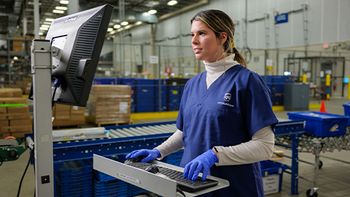
The facilities are expected to offer pharma shipment support by addressing time and temperature-specific requirements.
Advertisement
Advertisement