
Manufacturing & Packaging
Latest News
Advertisement
Latest Videos

Podcasts
Advertisement
More News
The pharma giant’s new 10,000-square-foot Carlsbad plant strengthens its US manufacturing network and supports its overarching $50 billion investment plan committed to operations.
In the first part of her Pharma Commerce video interview, Christy Christian, senior industry principal with Kinaxis, describes how manufacturers face mounting challenges managing long, complex supply chains, including limited inventory buffers, tight cash flow constraints, and constant policy changes.

The investment is aimed at boosting oral medicine manufacturing capacity.
This episode of Pharma Pulse discusses Novartis’ $12 billion acquisition of Avidity Biosciences to expand its RNA therapeutics portfolio, and President Trump’s proposed 10% tariff increase on Canadian imports that could disrupt pharma supply chains.

The move adds new tension to US-Canada trade relations under the USMCA and raises questions about pending pharmaceutical import policies.
This episode of Pharma Pulse discusses new research linking cholesterol imbalance in obesity to higher depression risk, Eli Lilly’s acquisition of Aderum Biotechnologies to strengthen its neuroscience pipeline, and Cambrex’s $120 million investment to boost US. API manufacturing capacity.
The CDMO’s latest investment will boost capacity at its Charles City, IA facility by 40%, underscoring Cambrex’s focus on reshoring drug manufacturing, advancing peptide and small molecule production, and supporting the long-term stability of the US pharma supply chain.
This episode of Pharma Pulse covers Alkermes’ acquisition of Avadel Pharmaceuticals to expand its portfolio, BioNTech’s public exchange offer for CureVac to strengthen its mRNA pipeline, and a new report revealing how US medical device manufacturers are adopting digital-first models to boost compliance and patient engagement.

The acquisition brings together two leaders in mRNA innovation, strengthening BioNTech’s oncology strategy and expanding its R&D and commercialization capabilities.
Kala Shankle, JD, HDA’s vice president of regulatory affairs, shares that as DSCSA traceability requirements take full effect, distributors and trading partners are preparing for long-term gains in supply chain security, recall efficiency, and counterfeit prevention.
This episode of Pharma Pulse covers Amazon and WeightWatchers’ partnership to deliver FDA-approved weight-loss medications, Merck’s new biomanufacturing center of excellence in Virginia, and the FDA’s first-ever approval of a TSLP-targeting biologic, Tezspire, for chronic rhinosinusitis with nasal polyps.

The company’s new 400,000-square-foot facility in Elkton will boost small molecule manufacturing, create hundreds of jobs, and strengthen US innovation and supply chain resilience.
Kala Shankle, JD, HDA’s vice president of regulatory affairs, describes how FDA officials are signaling a balanced enforcement approach when it comes to DSCSA enforcement, expecting compliance efforts and documentation, but also recognizing that perfection will take time.
This episode of Pharma Pulse discusses new research revealing persistent disparities in women’s cancer outcomes, record-high physician pay amid steady productivity, and AstraZeneca’s major Texas expansion to double production of its hyperkalemia treatment, Lokelma.
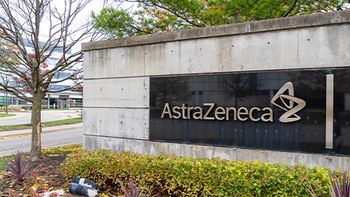
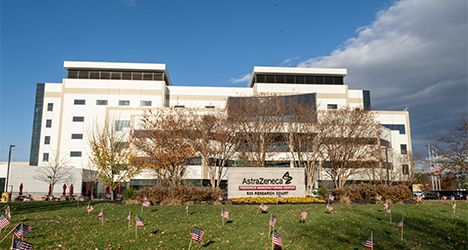
The $445 million expansion of AstraZeneca’s Coppelsite will boost global production capacity for Lokelma, enhance local job growth, and strengthen the company’s US manufacturing footprint amid industry-wide onshoring trends.
This episode of Pharma Pulse covers the FDA’s approval of a rapid one-minute HIV self-test, the US government’s decision to delay tariffs on pharmaceutical exports from Singapore, and CVS Pharmacy’s acquisition of more than 600 Rite Aid stores across three states to expand its community health footprint.
A planned 100% tariff on branded and patented drugs from Singapore is being postponed as US and Singapore officials explore potential exemptions.
This episode of Pharma Pulse covers the nationwide Kaiser Permanente strike involving more than 40,000 healthcare workers, Takeda’s new AI-driven antibody discovery partnership with Nabla Bio, and the FDA’s OAI designation for Novo Nordisk’s Bloomington manufacturing facility.
The fallout is impacting partners Scholar Rock and Regeneron, both of whom have pending regulatory applications tied to the facility.
This episode of Pharma Pulse covers how recent CDC layoffs are fueling concerns about disease surveillance, Ypsomed’s new autoinjector manufacturing site in North Carolina, and Lupin’s $250 million investment to build a respiratory and specialty drug facility in Florida.

The global generics maker’s new Florida site will produce more than 25 critical respiratory medicines, create over 200 jobs, and reinforce domestic manufacturing and drug security.
This episode of Pharma Pulse covers how Mark Cuban’s direct-to-consumer pharmacy is challenging traditional drug pricing models, AstraZeneca’s $4.5 billion investment to expand its Virginia manufacturing site, and Bristol Myers Squibb’s $1.5 billion acquisition of Orbital Therapeutics to advance RNA-based medicines.
The new Albemarle County site—reportedly the largest investment in AstraZeneca’s history—will focus on API and ADC production, create 3,600 jobs, while strengthening US pharma supply chain resilience.

The addition of Evo’s cryogenic shipping and tracking technology enhances Peli BioThermal’s reach across the pharma value chain, driving innovation and integration in temperature-controlled logistics while supporting these therapies.
This episode of Pharma Pulse covers new research showing how obesity at age 20 increases postpartum diabetes risk, Amgen’s new direct-to-consumer digital platform aimed at improving treatment access, and Eli Lilly’s $1 billion investment to strengthen manufacturing in India.
Advertisement
Advertisement
Trending on Pharmaceutical Commerce
1
White House Extends MFN Pricing to Every State Medicaid Program
2
Q&A: Inside the NDC-12 Transition
3
Pharma Pulse: Behind the Scenes of LogiPharma USA 2026
4
Pharma Pulse: Independent Pharmacies Sue Express Scripts, Novo Taps Anthropic, Pharma Joins Clean Heat
5