



Manufacturing & Packaging
Latest News
Advertisement
Latest Videos
Advertisement
More News
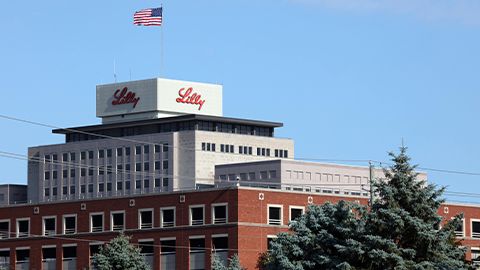
This episode of Pharma Pulse covers the former CDC director’s claim she was dismissed for refusing to prioritize ideology over evidence, new findings that physician mental health remains a serious concern, and Eli Lilly’s $5 billion investment in a new Virginia manufacturing plant to expand biologics production.
The new Goochland County facility will serve as Lilly’s first fully integrated API and drug product site, focusing on antibody-drug conjugates, while creating thousands of jobs and strengthening domestic supply chains.
This episode of Pharma Pulse covers reports of a White House executive order to restrict treatments discovered in China, new data showing robust immune responses from Pfizer and BioNTech’s COVID-19 vaccine in high-risk adults, and Samsung Biologics’ latest US manufacturing deal amid tariff uncertainty.

The South Korean CDMO has signed its second multi-billion-dollar contract in less than a year, even as shifting US trade policies and looming tariffs create challenges for global drugmakers.

The move consolidates R&D, manufacturing, and commercialization under the CGM system’s developer to accelerate growth and expand global reach.

By reducing waste, improving forecasting, and strengthening payer negotiations, these technologies are helping pharmaceutical companies unlock efficiency, accelerate adoption, and differentiate in competitive markets.
This episode of Pharma Pulse covers President Trump’s appeal to the Supreme Court to preserve pharma tariffs, Sanofi’s 10% stock drop after Amlitelimab failed in Phase III, and new research showing how the COVID-19 pandemic reshaped pneumococcal mortality trends.
The company is committing over half a billion dollars to build a state-of-the-art research hub in Thousand Oaks, CA, designed to accelerate next-generation therapeutics through advanced automation and collaboration.
This episode of Pharma Pulse covers Susan Monarez’s rejection of White House efforts to remove her as CDC director, new analysis on how long-lasting drug shortages expose systemic supply chain weaknesses, and the FDA’s approval of the first generic liraglutide for weight management.
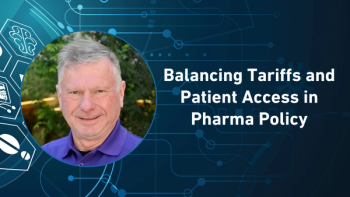
In the final part of his Pharma Commerce video interview, Dave Malenfant, a healthcare supply chain expert, emphasizes that patient access must remain the top priority, even amid steep tariffs, citing cases like orphan drugs and oncology treatments where government flexibility is essential.

CCT is strengthening its Asia-Pacific footprint through new hubs in Tokyo and Mumbai, expanded distributor partnerships in China and Australia, and rebranded regional operations

With potential tariffs reaching 250% and new federal initiatives like SAPIR and most-favored nation pricing reshaping incentives, this explainer explores how major drugmakers are pouring billions into US facilities.
FDA approves COVID-19 vaccines from Moderna, Pfizer-BioNTech, and Novavax targeting the LP.8.1 sublineage of SARS-CoV-2, with eligibility limited to adults aged 65 years and older and those with underlying medical conditions that place them with a high risk for severe disease.
In the fourth part of his Pharma Commerce video interview, Dave Malenfant, a healthcare supply chain expert, cautions that stockpiling to offset tariffs could backfire for pharma companies, leading to expired inventory, higher waste, and costly trade-offs, unless renegotiation strategies are pursued.

As of today, Aug. 27, wholesale distributors must fully comply with the Drug Supply Chain Security Act’s enhanced drug distribution requirements, closing the FDA’s exemption period and advancing efforts to strengthen patient safety and supply chain integrity.
This episode of Pharma Pulse covers the FDA’s new daily adverse event reporting initiative, the CDC’s appointment of an mRNA vaccine critic to lead its COVID-19 immunization workgroup, and Genentech’s $700 million investment in a North Carolina biologics facility.

The new 700,000-square-foot Holly Springs site—part of Roche’s $50 billion US investment plan—will focus on metabolic and obesity treatments, create 400 jobs, and strengthen domestic biopharma manufacturing amid shifting tariff and drug pricing policies.
This episode of Pharma Pulse covers FDA findings of contamination and safety lapses at Novo’s Bloomington manufacturing plant, the rise of off-label GLP-1 prescribing and its equity challenges, and AbbVie’s acquisition of bretisilocin to advance treatments for major depressive disorder.
An FDA Form 483 cited unaddressed contamination, pest infestations, and equipment failures at manufacturer’s Bloomington, IN facility, which was acquired in the Catalent buyout.

Addressing the most common concerns surrounding the legislation intended to establish interoperability within the pharma supply chain.
This episode of Pharma Pulse covers the White House–EU agreement on pharmaceutical tariffs, Johnson & Johnson’s $2 billion expansion of its North Carolina manufacturing site, and a new federal rule requiring e-prescribing and prior authorization tools in certified EHR systems.

The new framework, set to take effect Sept. 1, limits tariffs on pharmaceutical imports to 15% but follows months of shifting proposals, including threats of tariffs as high as 250%.

In the fourth part of his Pharma Commerce video interview, Mark Lee, MarqVision’s founder and CEO, discusses how healthcare companies and regulators can strengthen defenses against counterfeit drugs by integrating AI with physical authentication methods and enabling secure, anonymized data sharing across the pharm sector.
The company will be heavily investing over the next decade to build a new biopharmaceutical facility in Holly Springs, NC, creating 120 jobs and reinforcing its $55 billion pledge to strengthen US manufacturing, R&D, and innovation.
In the third part of his Pharma Commerce video interview, Dave Malenfant, a healthcare supply chain expert, discusses how predictive analytics, AI, and automation are streamlining US pharmaceutical manufacturing—cutting overhead, boosting efficiency, and enhancing safety.
Advertisement
Advertisement
Trending on Pharmaceutical Commerce
1
Pharma Pulse: Cencora to Acquire AON, Amazon and Google Back ePA Expansion
2
Inside the 340B Rebate Pilot Standoff: Court, Congress, Drugmakers
3
LogiPharma 2026: CSafe on Right-Sizing Bulk Air Cargo Protection
4
FAQ: How Is AI Being Deployed in Pharma Supply Chains?
5