



Market Access
Latest News
Advertisement
Latest Videos







Shorts

0:37
Which US health policy will shape market access most?
4 months ago
by
Will Shrank, MD

0:49
Why Most Pharma Giants Are Facing a $100 Billion Growth Gap
7 months ago
by
Dan Chancellor(+1 more)

0:49
A PC Synopsis
8 months ago
by
Nicholas Saraceno, Senior Editor
0:40
Why the Insurance Journey Fails Patients
9 months ago
by
Nicholas Saraceno, Senior Editor(+1 more)
0:57
The Complex Reality of Modern Medicine Pricing
9 months ago
by
Nicholas Saraceno, Senior Editor(+1 more)
0:33
Why Physician Groups Are Setting Up Their Own Pharmacy Structures
9 months ago
by
Nicholas Saraceno, Senior Editor(+1 more)

0:39
Why Drug Price Cuts Don’t Make Sense for Development Incentives
10 months ago
by
Nicholas Saraceno, Senior Editor(+1 more)
0:26
What Do FRMs Really Do?
a year ago
by
Nicholas Saraceno, Senior Editor(+1 more)
Podcasts
Advertisement
More News

Nine more manufacturers join the MFN program, pairing new Medicaid pricing deals with $19.6B in U.S. manufacturing investment and API reserve donations.

TrumpRx has topped 800 drugs since its February launch, but managed care skepticism over real patient savings persists.
Virtual care's pre- and postvisit windows offer pharma marketers a more targeted, attentive audience than physical waiting rooms, new research shows, and most brands aren't capitalizing on it yet.

AMCP's Adam Colborn discusses survey findings on TrumpRx's six-month performance, examining payer skepticism about pricing claims and pharmacy access hurdles for patients.

In coordination with the Centers for Medicare and Medicaid Services, 10 PBMs will surface TrumpRx cash prices in prescribers' benefit tools, PCMA announced.

Patient Advocate Foundation's Amy Niles on faster CMS prior authorization rules, Medicaid work requirements and what shrinking coverage means for patients.

Ed Schoonveld examines how AI is reshaping drug pricing and access, from payer decisions to prescribing, and what it means for new drug treatments.

Across pricing, supply chain, and patient support, the playbooks of pharma commercialization are being rewritten at once for a new era.

AMCP's Adam Colborn breaks down survey findings on how health plans and PBMs view the TrumpRx platform.

Gifthealth CEO Chip Parkinson on the factors accelerating direct-to-patient model adoption, and what's next for the channel.

CVS Health is pairing a new Lilly pricing collaboration with a $29 MinuteClinic visit and expanded pharmacist support, disclosed alongside a sharp Q2 earnings beat.
Four pharma commerce experts revisit their 2026 predictions on dealmaking, patient access and commercialization at the year's midpoint.

Gifthealth's Chip Parkinson says direct-to-patient adoption has accelerated since January, driven by structural, not cyclical, market forces.
Amy Niles of the Patient Advocate Foundation on the Medicare Part D cap, Medicaid, ACA exchanges and rural hospital access in late 2026.

How commercial trade groups are shifting from distribution execution to strategic partners shaping market access, launch readiness and commercial performance.
Amy Niles of the Patient Advocate Foundation on Medicaid work requirements, ACA subsidy expiration and patient affordability in 2026.

A subtraction-oriented approach to pharmacy data can surface avoidable drug waste that fragmented systems routinely miss.
Amy Niles of the Patient Advocate Foundation revisits her 2026 outlook on prior authorization reform and the Medicare Prescription Payment Plan.

The models pharma inherited were built for conditions that have changed. A look across the August issue at an industry redesigning itself.
Episode 1 of Supply Chain Signal breaks down the FDA's PreCheck pilot, the US Section 301 probe into German drug pricing, and CMS's move to make Medicare drug price negotiation permanent.
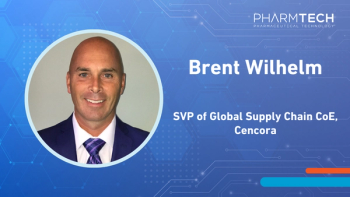
Brent Wilhelm of Cencora discusses why available inventory still leads to shortages, and how tighter distributor-manufacturer integration and AI could close the gap.
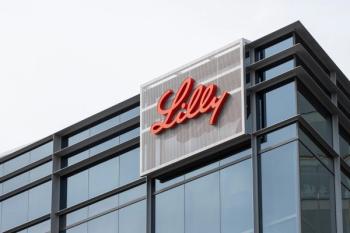
Eli Lilly's acquisition of AtaiBeckley signals growing pharmaceutical industry commitment to psychedelic-based treatments for treatment-resistant depression.
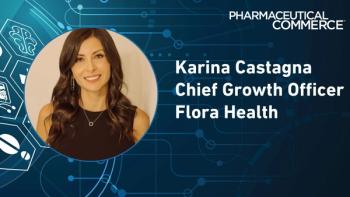
Many barriers to therapy emerge after a prescription is written. Karina Castagna makes the case for access support embedded at the point of care.

Germany's new health insurance law more than doubles mandatory drug rebates. Here is why it matters for US pharma pricing and launches.

RxLogic's Ann Beal on how PBM reform indirectly impacts pharma manufacturers' affordability programs, rebate planning, and patient access.
Advertisement
Advertisement